
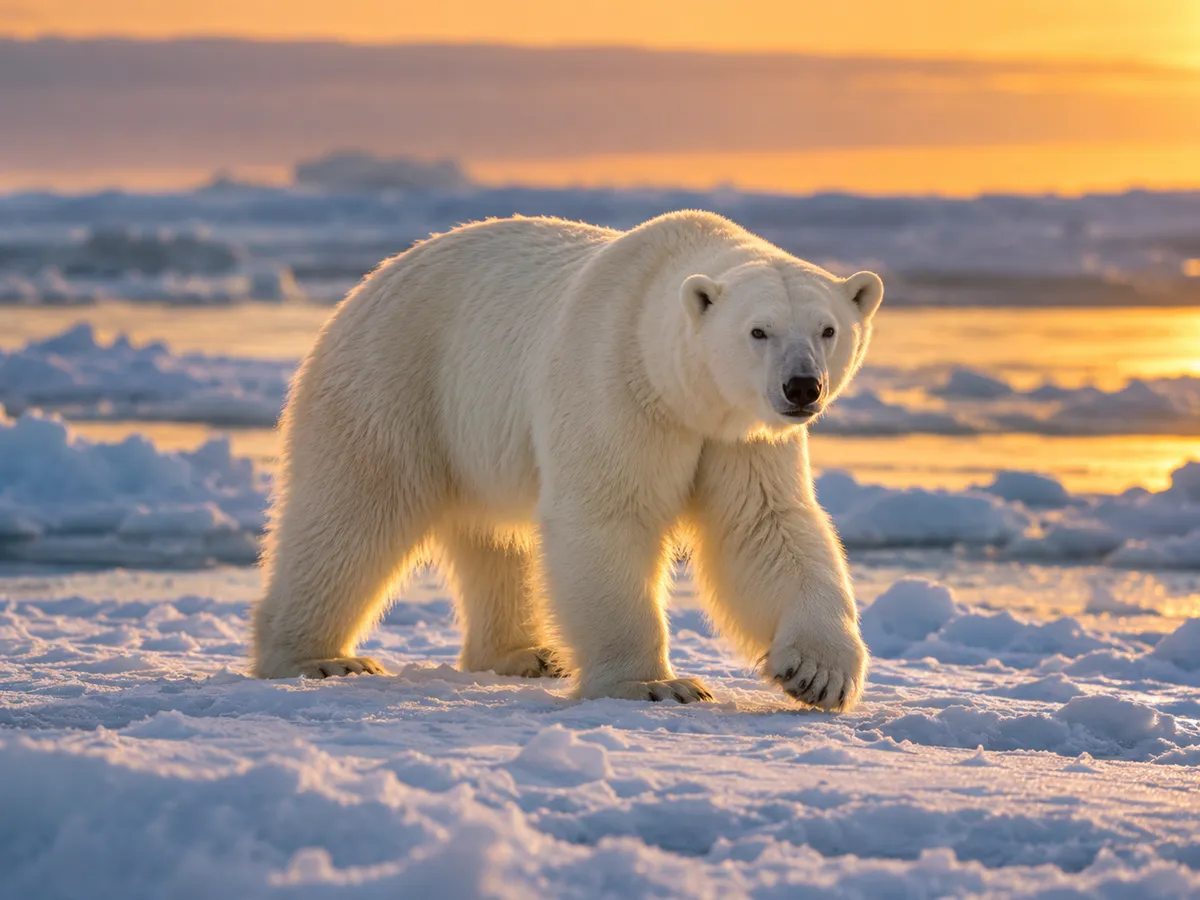
Polar bears
The largest predator of the Arctic, the polar bear spends much of its life on sea ice hunting seals. Melting ice directly threatens the future of this species.
- الطول
- 1.8–2.6 m
- الوزن
- 150–700 kg
- العمر في البرية
- 15–25 سنة
- حالة الحفظ (IUCN)
- معرض للخطر (VU)
القيم تقريبية للبالغين وتختلف حسب الجنس والنويع والمجموعة.
نظرة سريعة
أهم المعلومات عن الدببة القطبية.
- Where does it live?Polar bears live around the Arctic, in Canada, Alaska (USA), Greenland, Norway's Svalbard islands and northern Russia.
- What does it eat?It is a carnivore whose main prey are seals such as ringed and bearded seals.
- Behaviour and social lifePolar bears mostly live alone and roam over very large areas in search of prey.
- CubsIn autumn, pregnant females dig a den in the snow.
بالتفصيل
باختصار
- The polar bear is one of the largest land carnivores.
- Its main prey are seals, which it hunts on the sea ice.
- It is a powerful swimmer and is classified as a marine mammal.
- Its fur looks white, but its skin is black.
- The IUCN lists it as Vulnerable; shrinking sea ice is the biggest threat.
The polar bear (Ursus maritimus) is a large bear adapted to the icy Arctic. Its scientific name means "sea bear"; because it spends most of its life on sea ice or in the water, it is also classified as a marine mammal.
Where does it live?
Polar bears live around the Arctic, in Canada, Alaska (USA), Greenland, Norway's Svalbard islands and northern Russia. They depend on sea ice.
What does it eat?
It is a carnivore whose main prey are seals such as ringed and bearded seals. It often waits patiently at holes in the ice where seals come up to breathe. When it cannot find prey, it may eat carcasses, bird eggs and other food.
Behaviour and social life
Polar bears mostly live alone and roam over very large areas in search of prey. They can swim long distances. A thick layer of fat and a two-layer coat protect them from the freezing cold.
Cubs
In autumn, pregnant females dig a den in the snow. Cubs are born in midwinter, usually as twins, and grow on their mother's milk in the den until spring. They stay with their mother for about 2.5 years.
Conservation status
The polar bear is listed as Vulnerable (VU) on the IUCN Red List. Because of climate change, sea ice melts earlier and freezes later, shortening the time polar bears can hunt. Pollution and oil and gas activity are additional threats.
Fun facts
- Polar bear hairs are actually colourless and hollow; they look white because they reflect light.
- Its skin is black, which helps absorb heat from the sun.
- A thick layer of fat provides insulation and helps it float while swimming.
حيوانات مشابهة
حيوانات أخرى من المجموعة نفسها.
احترام الطبيعة، غد أقوى
حماية الحياة البرية مسؤوليتنا جميعًا.
إذا وجدت حيوانًا بريًا مصابًا أو صغيرًا فلا تلمسه، وأبلغ جهة حماية الطبيعة المحلية. معرفة أكثر، وعي أكبر.
- احترم المواطن الطبيعية
- راقب الحيوانات البرية من بعيد
- لا تترك نفايات في الطبيعة
- ادعم مستقبلًا مستدامًا