Koalas
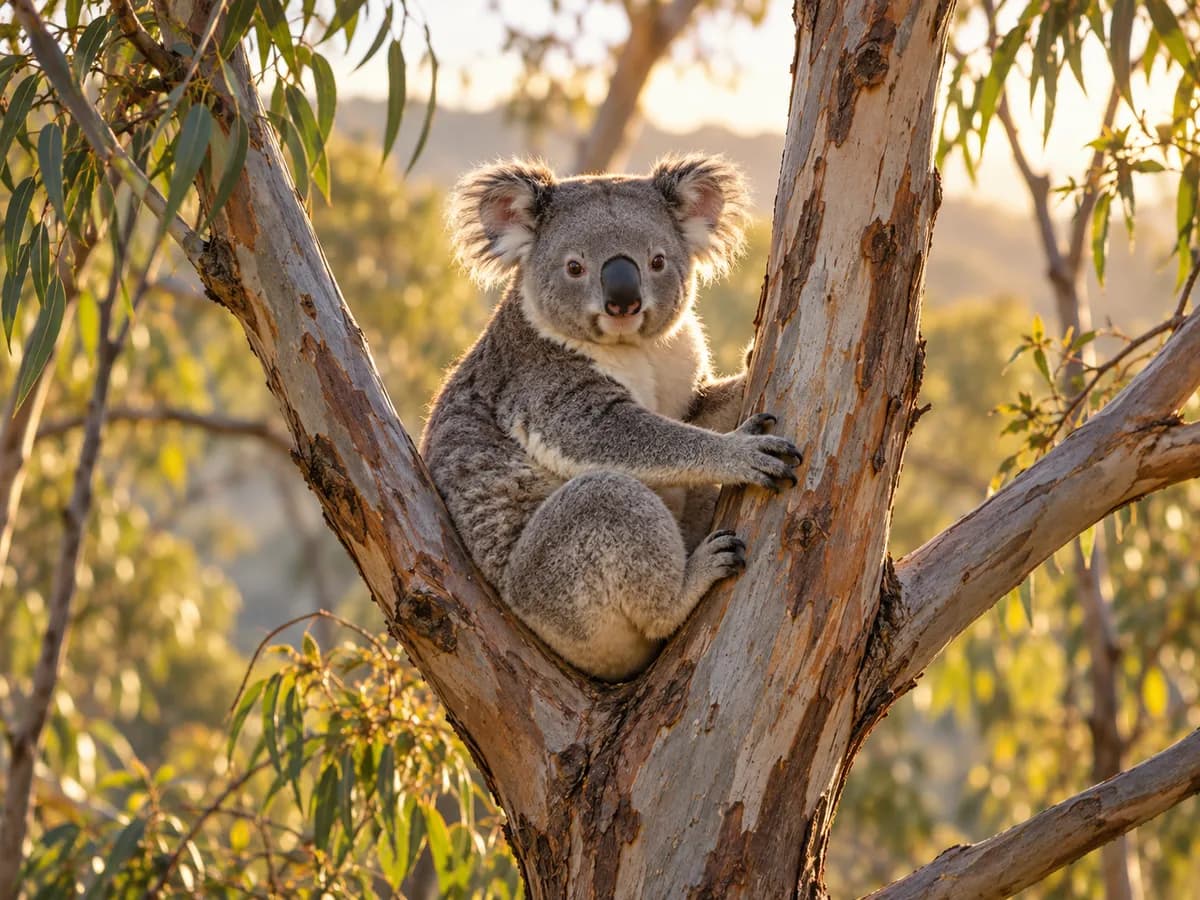
The koala, which spends much of the day sleeping in eucalyptus trees, is a marsupial found only in Australia. Although often called a "bear", it is not related to bears.
- Lunghezza
- 60–85 cm
- Peso
- 4–14 kg
- Longevità in natura
- 10–15 anni
- Stato di conservazione (IUCN)
- Vulnerabile (VU)
Valori indicativi per gli adulti; variano in base a sesso, sottospecie e popolazione.
In breve
I dati principali su Koala.
- Where does it live?Koalas live only in eastern and south-eastern Australia, in woodlands with eucalyptus trees.
- What does it eat?It feeds almost exclusively on eucalyptus leaves and prefers only some of the hundreds of eucalyptus species.
- Behaviour and social lifeKoalas mostly live alone and use a home range made up of their own trees.
- JoeysAfter a pregnancy of about 35 days, the female gives birth to a single joey the size of a jelly bean.
Approfondimento
In breve
- The koala is not a bear but a marsupial, like the kangaroo.
- It feeds almost only on eucalyptus leaves.
- It may rest 18–22 hours a day to save energy.
- Its joey grows for months in its mother's pouch.
- The IUCN lists it as Vulnerable; habitat loss, bushfires and disease are the main threats.
The koala (Phascolarctos cinereus) is a tree-dwelling marsupial known for its round ears and large nose. Although it is often called a "koala bear", it is not related to bears; it belongs to the same group as kangaroos and wombats.
Where does it live?
Koalas live only in eastern and south-eastern Australia, in woodlands with eucalyptus trees.
What does it eat?
It feeds almost exclusively on eucalyptus leaves and prefers only some of the hundreds of eucalyptus species. The leaves are fibrous, low in nutrients and toxic to many animals; koalas have a specialised digestive system that can cope with them. They also get most of their water from the leaves.
Behaviour and social life
Koalas mostly live alone and use a home range made up of their own trees. Because of their low-energy diet, they spend most of the day sleeping or resting in tree forks. Males make deep bellows that can be heard from far away, especially in the breeding season.
Joeys
After a pregnancy of about 35 days, the female gives birth to a single joey the size of a jelly bean. The joey grows inside the pouch for about six months and then rides on its mother's back for a while.
Conservation status
The koala is listed as Vulnerable (VU) on the IUCN Red List. Habitat loss from land clearing, bushfires, drought, dog attacks, vehicle strikes and diseases such as chlamydia are the main threats. In some Australian states koalas have been listed as endangered.
Fun facts
- Koala fingerprints are surprisingly similar to human fingerprints.
- Young koalas eat a special dropping produced by their mother to acquire the microbes that help digest eucalyptus.
- The name "koala" is thought to come from an Aboriginal Australian language.
Animali simili
Altri animali dello stesso gruppo.
Rispetto per la natura, domani più forti
Proteggere la fauna selvatica è responsabilità di tutti.
Se trovi un animale selvatico ferito o un cucciolo, non toccarlo e avvisa l'ente locale per la tutela della natura. Più conoscenza, più consapevolezza.
- Rispetta gli habitat naturali
- Osserva gli animali da lontano
- Non lasciare rifiuti nella natura
- Sostieni un futuro sostenibile