
Chimpanzees
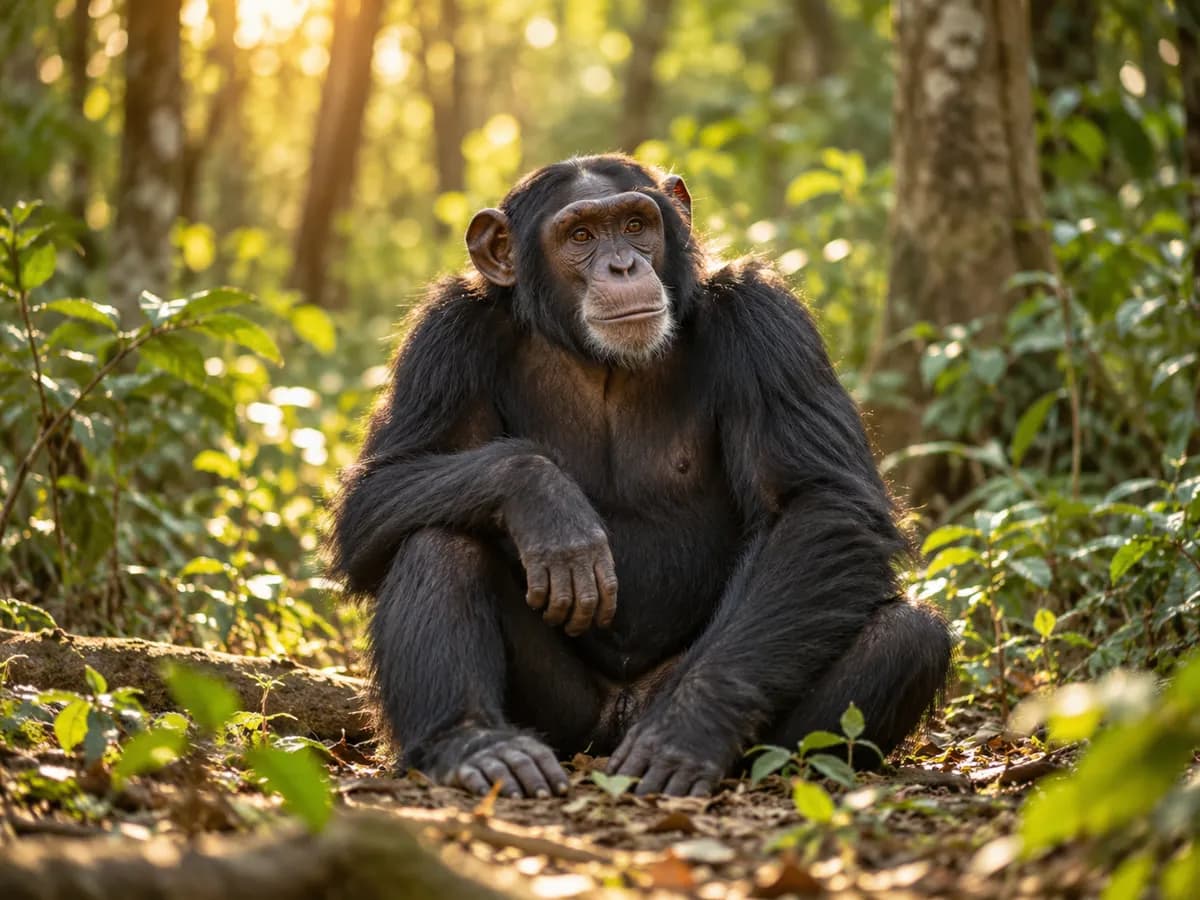
One of humanity's closest living relatives, the chimpanzee is known for its tool use, complex society and ability to learn. It lives in Africa's forests and is endangered.
- Altezza
- 1–1,5 m
- Peso
- 30–70 kg
- Longevità in natura
- 30–50 anni
- Stato di conservazione (IUCN)
- In pericolo (EN)
Valori indicativi per gli adulti; variano in base a sesso, sottospecie e popolazione.
In breve
I dati principali su Scimpanzé.
- Where does it live?It lives in the rainforests, wooded savannas and montane forests of West and Central Africa, in fragmented populations across an area stretching from…
- What does it eat?It is an omnivore whose diet is mostly fruit.
- Behaviour and social lifeChimpanzees live in communities of dozens of individuals, but members split into smaller parties during the day and later rejoin.
- YoungPregnancy lasts about eight months and usually a single infant is born.
Approfondimento
In breve
- Together with bonobos, chimpanzees are humans' closest living relatives.
- They use tools such as twigs to fish for termites and stones to crack nuts.
- They live in communities of dozens of individuals.
- Different communities can develop different behavioural "traditions".
- The IUCN lists them as Endangered; habitat loss, hunting and disease are the main threats.
The chimpanzee (Pan troglodytes) is an intelligent great ape that shares a common ancestor with humans. Along with the bonobo, it is considered our closest living relative. It communicates richly with facial expressions, calls and gestures.
Where does it live?
It lives in the rainforests, wooded savannas and montane forests of West and Central Africa, in fragmented populations across an area stretching from Guinea to Tanzania.
What does it eat?
It is an omnivore whose diet is mostly fruit. It also eats leaves, seeds, flowers and insects. Some communities hunt small mammals such as monkeys in groups.
Behaviour and social life
Chimpanzees live in communities of dozens of individuals, but members split into smaller parties during the day and later rejoin. Communities have a hierarchy among males. Grooming each other is an important way to strengthen social bonds. Chimpanzees use tools: twigs to fish termites out of mounds, stones to crack nuts and leaves to soak up water. These skills differ from community to community and are learned by the young through observation.
Young
Pregnancy lasts about eight months and usually a single infant is born. It nurses for several years and stays with its mother for many years.
Conservation status
The chimpanzee is listed as Endangered (EN) on the IUCN Red List. Deforestation, mining, hunting for bushmeat, the illegal pet trade and diseases that can spread from humans are the main threats.
Fun facts
- Jane Goodall's observations in Tanzania showed the world that chimpanzees make and use tools.
- Chimpanzees can recognise themselves in a mirror.
- Some communities perform dramatic displays, called "rain dances", when rain begins.
Animali simili
Altri animali dello stesso gruppo.
Rispetto per la natura, domani più forti
Proteggere la fauna selvatica è responsabilità di tutti.
Se trovi un animale selvatico ferito o un cucciolo, non toccarlo e avvisa l'ente locale per la tutela della natura. Più conoscenza, più consapevolezza.
- Rispetta gli habitat naturali
- Osserva gli animali da lontano
- Non lasciare rifiuti nella natura
- Sostieni un futuro sostenibile