

Great white sharks
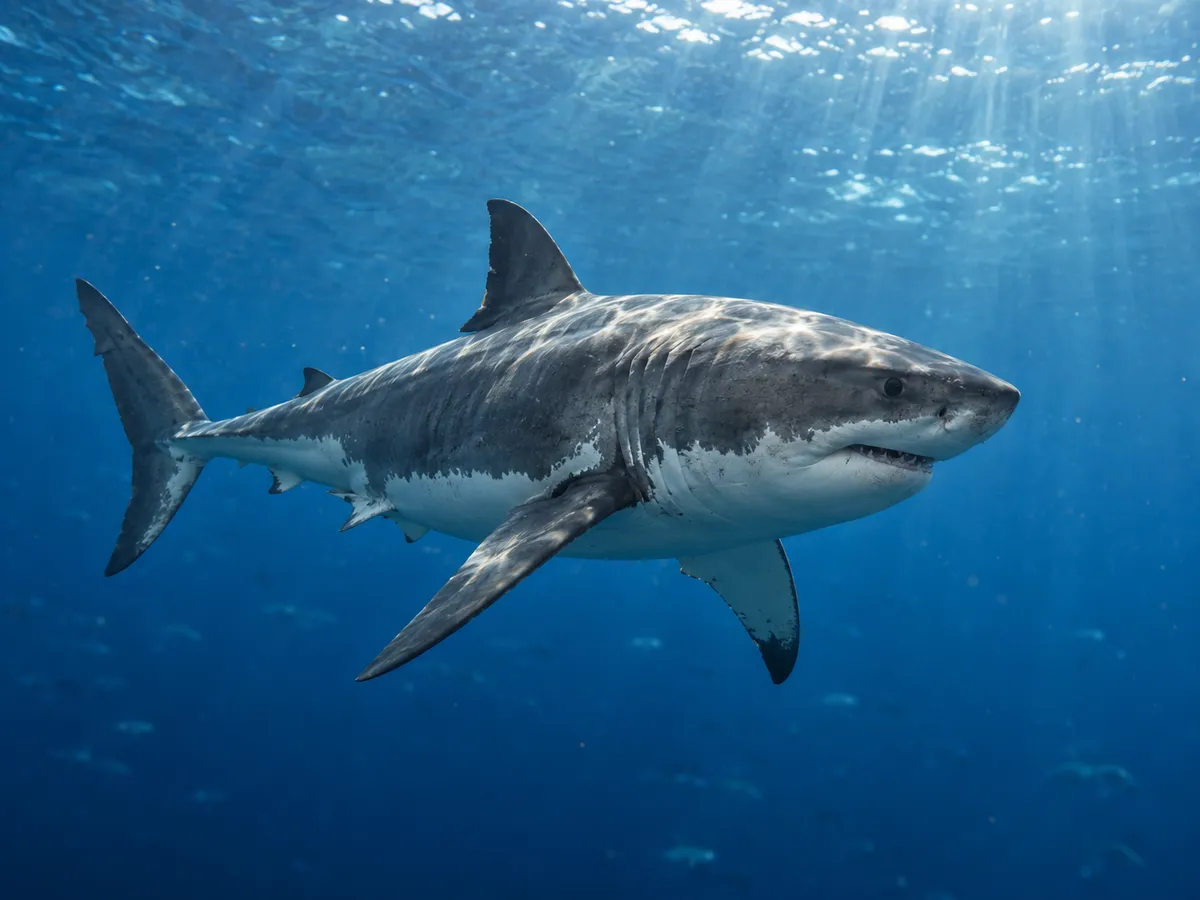
The ocean's most famous predator, the great white shark is known for its powerful senses and impressive size. Despite its frightening film image, attacks on people are extremely rare.
- Lunghezza
- 3,4–6,1 m
- Peso
- 0,5–1,9 t
- Longevità in natura
- 50–70 anni
- Stato di conservazione (IUCN)
- Vulnerabile (VU)
Valori indicativi per gli adulti; variano in base a sesso, sottospecie e popolazione.
In breve
I dati principali su Squali bianchi.
Approfondimento
In breve
- The great white is one of the world's largest predatory fish.
- Its main prey are seals, sea lions and large fish.
- Females are larger than males.
- It can migrate thousands of kilometres across oceans.
- The IUCN lists it as Vulnerable; overfishing and bycatch are the biggest threats.
The great white shark (Carcharodon carcharias) is a large shark with a dark grey back and a white belly. This two-tone colouring helps it blend with the dark water when seen from above and with the bright surface when seen from below.
Where does it live?
It is found worldwide in temperate and cool coastal waters. South Africa, Australia, California and Mexico are among the best-known areas. It has also been recorded in the Mediterranean, where it is rare.
What does it eat?
Young great whites mostly eat fish and rays. Adults also hunt marine mammals such as seals and sea lions and may feed on whale carcasses. They usually approach prey from below with a fast rush.
Behaviour and social life
Great whites mostly hunt alone. Satellite tagging has shown that some individuals migrate thousands of kilometres between oceans. A keen sense of smell that detects tiny amounts of blood and special sense organs that feel electric fields in the water help them find prey.
Young
Females do not lay eggs; the pups develop inside the mother and are independent at birth. Great whites mature late and have few young, so their populations recover slowly.
Conservation status
The great white is listed as Vulnerable (VU) on the IUCN Red List. Targeted fishing, entanglement in nets set for other fish (bycatch) and the fin trade are the main threats. It is legally protected in many countries.
Fun facts
- Sharks replace their teeth throughout life; a lost tooth is replaced by a new one.
- Humans are not natural prey; most rare bites are thought to be cases of mistaken identity.
- Some individuals are estimated to live for around 70 years.
Animali simili
Altri animali dello stesso gruppo.
Rispetto per la natura, domani più forti
Proteggere la fauna selvatica è responsabilità di tutti.
Se trovi un animale selvatico ferito o un cucciolo, non toccarlo e avvisa l'ente locale per la tutela della natura. Più conoscenza, più consapevolezza.
- Rispetta gli habitat naturali
- Osserva gli animali da lontano
- Non lasciare rifiuti nella natura
- Sostieni un futuro sostenibile