

Ostriches
The largest living bird, the ostrich cannot fly but runs very fast on its powerful legs. It lives in Africa's savannas and semi-deserts and lays the largest egg of any bird.
- Altura
- 2,1–2,8 m
- Peso
- 63–145 kg
- Esperanza de vida en libertad
- 30–40 años
- Estado de conservación (UICN)
- Preocupación menor (LC)
Las cifras son aproximadas para adultos y varían según el sexo, la subespecie y la población.
De un vistazo
Los datos clave sobre Avestruces.
- Where does it live?It lives in Africa's savannas, open grasslands and semi-deserts.
- What does it eat?Most of its diet is plants such as grass, leaves, seeds and flowers; it sometimes eats insects and small animals.
- Behaviour and social lifeOstriches live in small groups and often graze alongside zebras and antelopes.
- ChicksIn the breeding season a male and a dominant female use a shared nest in which several other females also lay eggs.
En detalle
En resumen
- The ostrich is the largest and heaviest living bird.
- It cannot fly, but it is the fastest running bird on land.
- Each foot has only two toes.
- Its egg is the largest of any living bird.
- The IUCN lists it as Least Concern.
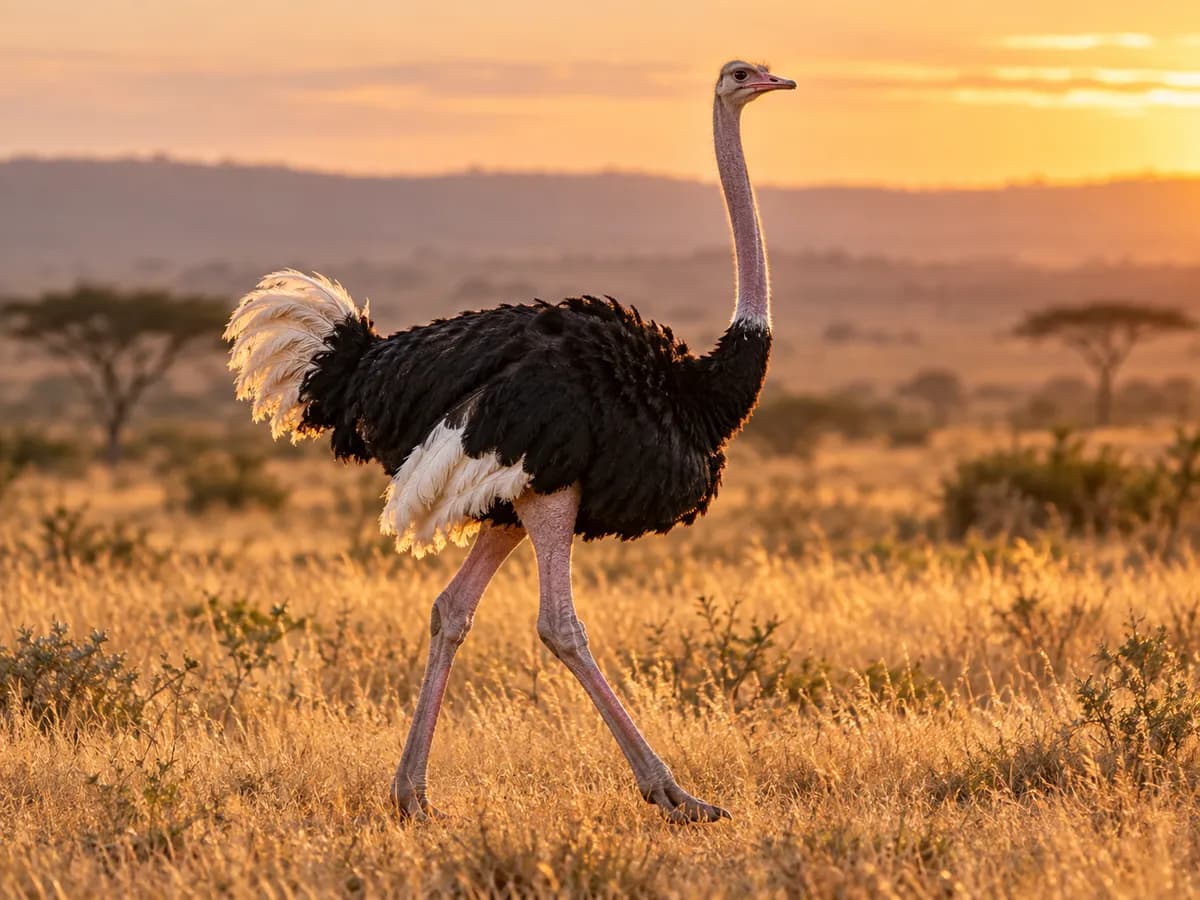
The ostrich (Struthio camelus) can stand more than 2.5 metres tall and is the largest living bird. It is easy to recognise by its long neck and legs, large eyes and black (males) or grey-brown (females) plumage. It has wings, but they are used for balance, display and shading chicks rather than flying.
Where does it live?
It lives in Africa's savannas, open grasslands and semi-deserts. Historically a subspecies also lived on the Arabian Peninsula; it died out in the 20th century.
What does it eat?
Most of its diet is plants such as grass, leaves, seeds and flowers; it sometimes eats insects and small animals. It swallows small stones to help with digestion. It can get much of its water from plants.
Behaviour and social life
Ostriches live in small groups and often graze alongside zebras and antelopes. When in danger they run away fast, reaching more than 60–70 kilometres per hour in short bursts. Their powerful kicks are an effective defence against predators.
Chicks
In the breeding season a male and a dominant female use a shared nest in which several other females also lay eggs. The male usually incubates at night and the dominant female by day. Chicks can walk soon after hatching.
Conservation status
The ostrich is listed as Least Concern (LC) on the IUCN Red List. Some North African populations, however, have declined sharply because of hunting and habitat loss. The Somali ostrich is treated as a separate species.
Fun facts
- An ostrich's eyes are larger than its brain.
- "Burying its head in the sand" is a myth; it lowers its head to turn its eggs or lies flat to hide from danger.
- One ostrich egg can equal about two dozen chicken eggs.
Animales similares
Otros animales del mismo grupo.

Respeto por la naturaleza, mañanas más fuertes
Proteger la fauna silvestre es responsabilidad de todos.
Si encuentras un animal silvestre herido o una cría, no lo toques y avisa a la autoridad local de protección de la naturaleza. Más conocimiento, más conciencia.
- Respeta los hábitats naturales
- Observa a los animales desde lejos
- No dejes basura en la naturaleza
- Apoya un futuro sostenible