
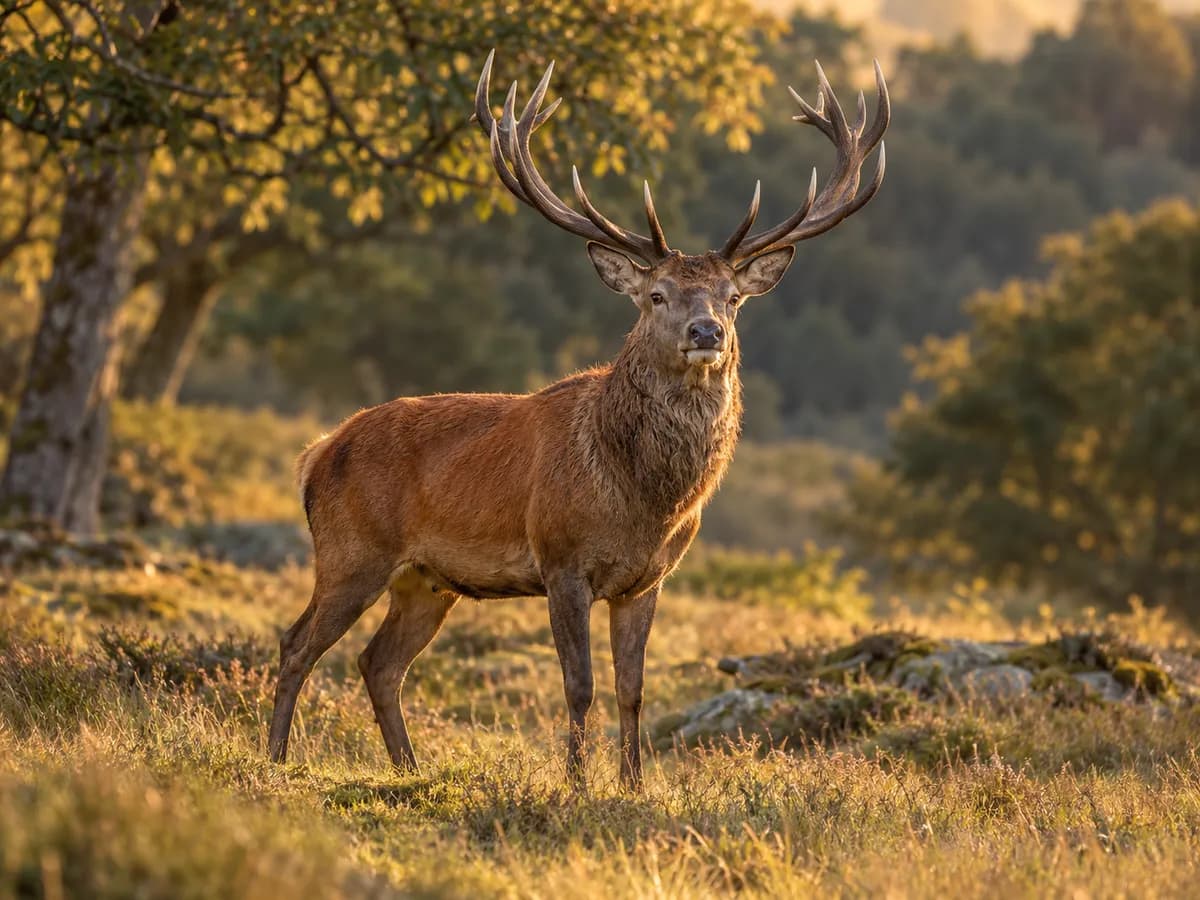
Red deer
Known for the impressive antlers of the stags and their powerful autumn roars, the red deer is one of Europe's largest deer. It also lives in the forests of northern Türkiye.
- Altura
- 1–1,3 m
- Peso
- 80–240 kg
- Esperanza de vida en libertad
- 12–15 años
- Estado de conservación (UICN)
- Preocupación menor (LC)
Las cifras son aproximadas para adultos y varían según el sexo, la subespecie y la población.
De un vistazo
Los datos clave sobre Ciervos rojos.
- Where does it live?It lives across most of Europe, in western and central Asia and in North Africa's Atlas Mountains.
- What does it eat?It is a herbivore that eats grass, leaves, shoots, bark, fruit and acorns.
- Behaviour and social lifeFemales and their young live in herds apart from the males for most of the year.
- CalvesIn late spring or early summer, the female usually has a single calf.
En detalle
En resumen
- The red deer is one of Europe's largest deer species.
- Stags shed their antlers and grow new ones every year.
- During the autumn rut, stags roar loudly.
- In Türkiye it is found in the forests of northern Anatolia and some other regions.
- The IUCN lists it as Least Concern globally.
The red deer (Cervus elaphus) is a large deer with a reddish-brown coat in summer and a darker, greyish-brown coat in winter. The branched antlers on the stags' heads fall off every spring and grow back over the summer.
Where does it live?
It lives across most of Europe, in western and central Asia and in North Africa's Atlas Mountains. It uses forests, woodland edges, mountain meadows and open ground. In Türkiye it is found especially in the forested mountains of northern Anatolia. People have introduced it to countries such as Argentina, New Zealand and Australia.
What does it eat?
It is a herbivore that eats grass, leaves, shoots, bark, fruit and acorns. In winter, when food is scarce, bark and twigs become more important.
Behaviour and social life
Females and their young live in herds apart from the males for most of the year. During the autumn rut, stags roar loudly to claim groups of females and fight each other with their antlers. How often and how powerfully a stag roars shows its condition to rivals and females.
Calves
In late spring or early summer, the female usually has a single calf. The white-spotted calf hides in tall grass for its first weeks, and its mother returns regularly to nurse it.
Conservation status
The red deer is listed as Least Concern (LC) globally on the IUCN Red List. Some regional populations, however, need protection because of habitat loss, illegal hunting and the isolation of small populations.
Fun facts
- Deer antlers are among the fastest-growing tissues in the animal kingdom.
- While growing, antlers are covered with furry skin called velvet.
- If you find a deer calf in the forest, do not touch it; its mother is usually nearby.
Animales similares
Otros animales del mismo grupo.
Respeto por la naturaleza, mañanas más fuertes
Proteger la fauna silvestre es responsabilidad de todos.
Si encuentras un animal silvestre herido o una cría, no lo toques y avisa a la autoridad local de protección de la naturaleza. Más conocimiento, más conciencia.
- Respeta los hábitats naturales
- Observa a los animales desde lejos
- No dejes basura en la naturaleza
- Apoya un futuro sostenible