

Plains zebras
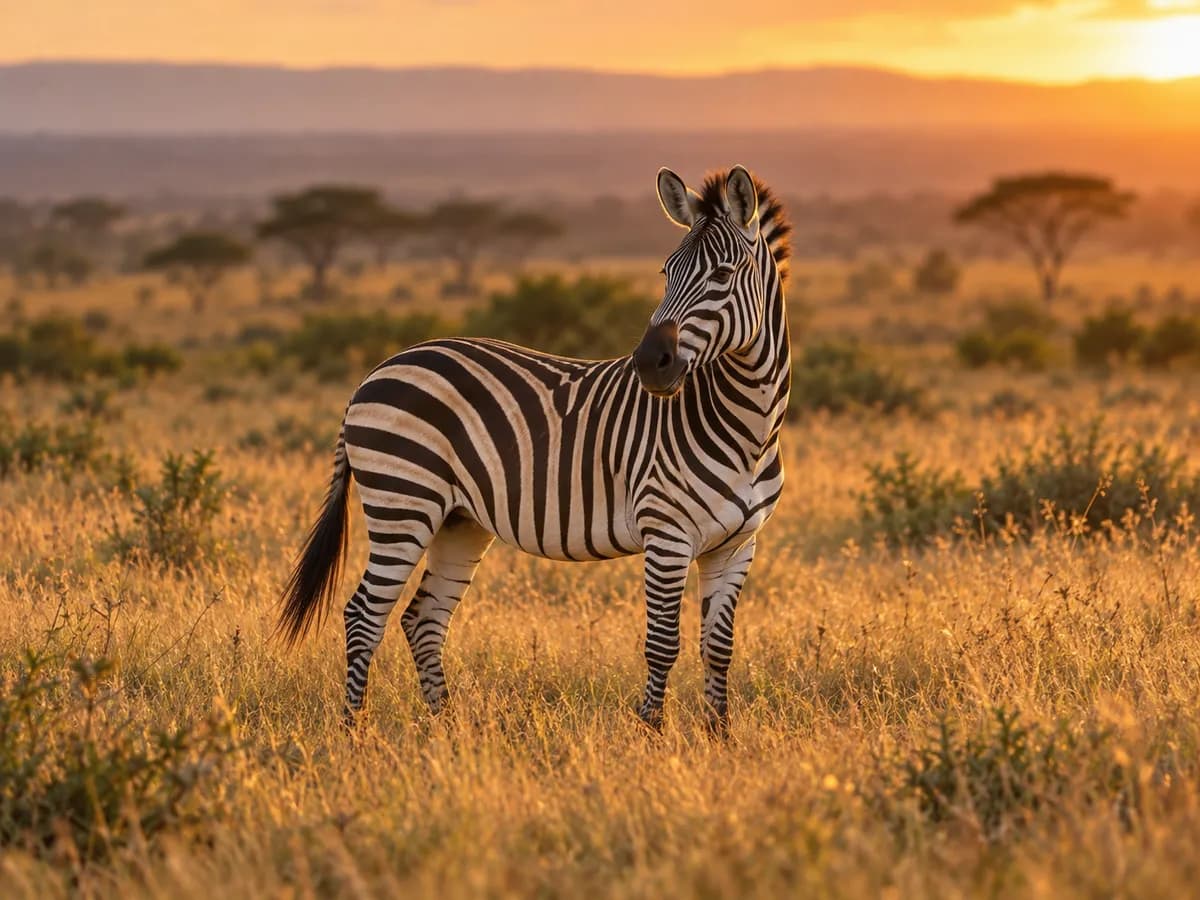
With its black-and-white stripes, the plains zebra is one of the savanna's best-known animals and lives in large herds. Every zebra's stripe pattern is unique.
- Altura
- 1,1–1,5 m
- Peso
- 175–390 kg
- Esperanza de vida en libertad
- 20–25 años
- Estado de conservación (UICN)
- Casi amenazado (NT)
Las cifras son aproximadas para adultos y varían según el sexo, la subespecie y la población.
De un vistazo
Los datos clave sobre Cebras.
- Where does it live?It lives in the savannas and grasslands of eastern and southern Africa.
- What does it eat?It is a herbivore that mostly eats grass.
- Behaviour and social lifeZebras live in stable family groups of one stallion, several mares and their young.
- FoalsPregnancy lasts about a year and usually a single foal is born.
En detalle
En resumen
- The plains zebra is the most common zebra species.
- Every zebra's stripe pattern is unique.
- Family groups consist of a stallion, several mares and their foals.
- It forms huge herds with antelopes during seasonal migrations.
- The IUCN lists it as Near Threatened; habitat loss and hunting are the main threats.
The plains zebra (Equus quagga) is a herbivore related to horses and known for its black-and-white stripes. It is the most widespread of the three zebra species. The purpose of the stripes has long been debated; research offers strong evidence that they make it harder for biting flies to land.
Where does it live?
It lives in the savannas and grasslands of eastern and southern Africa. Because it needs water regularly, it does not stray far from water sources.
What does it eat?
It is a herbivore that mostly eats grass. Because it can eat tough, tall grass, it helps create the shorter grass that more selective grazers prefer.
Behaviour and social life
Zebras live in stable family groups of one stallion, several mares and their young. These family groups can come together in herds of thousands. In the Serengeti–Mara region they join the great migrations that follow the rains together with wildebeest.
Foals
Pregnancy lasts about a year and usually a single foal is born. The foal can stand and walk soon after birth. In the first days the mother keeps other zebras away so the foal learns her pattern and scent.
Conservation status
The plains zebra is listed as Near Threatened (NT) on the IUCN Red List. Habitat loss to farming and settlement, competition with livestock for grazing and water, and hunting for meat and skins are the main threats.
Fun facts
- A zebra's skin is dark; the white stripes come from its hair.
- A herd full of striped zebras may make it harder for predators to focus on a single target.
- Zebras have never been widely domesticated the way horses were.
Animales similares
Otros animales del mismo grupo.

Respeto por la naturaleza, mañanas más fuertes
Proteger la fauna silvestre es responsabilidad de todos.
Si encuentras un animal silvestre herido o una cría, no lo toques y avisa a la autoridad local de protección de la naturaleza. Más conocimiento, más conciencia.
- Respeta los hábitats naturales
- Observa a los animales desde lejos
- No dejes basura en la naturaleza
- Apoya un futuro sostenible