

Greater flamingos
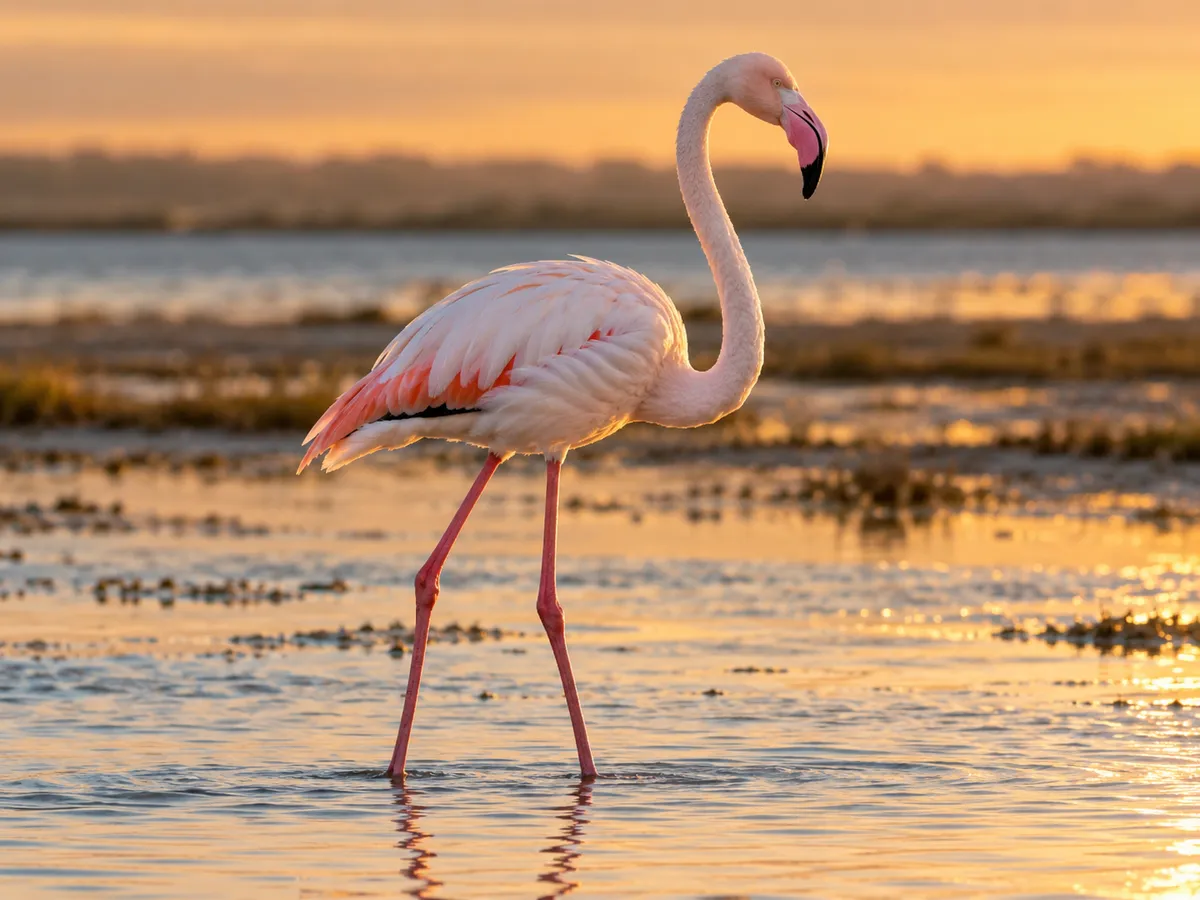
With pink feathers, long legs and a bent beak, the greater flamingo is the most striking bird of shallow salt lakes. Türkiye's Lake Tuz is one of the world's important flamingo breeding sites.
- Altura
- 1,1–1,5 m
- Peso
- 2–4 kg
- Esperanza de vida en libertad
- 30–40 años
- Estado de conservación (UICN)
- Preocupación menor (LC)
Las cifras son aproximadas para adultos y varían según el sexo, la subespecie y la población.
De un vistazo
Los datos clave sobre Flamencos comunes.
- Where does it live?It lives in shallow salt lakes, lagoons and deltas in Africa, southern Europe, the Middle East and South Asia.
- What does it eat?It puts its head upside down in the water and uses sieve-like structures in its beak to filter small crustaceans, algae and other tiny organisms.
- Behaviour and social lifeFlamingos are very social birds that live in colonies of thousands or even tens of thousands.
- ChicksPairs lay a single egg on a cone-shaped nest built of mud.
En detalle
En resumen
- The greater flamingo is the largest and most widespread flamingo species.
- It gets its pink colour from pigments in the small organisms it eats.
- It feeds with its head upside down, filtering water through its beak.
- In Türkiye, Lake Tuz and the Gediz Delta are important sites.
- The IUCN lists it as Least Concern.
The greater flamingo (Phoenicopterus roseus) is the largest and most widespread of the living flamingos. It is easy to recognise by its long neck and legs, pink-and-white feathers and beak that bends downward in the middle.
Where does it live?
It lives in shallow salt lakes, lagoons and deltas in Africa, southern Europe, the Middle East and South Asia. In Türkiye, Lake Tuz is one of the world's most important flamingo breeding sites; the Gediz Delta and other wetlands are also places where flamingos are often seen.
What does it eat?
It puts its head upside down in the water and uses sieve-like structures in its beak to filter small crustaceans, algae and other tiny organisms. The pink colour of its feathers comes from pigments called carotenoids in this food.
Behaviour and social life
Flamingos are very social birds that live in colonies of thousands or even tens of thousands. They find mates through synchronised group "dances". They often rest standing on one leg.
Chicks
Pairs lay a single egg on a cone-shaped nest built of mud. Both parents incubate and feed the chick with a special secretion called crop milk. Chicks are born with grey down; the pink colour develops over the years.
Conservation status
The greater flamingo is listed as Least Concern (LC) on the IUCN Red List. However, the small number of breeding sites, drained wetlands, changing water levels and disturbance can affect some regional populations.
Fun facts
- Flamingos use their beaks upside down while feeding.
- Standing on one leg is thought to save energy and body heat.
- Young flamingos can stay grey for years before their feathers turn pink.
Animales similares
Otros animales del mismo grupo.

Respeto por la naturaleza, mañanas más fuertes
Proteger la fauna silvestre es responsabilidad de todos.
Si encuentras un animal silvestre herido o una cría, no lo toques y avisa a la autoridad local de protección de la naturaleza. Más conocimiento, más conciencia.
- Respeta los hábitats naturales
- Observa a los animales desde lejos
- No dejes basura en la naturaleza
- Apoya un futuro sostenible