

Hedgehogs
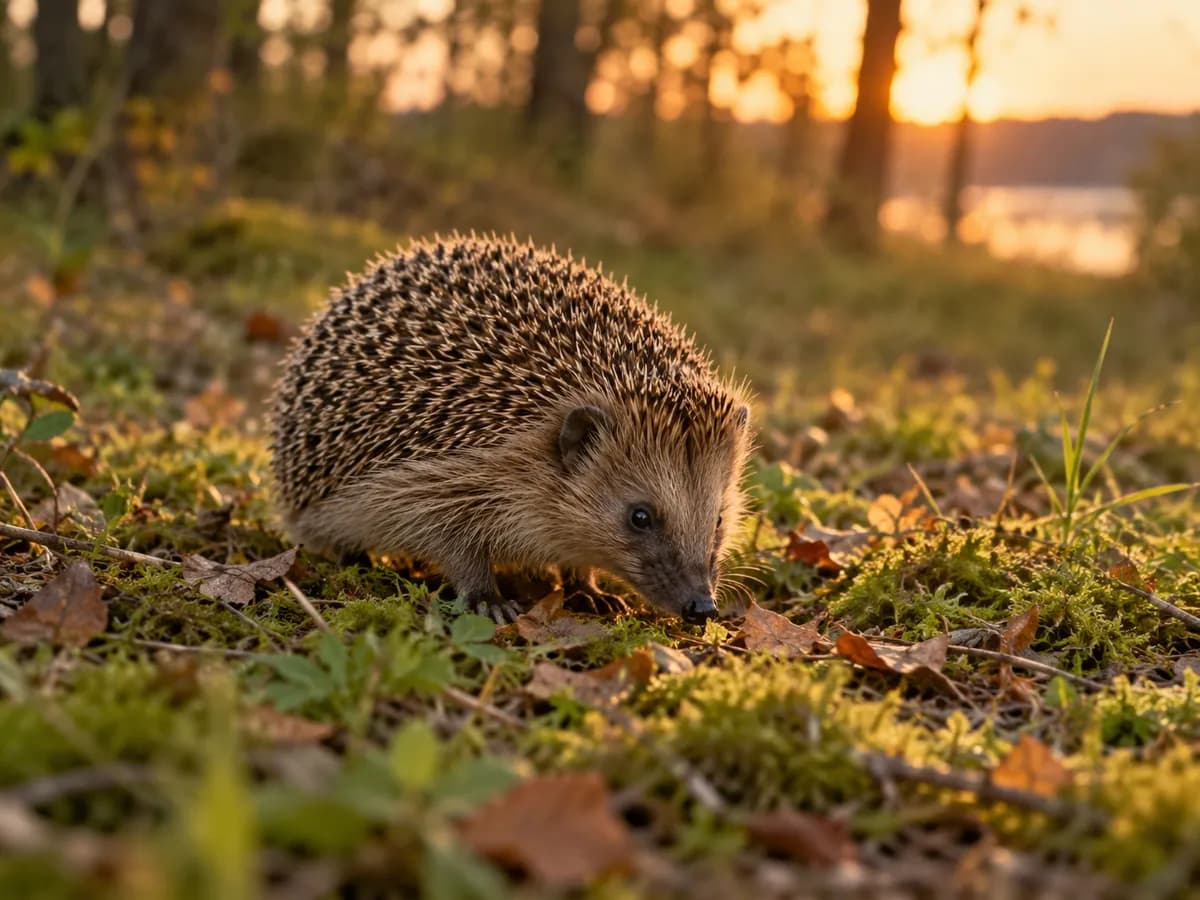
Known for the thousands of spines on its back, the European hedgehog is the nocturnal wanderer of gardens and hedgerows. It helps gardens by eating insects and snails, but its numbers have fallen in recent years.
- Longitud
- 20–30 cm
- Peso
- 0,5–1,5 kg
- Esperanza de vida en libertad
- 2–5 años
- Estado de conservación (UICN)
- Casi amenazado (NT)
Las cifras son aproximadas para adultos y varían según el sexo, la subespecie y la población.
De un vistazo
Los datos clave sobre Erizos europeos.
- Where does it live?It lives in western and northern Europe, in woodland edges, hedgerows, meadows, farmland and especially gardens and parks in towns.
- What does it eat?It is an insectivore that eats beetles, worms, snails, slugs and caterpillars.
- Behaviour and social lifeHedgehogs live alone and are active at night.
- YoungIn summer, the female usually has 4–5 young.
En detalle
En resumen
- The European hedgehog carries thousands of spines on its back.
- When in danger it rolls into a ball and is protected by its spines.
- It eats insects, worms, snails and grubs.
- It spends the cold winter months hibernating.
- In 2024 the IUCN moved the European hedgehog to Near Threatened.
The European hedgehog (Erinaceus europaeus) is a small mammal known for the thousands of stiff spines covering its back and sides. The spines are actually hardened hairs. In Türkiye, the very similar white-breasted hedgehogs (Erinaceus concolor and Erinaceus roumanicus) are the common species, with largely the same way of life. The quick facts on this page refer to the European hedgehog.
Where does it live?
It lives in western and northern Europe, in woodland edges, hedgerows, meadows, farmland and especially gardens and parks in towns. People introduced it to New Zealand.
What does it eat?
It is an insectivore that eats beetles, worms, snails, slugs and caterpillars. When it gets the chance, it may also eat bird eggs, fruit and carrion.
Behaviour and social life
Hedgehogs live alone and are active at night. They may walk several kilometres a night looking for food. When in danger they tense their muscles, roll into a ball and point their spines in every direction. In the cold months they hibernate in nests made of leaves and twigs.
Young
In summer, the female usually has 4–5 young. Hoglets are born with soft spines that harden quickly.
Conservation status
In 2024 the IUCN moved the European hedgehog from Least Concern to Near Threatened (NT). Habitat loss, gardens sealed off by fences, road accidents, pesticides and declining insect numbers are the main threats.
Fun facts
- An adult hedgehog has about 5,000–7,000 spines on its back.
- Hedgehogs cannot digest cow's milk; giving them milk and bread is harmful.
- Cutting a small gap in garden fences helps hedgehogs move between gardens.
Conviene saber
Los puntos más importantes.
- If you want to help a hedgehogIf you see a hedgehog in your garden, do not give it milk; you can leave clean water in a shallow dish. If you find an injured hedgehog or one out during the day, contact a local wildlife rescue centre or a veterinarian.
Animales similares
Otros animales del mismo grupo.


Respeto por la naturaleza, mañanas más fuertes
Proteger la fauna silvestre es responsabilidad de todos.
Si encuentras un animal silvestre herido o una cría, no lo toques y avisa a la autoridad local de protección de la naturaleza. Más conocimiento, más conciencia.
- Respeta los hábitats naturales
- Observa a los animales desde lejos
- No dejes basura en la naturaleza
- Apoya un futuro sostenible