

Common chameleons
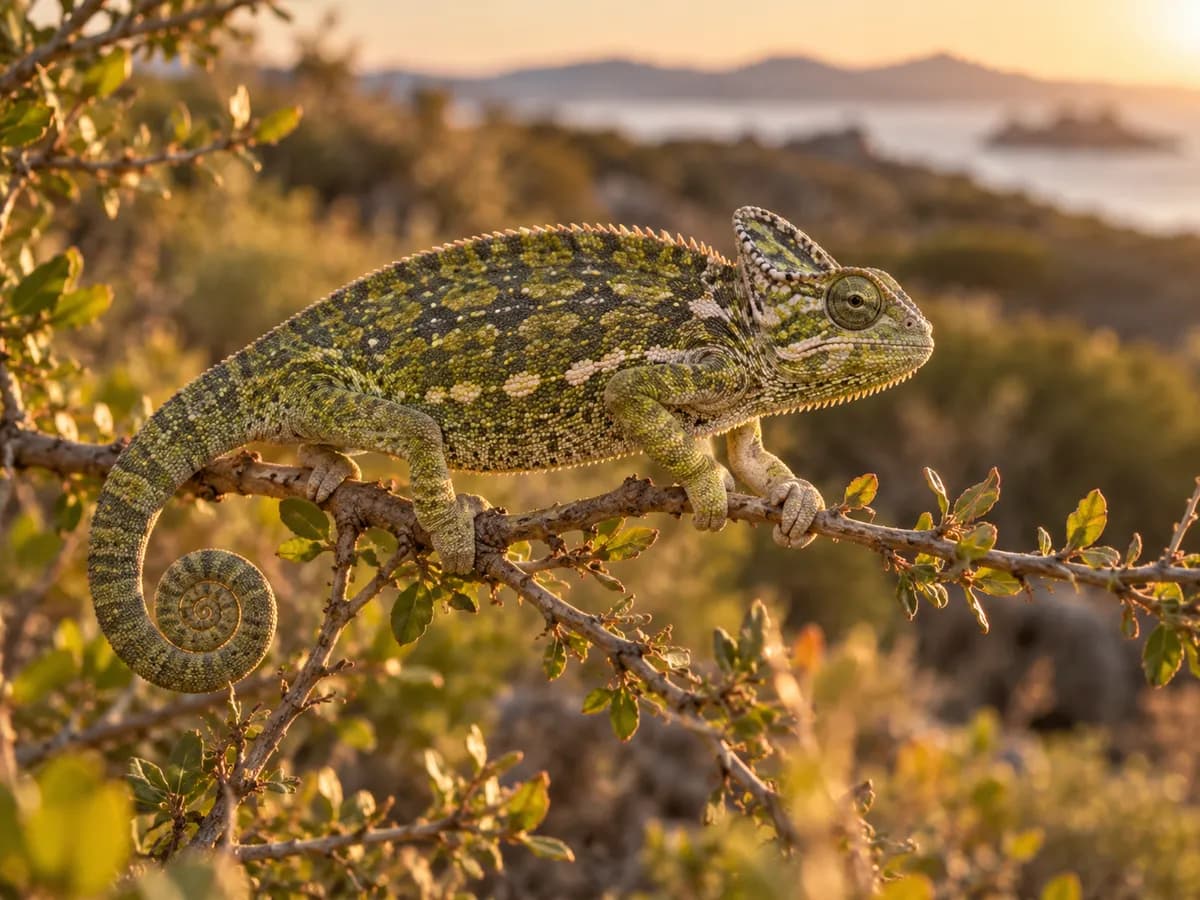
With eyes that turn independently, a long sticky tongue and the ability to change colour, the common chameleon is a fascinating reptile that also lives on Türkiye's southern coasts.
- Comprimento
- 20–35 cm
- Estado de conservação (UICN)
- Pouco preocupante (LC)
- Alimentação
- Insetívoro
- Classe
- Réptil
Valores aproximados para adultos; variam com o sexo, a subespécie e a população.
Num relance
Os factos principais sobre Camaleões-comuns.
- Where does it live?It lives in parts of southern Europe, North Africa and the Middle East.
- What does it eat?It is an insectivore that eats grasshoppers, flies, butterflies and other insects.
- Behaviour and social lifeChameleons live alone and move slowly with a swaying gait that is thought to imitate a leaf moving in the wind.
- YoungIn autumn, the female lays her eggs in a hole she digs in the ground.
Em detalhe
Em resumo
- The common chameleon is the only widespread chameleon around the Mediterranean.
- In Türkiye it lives in parts of the Aegean and Mediterranean coasts.
- It can move its eyes independently of each other.
- It catches prey with a sticky tongue that can extend almost its body length.
- It changes colour not only to hide but also to regulate heat and communicate.
The common chameleon (Chamaeleo chamaeleon) is a reptile adapted to life in trees and shrubs, with a flattened body, a gripping tail and pincer-like feet. Its colour can change from green to brown and yellow.
Where does it live?
It lives in parts of southern Europe, North Africa and the Middle East. In Türkiye it is found in parts of the Aegean and Mediterranean coasts, in scrub, gardens and coastal vegetation.
What does it eat?
It is an insectivore that eats grasshoppers, flies, butterflies and other insects. It watches patiently from one spot and catches prey by shooting out its long, sticky-tipped tongue very quickly.
Behaviour and social life
Chameleons live alone and move slowly with a swaying gait that is thought to imitate a leaf moving in the wind. Because their eyes move independently, they can look in two directions at once. Colour change depends on temperature, light, mood and communication with other chameleons.
Young
In autumn, the female lays her eggs in a hole she digs in the ground. The young hatch months later and are independent right away.
Conservation status
The common chameleon is listed as Least Concern (LC) on the IUCN Red List. However, coastal development, garden pesticides, traffic and illegal collection threaten some local populations. It is protected in Türkiye and many other countries.
Fun facts
- A chameleon's tongue shoots out in the blink of an eye.
- Colour change happens when the arrangement of microscopic crystals in special skin cells changes.
- Chameleons seen in the wild should be left where they are; they are very hard to keep at home.
Animais semelhantes
Outros animais do mesmo grupo.
Respeito pela natureza, amanhãs mais fortes
Proteger a vida selvagem é responsabilidade de todos.
Se encontrar um animal selvagem ferido ou uma cria, não lhe toque e avise a autoridade local de conservação da natureza. Mais conhecimento, mais consciência.
- Respeite os habitats naturais
- Observe os animais à distância
- Não deixe lixo na natureza
- Apoie um futuro sustentável