
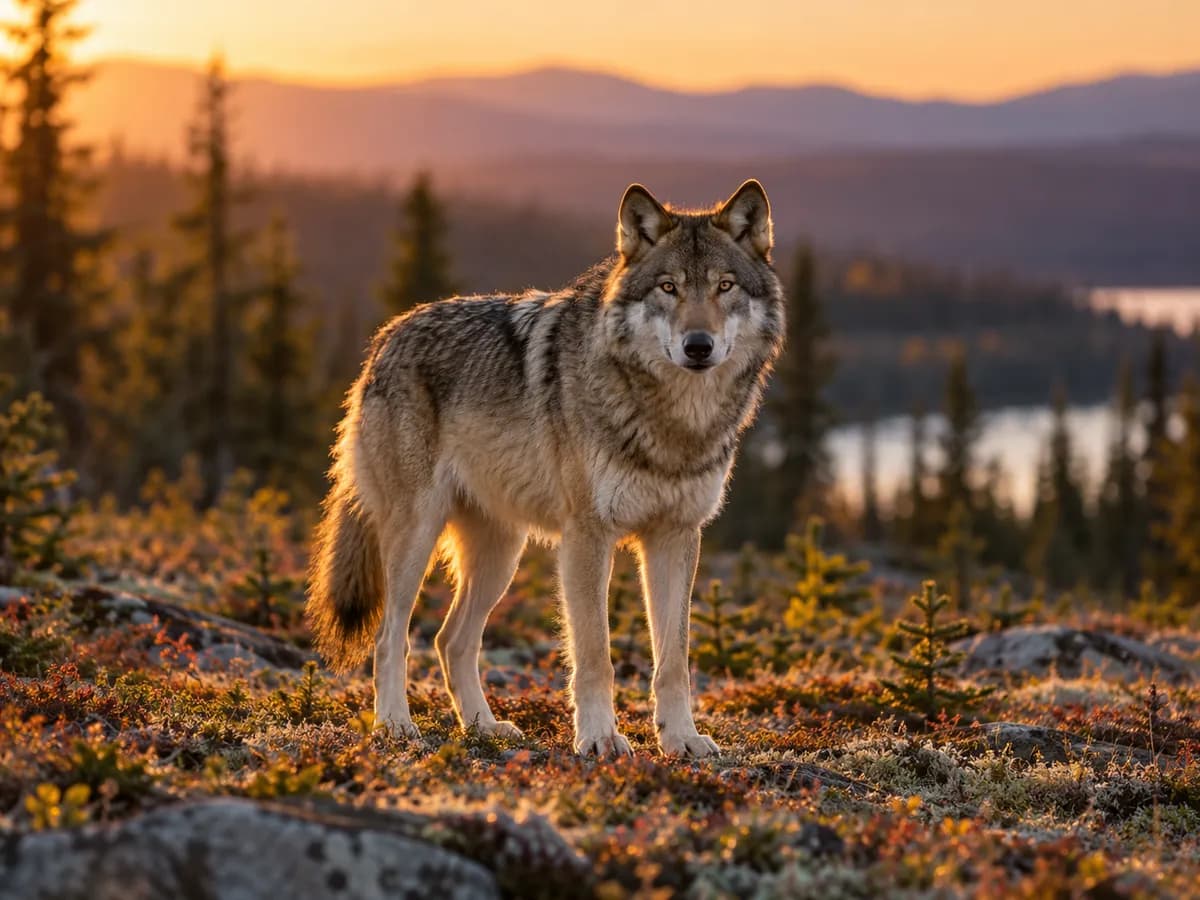
Wolves
The ancestor of the domestic dog, the wolf is a highly intelligent predator that lives with strong family bonds. It lives across much of the Northern Hemisphere, including Türkiye.
- Comprimento
- 1–1,6 m
- Peso
- 25–70 kg
- Longevidade na natureza
- 6–13 anos
- Estado de conservação (UICN)
- Pouco preocupante (LC)
Valores aproximados para adultos; variam com o sexo, a subespécie e a população.
Num relance
Os factos principais sobre Lobos.
- Where does it live?Wolves live in the forests, mountains, steppes and tundra of North America, Europe and Asia.
- What does it eat?Wolves are carnivores that hunt herbivores such as deer, roe deer, wild boar and wild goats.
- Behaviour and social lifeA wolf pack is usually a family: a breeding pair and their offspring of different ages.
- PupsIn spring, the female usually gives birth to 4–6 pups in a den.
Em detalhe
Em resumo
- Wolves usually live in packs made up of a breeding pair and their offspring.
- The domestic dog shares a common ancestor with the wolf.
- Howling helps pack members find each other and announce their territory.
- By hunting herbivores such as deer and wild boar, wolves help keep ecosystems in balance.
- The IUCN lists the wolf as Least Concern globally.
The wolf (Canis lupus) is the largest wild member of the dog family. Today's domestic dogs are thought to share a common ancestor with the wolf. Coat colour varies by region, from grey and brown to black and almost white.
Where does it live?
Wolves live in the forests, mountains, steppes and tundra of North America, Europe and Asia. In Türkiye they are found in many parts of Anatolia, especially in mountainous and forested areas. In recent years they have been spreading back into parts of Europe.
What does it eat?
Wolves are carnivores that hunt herbivores such as deer, roe deer, wild boar and wild goats. By cooperating as a pack, they can catch prey larger than themselves. Small mammals, carrion and sometimes fruit are also part of their diet.
Behaviour and social life
A wolf pack is usually a family: a breeding pair and their offspring of different ages. Young wolves leave when they mature to find their own mates and territories. Packs hold large territories and announce their borders to other packs by howling and scent marking.
Pups
In spring, the female usually gives birth to 4–6 pups in a den. Other pack members help feed and protect the pups.
Conservation status
The wolf is listed as Least Concern (LC) globally on the IUCN Red List, but some regional populations are small and under pressure. Conflict with people, illegal killing, road accidents and fragmented habitat are the main problems.
Fun facts
- Wolves are long-distance runners; they can cover dozens of kilometres a day while searching for prey.
- Howling is not "calling to the moon" but a way to communicate with the pack.
- By changing how prey animals behave, wolves can indirectly help vegetation recover.
Animais semelhantes
Outros animais do mesmo grupo.
Respeito pela natureza, amanhãs mais fortes
Proteger a vida selvagem é responsabilidade de todos.
Se encontrar um animal selvagem ferido ou uma cria, não lhe toque e avise a autoridade local de conservação da natureza. Mais conhecimento, mais consciência.
- Respeite os habitats naturais
- Observe os animais à distância
- Não deixe lixo na natureza
- Apoie um futuro sustentável