

Tigers
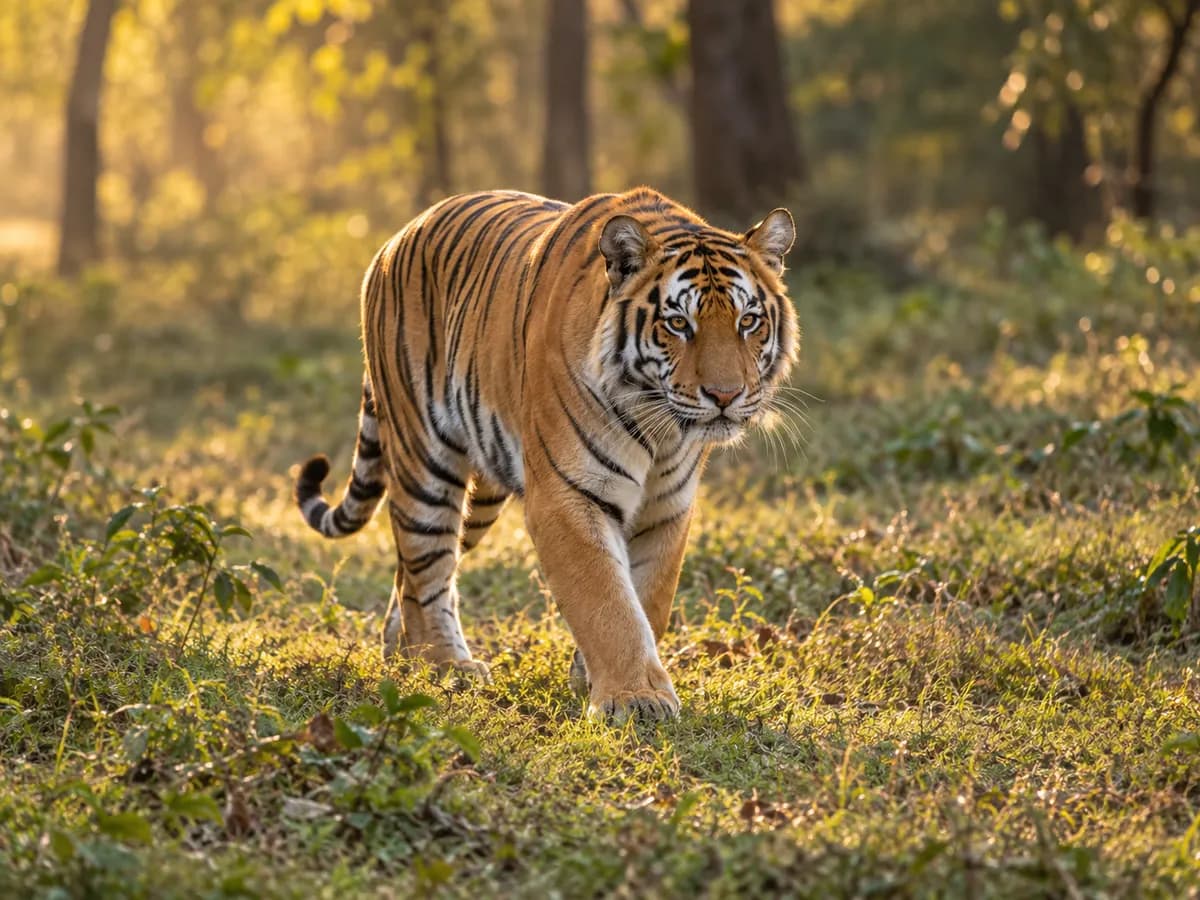
The largest of all cats, the tiger is known for its striped coat and solitary life. It lives in habitats from Asian forests to mangrove swamps, but it is endangered.
- Comprimento
- 1,4–2,8 m
- Peso
- 65–300 kg
- Longevidade na natureza
- 10–15 anos
- Estado de conservação (UICN)
- Em perigo (EN)
Valores aproximados para adultos; variam com o sexo, a subespécie e a população.
Num relance
Os factos principais sobre Tigres.
- Where does it live?Today tigers live only in Asia, including India, Nepal, Bangladesh, the Russian Far East, Southeast Asia and Sumatra.
- What does it eat?Tigers are carnivores that usually hunt large mammals such as deer, wild boar and wild cattle.
- Behaviour and social lifeApart from mothers with cubs, tigers live alone.
- CubsAfter a pregnancy of about three and a half months, a tigress usually has 2–4 cubs.
Em detalhe
Em resumo
- The tiger is the largest species in the cat family.
- Every tiger's stripe pattern is unique, like a fingerprint.
- Tigers live alone and hold large territories.
- They are strong swimmers and do not avoid water.
- The IUCN lists the tiger as Endangered; poaching and habitat loss are the main threats.
The tiger (Panthera tigris) is the largest member of the cat family. The dark stripes on its orange coat help it blend into the patterns of light and shadow in the forest. Each tiger's stripe pattern is unique, and researchers can identify individuals from them.
Where does it live?
Today tigers live only in Asia, including India, Nepal, Bangladesh, the Russian Far East, Southeast Asia and Sumatra. They adapt to a wide range of habitats, from tropical rainforests and temperate forests to tall grasslands and mangrove swamps. The Caspian tiger once lived in eastern Anatolia; that subspecies died out in the 20th century.
What does it eat?
Tigers are carnivores that usually hunt large mammals such as deer, wild boar and wild cattle. They stalk their prey from cover and attack with a short, powerful rush. One large kill can feed a tiger for several days.
Behaviour and social life
Apart from mothers with cubs, tigers live alone. Each tiger holds a large territory and marks its borders with scent and claw marks on tree trunks. They are mostly active at dusk and at night. Unlike most cats, tigers like water: they bathe to cool off on hot days and can swim across rivers.
Cubs
After a pregnancy of about three and a half months, a tigress usually has 2–4 cubs. The cubs stay with their mother for about two years and learn to hunt from her.
Conservation status
The tiger is listed as Endangered (EN) on the IUCN Red List. Poaching for skins and body parts, fragmented habitat and declining prey are the biggest threats. Thanks to conservation work in some countries, increases in wild tiger numbers have been reported in recent years.
Fun facts
- A tiger's skin is striped too, not just its fur.
- The white spots on the backs of its ears are thought to act as a "follow me" signal for cubs.
- Tigers can roar but cannot purr continuously like house cats.
Animais semelhantes
Outros animais do mesmo grupo.
Respeito pela natureza, amanhãs mais fortes
Proteger a vida selvagem é responsabilidade de todos.
Se encontrar um animal selvagem ferido ou uma cria, não lhe toque e avise a autoridade local de conservação da natureza. Mais conhecimento, mais consciência.
- Respeite os habitats naturais
- Observe os animais à distância
- Não deixe lixo na natureza
- Apoie um futuro sustentável