

African elephants
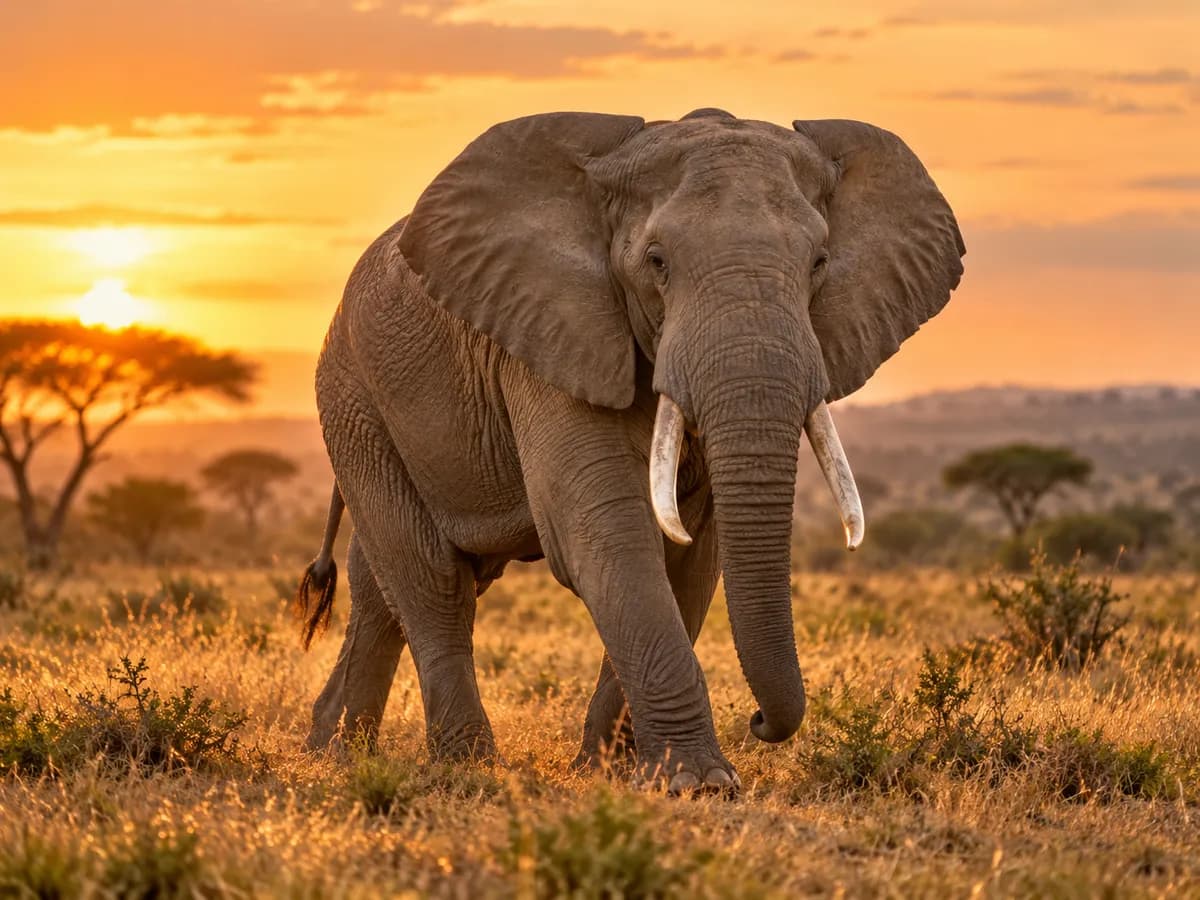
The largest land animal, the African elephant is known for its powerful trunk, huge ears and complex family bonds. Elephants are "engineers" that shape the ecosystems they live in.
- Altura
- 2,5–4 m
- Peso
- 2,5–6,5 t
- Longevidade na natureza
- 60–70 anos
- Estado de conservação (UICN)
- Em perigo (EN)
Valores aproximados para adultos; variam com o sexo, a subespécie e a população.
Num relance
Os factos principais sobre Elefantes-africanos.
- Where does it live?Savanna elephants live in Africa south of the Sahara, in savannas, grasslands and open woodlands.
- What does it eat?Elephants are herbivores that eat grass, leaves, bark, roots and fruit.
- Behaviour and social lifeElephant herds are made up of related females and their young, usually led by the oldest female.
- CalvesAn elephant pregnancy lasts about 22 months, the longest of any land mammal.
Em detalhe
Em resumo
- The African savanna elephant is the largest animal on land.
- The trunk is a versatile organ used for smelling, drinking, grasping and communicating.
- Herds are led by an old, experienced female called the matriarch.
- Elephants can eat more than 150 kilograms of plants a day.
- The IUCN lists the savanna elephant as Endangered and the forest elephant as Critically Endangered.
Two elephant species live in Africa: the African savanna elephant (Loxodonta africana) and the smaller African forest elephant (Loxodonta cyclotis) of Central Africa's rainforests. The quick facts on this page refer to the more widespread savanna elephant. African elephants have much larger ears than Asian elephants, which help them shed body heat.
Where does it live?
Savanna elephants live in Africa south of the Sahara, in savannas, grasslands and open woodlands. They depend on water and may walk long distances to find it during the dry season.
What does it eat?
Elephants are herbivores that eat grass, leaves, bark, roots and fruit. They spend most of the day feeding. By knocking down trees to open up clearings and spreading seeds in their dung, they deeply shape their ecosystem.
Behaviour and social life
Elephant herds are made up of related females and their young, usually led by the oldest female. The matriarch's memory of water sources and dangers is vital to the herd's survival. Males leave the herd in adolescence and live alone or in loose "bachelor groups". Elephants communicate by touch, by sound and with rumbles so low that humans cannot hear them, which can travel for kilometres.
Calves
An elephant pregnancy lasts about 22 months, the longest of any land mammal. Usually a single calf is born and raised with help from other females in the herd.
Conservation status
In 2021 the IUCN assessed the two African elephant species separately: the savanna elephant is Endangered (EN) and the forest elephant is Critically Endangered (CR). Poaching for ivory and the shrinking of their habitat to farms and settlements are the main threats.
Fun facts
- An elephant's trunk is estimated to contain tens of thousands of muscles and no bones.
- Elephants can sense ground vibrations through their feet.
- Tusks are actually greatly enlarged incisor teeth.
Animais semelhantes
Outros animais do mesmo grupo.
Respeito pela natureza, amanhãs mais fortes
Proteger a vida selvagem é responsabilidade de todos.
Se encontrar um animal selvagem ferido ou uma cria, não lhe toque e avise a autoridade local de conservação da natureza. Mais conhecimento, mais consciência.
- Respeite os habitats naturais
- Observe os animais à distância
- Não deixe lixo na natureza
- Apoie um futuro sustentável