

The senior bearded dragon stage
Bearded dragons can show signs of ageing from about 7 years of age. Easy-to-reach basking spots, an adapted diet and close monitoring make this stage more comfortable.
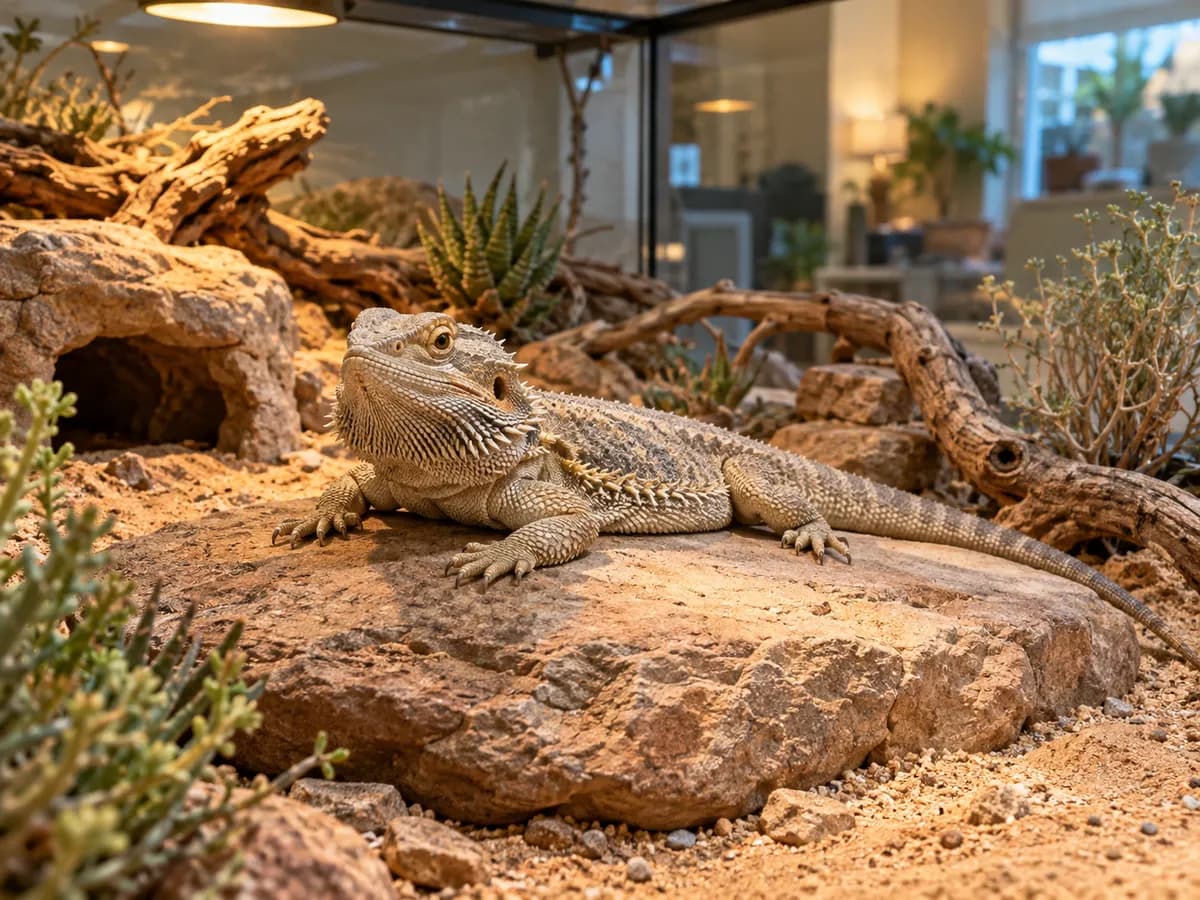
En resumen
- Activity and climbing may decrease; make the basking spot easier to reach.
- Appetite and portion sizes may shrink, so tracking weight matters.
- Heat and UVB remain essential in old age.
- Shedding can get harder; a humid hide helps.
- Veterinary check-ups are usually recommended more often.
Bearded dragons are considered seniors from about 7 years of age. Many still enjoy calm, happy years. The goal is to adapt the enclosure to changing needs and notice changes early.
What is happening in this stage?
- Activity and climbing may decrease.
- Appetite and the amount eaten may decrease.
- Sheds can become slower and more irregular.
- Sleep and rest may increase.
What should you do differently?
- Access: Low, wide ramps up to the basking spot; fewer high branches.
- Diet: Adapt portions and the supplement routine together with your veterinarian.
- Heat and light: Keep up the heat and UVB routine; the cool side should stay easy to reach too.
- Shedding: A humid hide and checks for stuck skin.
- Handling: Short, calm and well supported.
What should you monitor?
- Weight and muscle loss (regular weighing)
- Appetite and droppings
- Movement and balance
- Eyes and skin condition
Expected behavior
More rest, shorter active periods and a smaller appetite can be part of ageing. Still, any new change should be noted and shared with your veterinarian.
Reminders
- Check-ups as often as your veterinarian recommends (usually more often)
- UVB lamp replacement date
- Weighing every two weeks
Los rangos de edad son aproximados; las diferencias dentro de una especie (como el tamaño en los perros) pueden adelantar o retrasar las transiciones.
Este contenido es solo informativo y no sustituye un examen veterinario ni un diagnóstico. Si le preocupa la salud de su mascota, consulte a su veterinario.