

The adult budgie stage
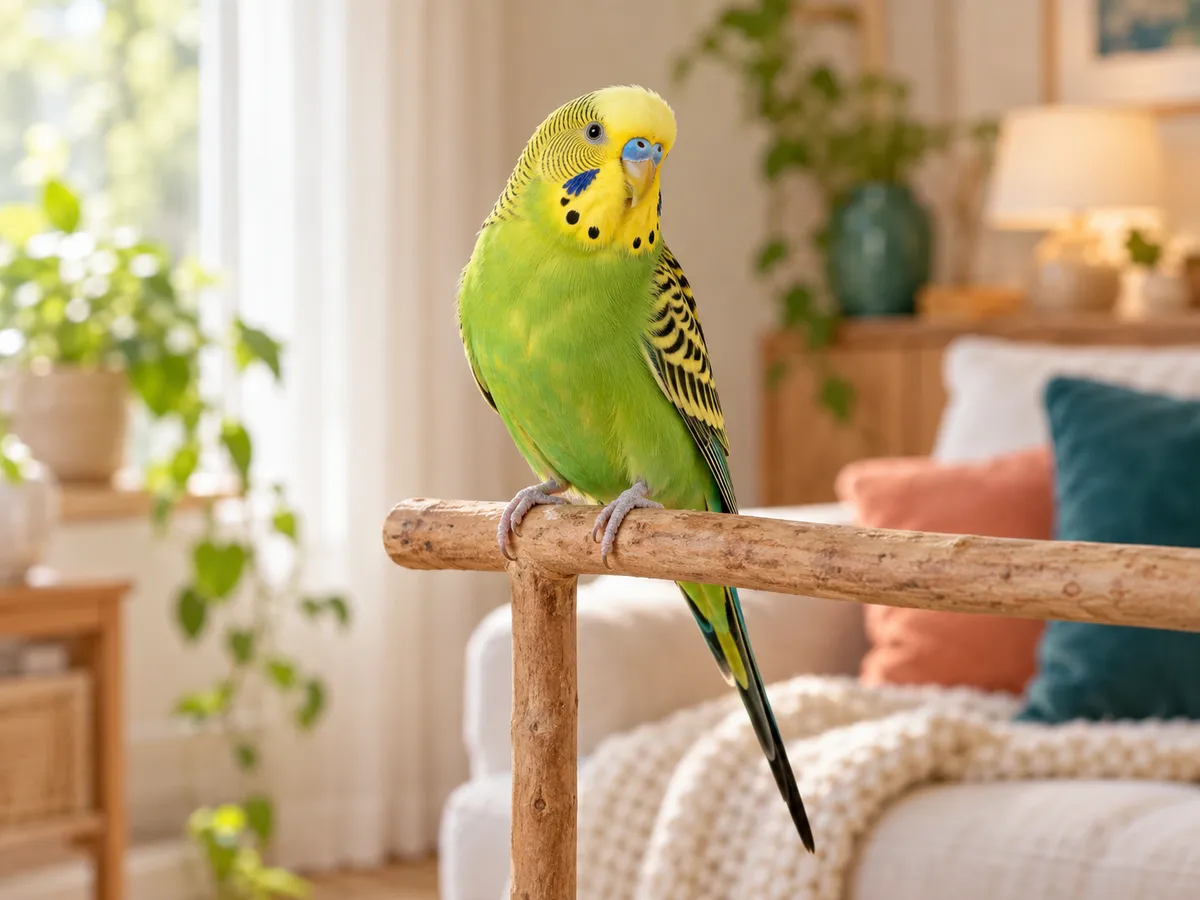
Between 6 months and 6 years, budgies are at their most active, social and chatty. Daily flying, enrichment, a varied diet and regular weighing are the foundation of these years.
En resumen
- Provide flying time in a safe room every day.
- Keep their minds busy by rotating toys and adding foraging games.
- Keep up a varied diet of seed, pellets, vegetables and greens.
- During moults they need more rest and good nutrition.
- Weekly weighing helps you spot small changes early.
Adulthood runs from about 6 months to 6 years of age. Your budgie has its adult plumage, and its personality, voice and habits become clear.
What is happening in this stage?
- Adult feather patterns are complete, and moults repeat seasonally.
- Social bonds, talking and mimicry may develop.
- Breeding behavior may appear (for example courting a mirror or toys).
What should you do differently?
- Flying: Supervised flying in a safe room every day.
- Enrichment: Rotate toys weekly and add foraging and shredding toys.
- Diet: Quality seed or pellets and fresh vegetables and greens daily; keep harmful foods (such as avocado and chocolate) away.
- Social life: Spend time together every day; you might consider a compatible bird companion.
- Sleep: A dark, quiet and regular bedtime.
What should you monitor?
- Weight (weighing at home)
- Droppings and appetite
- Feather condition, feather plucking
- Length of beak and nails
Expected behavior
Chirping and talking, "chatting" with themselves in a mirror, preening, chewing and shredding toys, and resting on one foot are normal at this stage.
Reminders
- Check-ups yearly or as often as your veterinarian recommends
- Weekly weighing
- Cage and perch cleaning; rotating toys
Next stage
From about 6 years of age your budgie enters the senior stage.
Los rangos de edad son aproximados; las diferencias dentro de una especie (como el tamaño en los perros) pueden adelantar o retrasar las transiciones.
Este contenido es solo informativo y no sustituye un examen veterinario ni un diagnóstico. Si le preocupa la salud de su mascota, consulte a su veterinario.