

The adult bearded dragon stage
Between 18 months and 7 years, bearded dragons settle into long adult years. A plant-heavy diet, correct heat and UVB, exercise and weight control are the foundation of this stage.
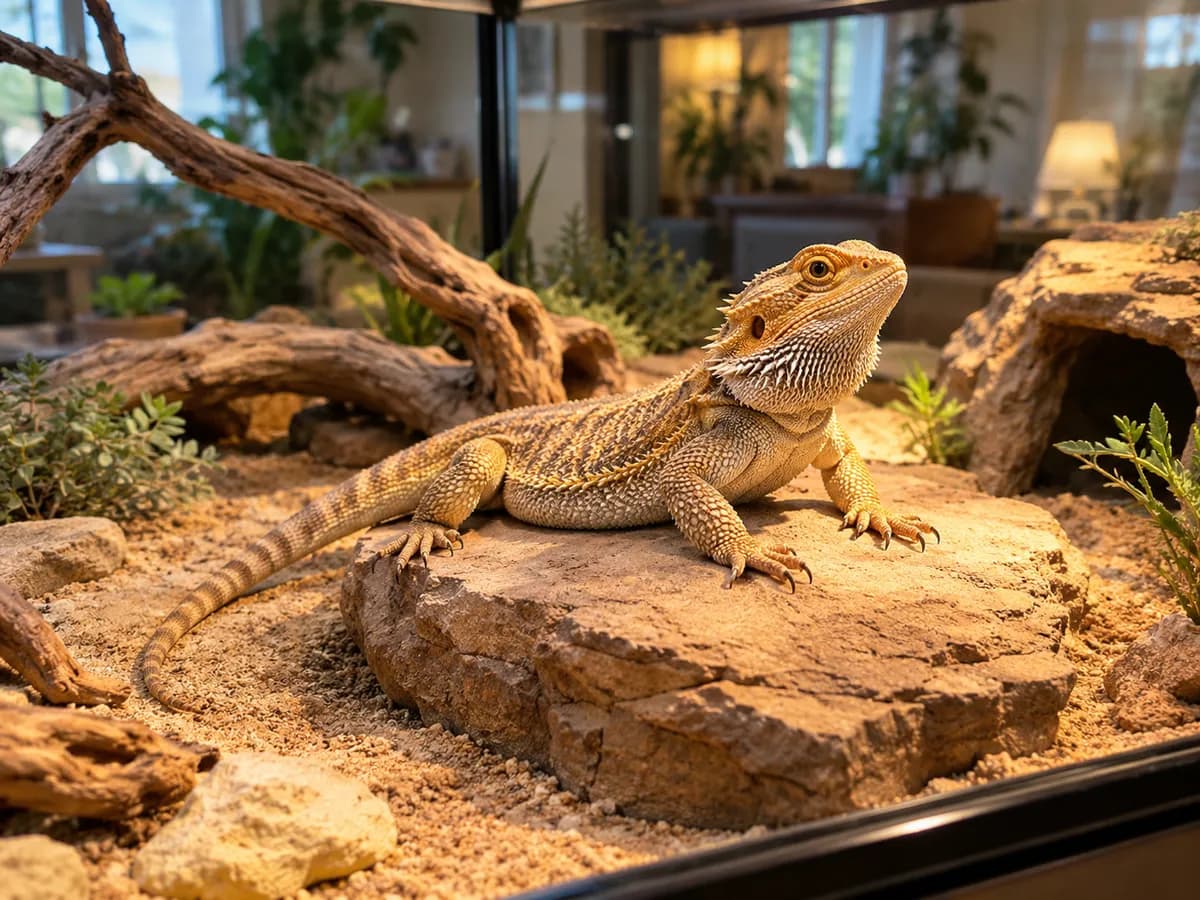
In breve
- Most of the diet is greens and vegetables, with insects offered less often.
- Heat and UVB remain essential for life.
- Adults can be prone to weight gain, so regular weighing matters.
- Some dragons move and eat less in the cooler season.
- Supervised time outside the enclosure and enrichment improve quality of life.
Adulthood runs from about 18 months to 7 years of age. Your bearded dragon has reached adult size and its personality and habits are settled.
What is happening in this stage?
- Growth is complete; sheds become less frequent and come off in patches.
- Dietary needs shift toward plant foods.
- Activity and appetite may drop seasonally.
- Females can lay eggs even without a male.
What should you do differently?
- Diet: Fresh greens and vegetables daily; insects less often and in measured amounts. Set the supplement routine with your veterinarian.
- Heat and light: The heat and UVB routine, with lamps replaced on schedule.
- Exercise: A large enclosure, climbing areas and supervised time outside.
- For females: It helps to provide a suitable digging area and discuss egg-laying with your veterinarian.
What should you monitor?
- Weight and body condition (weighing at home)
- Appetite and droppings
- Shedding
- Activity and basking habits
Expected behavior
Long basking sessions, head-bobbing, arm-waving and calm, curious exploring when they feel secure are normal at this stage.
Reminders
- Check-ups yearly or as often as your veterinarian recommends
- UVB lamp replacement date
- Monthly weighing
Next stage
From about 7 years of age your bearded dragon enters the senior stage.
Le fasce d'età sono indicative; le differenze all'interno di una specie (come la taglia nei cani) possono anticipare o ritardare i passaggi.
Questo contenuto ha scopo informativo generale e non sostituisce una visita veterinaria né una diagnosi. Se sei preoccupato per la salute del tuo animale, contatta il tuo veterinario.