

The young bearded dragon stage
Bearded dragons grow very fast in their first months; correct heat, UVB lighting and frequent, appropriately sized meals are the top priorities of this stage.
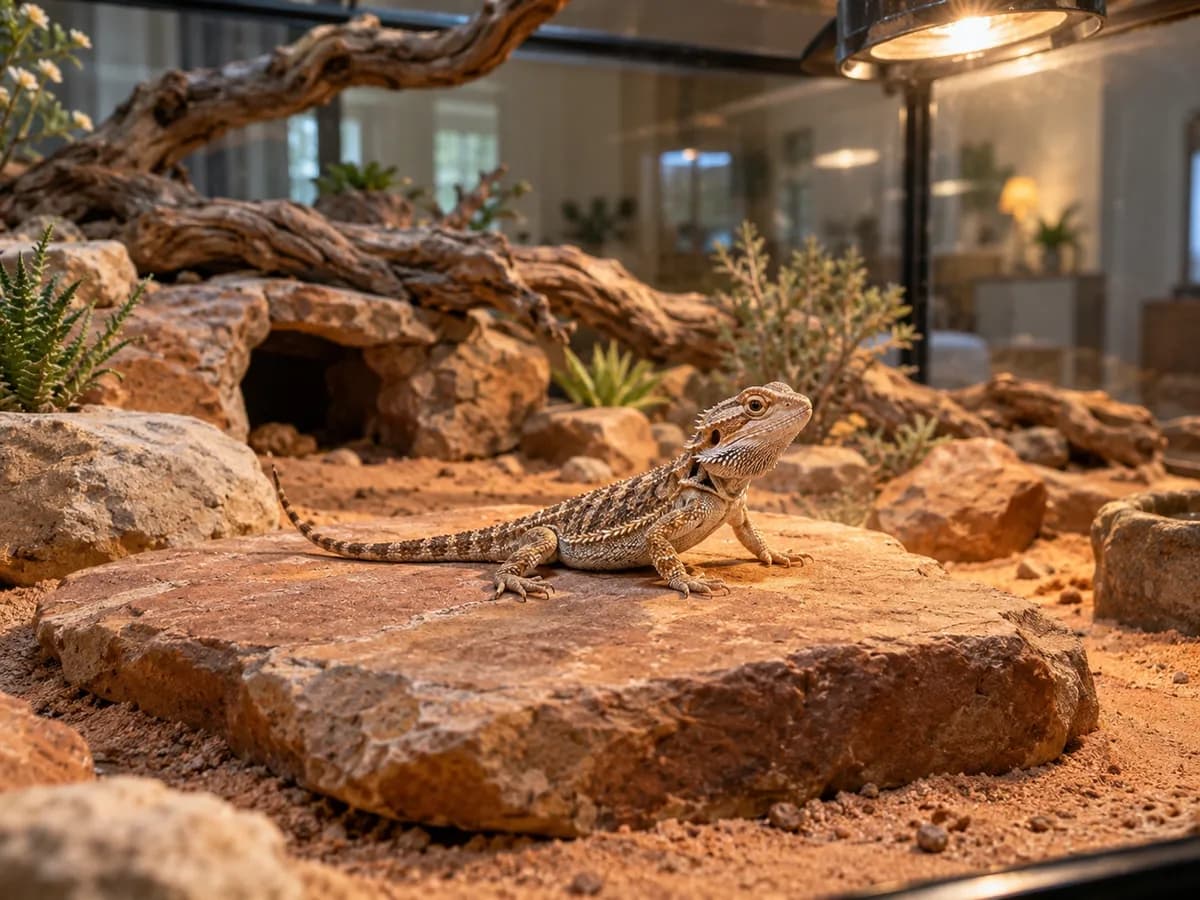
In breve
- Growth is very fast; juveniles eat more often and more animal-based food than adults.
- A basking spot, a warm–cool gradient and a UVB lamp are the foundation of the daily routine.
- Insects should be no larger than the space between the dragon's eyes.
- Offer fresh greens every day from a young age.
- Juveniles are usually housed separately; kept together they may injure each other.
The juvenile stage runs from hatching to about 7 months of age. Bearded dragons grow very quickly at this stage, multiplying in size in the first months and shedding often.
What is happening in this stage?
- Growth and shedding are very fast.
- Energy and hunting drive are high.
- Getting used to surroundings and handling begins.
What should you do differently?
- Heat and light: Set up the basking spot, warm–cool gradient and UVB lamp correctly, with heaters on a thermostat.
- Diet: Appropriately sized insects several times a day and fresh greens daily. Discuss gut-loading insects and dusting with supplements with a reptile-experienced veterinarian.
- Housing: Housing juveniles separately prevents tail and toe nipping.
- Handling: Short, calm and supported from below.
What should you monitor?
- Weight and length (regular weighing)
- Appetite and droppings
- Complete sheds (especially toes and tail tip)
- Basking and activity patterns
Expected behavior
Long periods on the basking spot, lunging at prey, communication gestures like head-bobbing and arm-waving, and puffing the beard when startled can all be seen at this stage.
Reminders
- First veterinary check-up (with a reptile-experienced vet)
- Replacing the UVB lamp at the interval the manufacturer recommends
- Regular weighing and measuring
Next stage
From about 7 months of age your bearded dragon enters the adolescent stage.
Le fasce d'età sono indicative; le differenze all'interno di una specie (come la taglia nei cani) possono anticipare o ritardare i passaggi.
Questo contenuto ha scopo informativo generale e non sostituisce una visita veterinaria né una diagnosi. Se sei preoccupato per la salute del tuo animale, contatta il tuo veterinario.