

Leopards
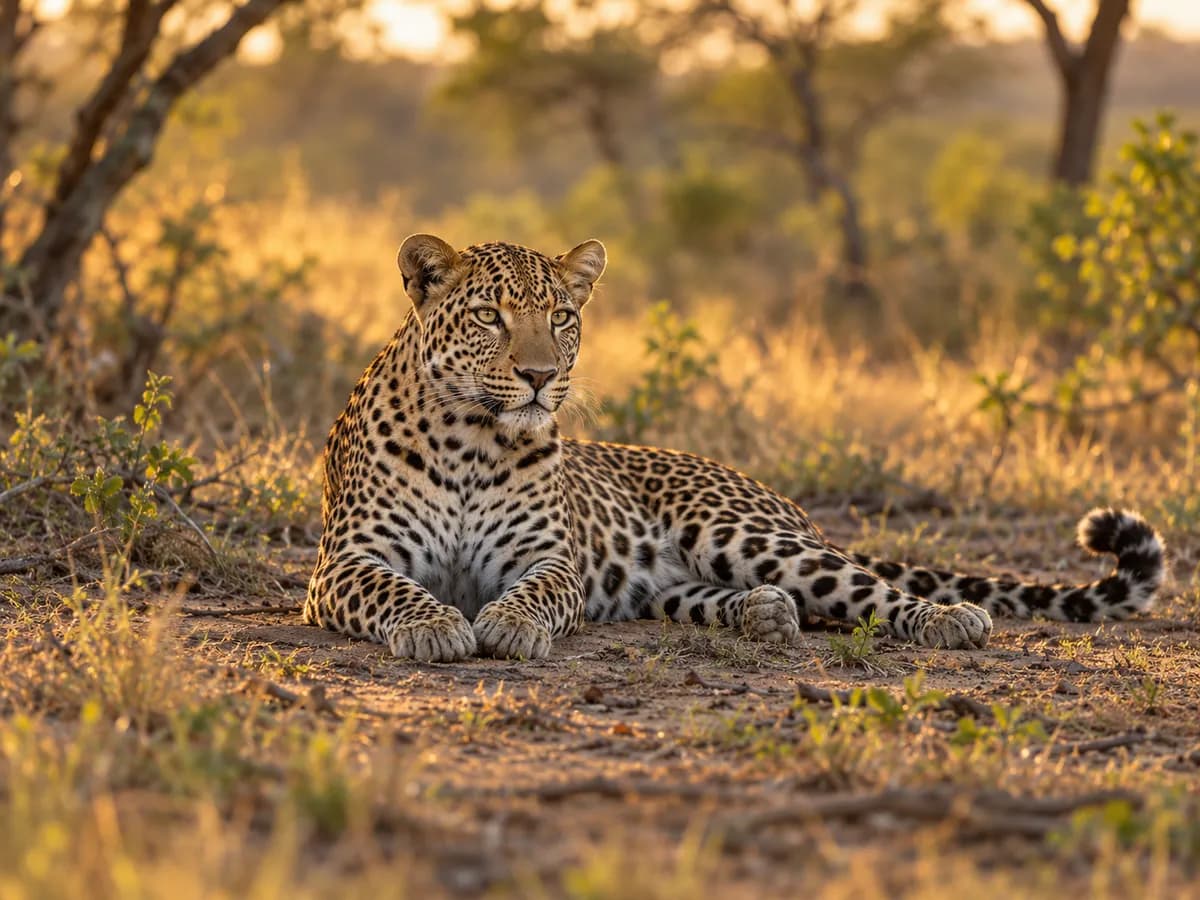
The most widespread of the big cats, the leopard stands out for its adaptability. It protects its prey from other predators by hauling it up into trees.
- Lengte
- 0,9–1,9 m
- Gewicht
- 17–90 kg
- Levensduur in het wild
- 12–17 jaar
- Beschermingsstatus (IUCN)
- Kwetsbaar (VU)
Waarden zijn bij benadering voor volwassen dieren en verschillen per geslacht, ondersoort en populatie.
In één oogopslag
De belangrijkste feiten over Luipaarden.
- Where does it live?Leopards live across most of Africa south of the Sahara and in a large part of Asia.
- What does it eat?It is a carnivore that takes a wide range of prey: antelopes, deer, wild boar, monkeys, birds and small mammals.
- Behaviour and social lifeLeopards live alone and mostly hunt at night.
- CubsAfter a pregnancy of about three months, the female usually has 2–3 cubs and raises them in hidden places.
Uitgebreid
In het kort
- The leopard can live in very different habitats, from Africa to Asia.
- The markings on its coat are called rosettes.
- It often hides its kills by carrying them up into trees.
- It is a solitary hunter, mostly active at night.
- The IUCN lists it as Vulnerable; the Anatolian leopard is a subspecies.
The leopard (Panthera pardus) is a big cat known for the rose-shaped spots (rosettes) on its coat and its muscular build. Black individuals are popularly called "black panthers"; they are not a separate species but dark-coloured leopards. The Anatolian leopard, known in Türkiye as "pars", is a subspecies of the leopard.
Where does it live?
Leopards live across most of Africa south of the Sahara and in a large part of Asia. They adapt to very different habitats, from rainforests and savannas to mountains and semi-deserts. In Anatolia the leopard is extremely rare and secretive, recorded only a few times in recent decades.
What does it eat?
It is a carnivore that takes a wide range of prey: antelopes, deer, wild boar, monkeys, birds and small mammals. Thanks to its strength, it can drag prey heavier than itself up into trees, protecting the kill from rivals such as lions and hyenas.
Behaviour and social life
Leopards live alone and mostly hunt at night. They are excellent climbers and swimmers. Because they are so secretive, they are hard to see in the wild; researchers often monitor them with camera traps.
Cubs
After a pregnancy of about three months, the female usually has 2–3 cubs and raises them in hidden places. Cubs stay with their mother for about one and a half to two years.
Conservation status
The leopard is listed as Vulnerable (VU) on the IUCN Red List. Habitat loss, declining prey, conflict over livestock and illegal hunting for skins are the main threats. Some subspecies are in a far more critical situation.
Fun facts
- "Black panther" leopards still have rosettes, but they are hard to see against the dark coat.
- The leopard has the widest geographic range of all the big cats.
- "Pars" and "leopard" are different names for the same species.
Vergelijkbare dieren
Andere dieren uit dezelfde groep.
Respect voor de natuur, een sterkere toekomst
Wilde dieren beschermen is ieders verantwoordelijkheid.
Vind je een gewond of jong wild dier, raak het dan niet aan en waarschuw de plaatselijke natuurbeschermingsdienst. Meer kennis, meer bewustzijn.
- Respecteer natuurlijke leefgebieden
- Bekijk wilde dieren van een afstand
- Laat geen afval achter in de natuur
- Steun een duurzame toekomst