

Eurasian lynx
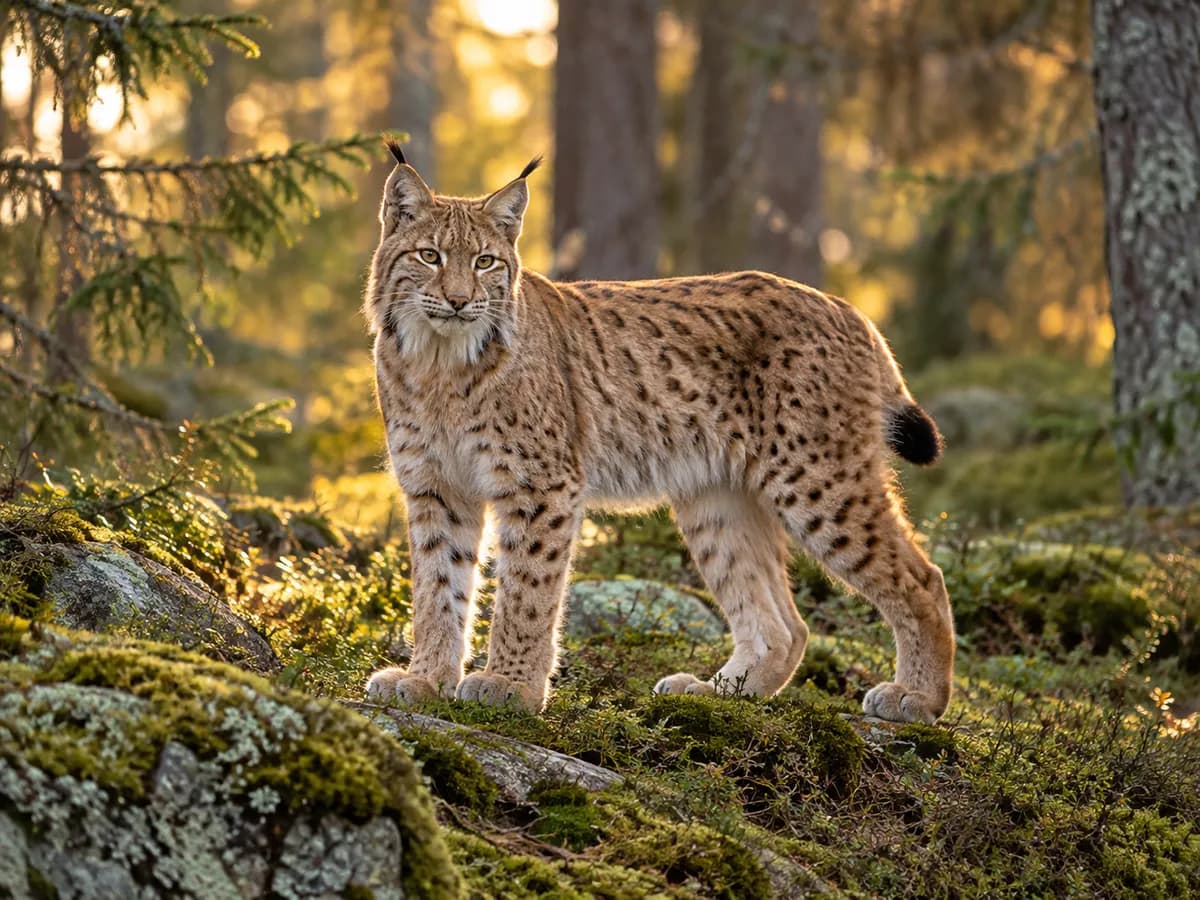
Known for the black tufts on its ears and its short tail, the Eurasian lynx is the forest's hidden hunter. In Türkiye it lives in the forests of the eastern Black Sea region and eastern Anatolia.
- Lengte
- 0,8–1,3 m
- Gewicht
- 15–35 kg
- Levensduur in het wild
- 10–17 jaar
- Beschermingsstatus (IUCN)
- Niet bedreigd (LC)
Waarden zijn bij benadering voor volwassen dieren en verschillen per geslacht, ondersoort en populatie.
In één oogopslag
De belangrijkste feiten over Lynxen.
- Where does it live?It lives across a vast area from western Europe to Siberia, Central Asia and the Himalayas, especially in forests and mountains.
- What does it eat?It is a carnivore.
- Behaviour and social lifeLynx live alone, use very large territories and are mostly active at dusk and at night.
- KittensIn late spring, the female usually has 2–3 kittens in a sheltered den.
Uitgebreid
In het kort
- The Eurasian lynx is the largest of the four lynx species.
- It is easy to recognise by the black tufts on its ears and its short tail.
- It hunts small deer such as roe deer, and hares.
- Its wide paws work like snowshoes in snow.
- The IUCN lists it as Least Concern globally.
The Eurasian lynx (Lynx lynx) is a medium-sized cat. It is easy to recognise by the black tufts on its ears, the ruff of fur framing its face, its spotted coat and its short, black-tipped tail. Long legs and wide paws help it move through snowy terrain.
Where does it live?
It lives across a vast area from western Europe to Siberia, Central Asia and the Himalayas, especially in forests and mountains. In Türkiye it is found in the forests of the eastern Black Sea region, eastern Anatolia and some other areas; camera-trap studies have documented its presence.
What does it eat?
It is a carnivore. Small hoofed animals such as roe deer and chamois, and hares, are its main prey; it also catches birds and rodents. It creeps close to its prey and attacks with a short, powerful leap.
Behaviour and social life
Lynx live alone, use very large territories and are mostly active at dusk and at night. Because they are so secretive, they are rarely seen in the wild.
Kittens
In late spring, the female usually has 2–3 kittens in a sheltered den. The kittens stay with their mother for about ten months and learn to hunt from her.
Conservation status
The Eurasian lynx is listed as Least Concern (LC) globally on the IUCN Red List. In parts of Europe, however, it was driven to extinction and has since been reintroduced. Fragmented habitat, illegal killing and road accidents are the main threats.
Fun facts
- The ear tufts are thought to help with hearing, but their exact function is still debated.
- Lynx have very sharp eyesight.
- The Eurasian lynx is Europe's third-largest predator.
Vergelijkbare dieren
Andere dieren uit dezelfde groep.



Respect voor de natuur, een sterkere toekomst
Wilde dieren beschermen is ieders verantwoordelijkheid.
Vind je een gewond of jong wild dier, raak het dan niet aan en waarschuw de plaatselijke natuurbeschermingsdienst. Meer kennis, meer bewustzijn.
- Respecteer natuurlijke leefgebieden
- Bekijk wilde dieren van een afstand
- Laat geen afval achter in de natuur
- Steun een duurzame toekomst