Bottlenose dolphins
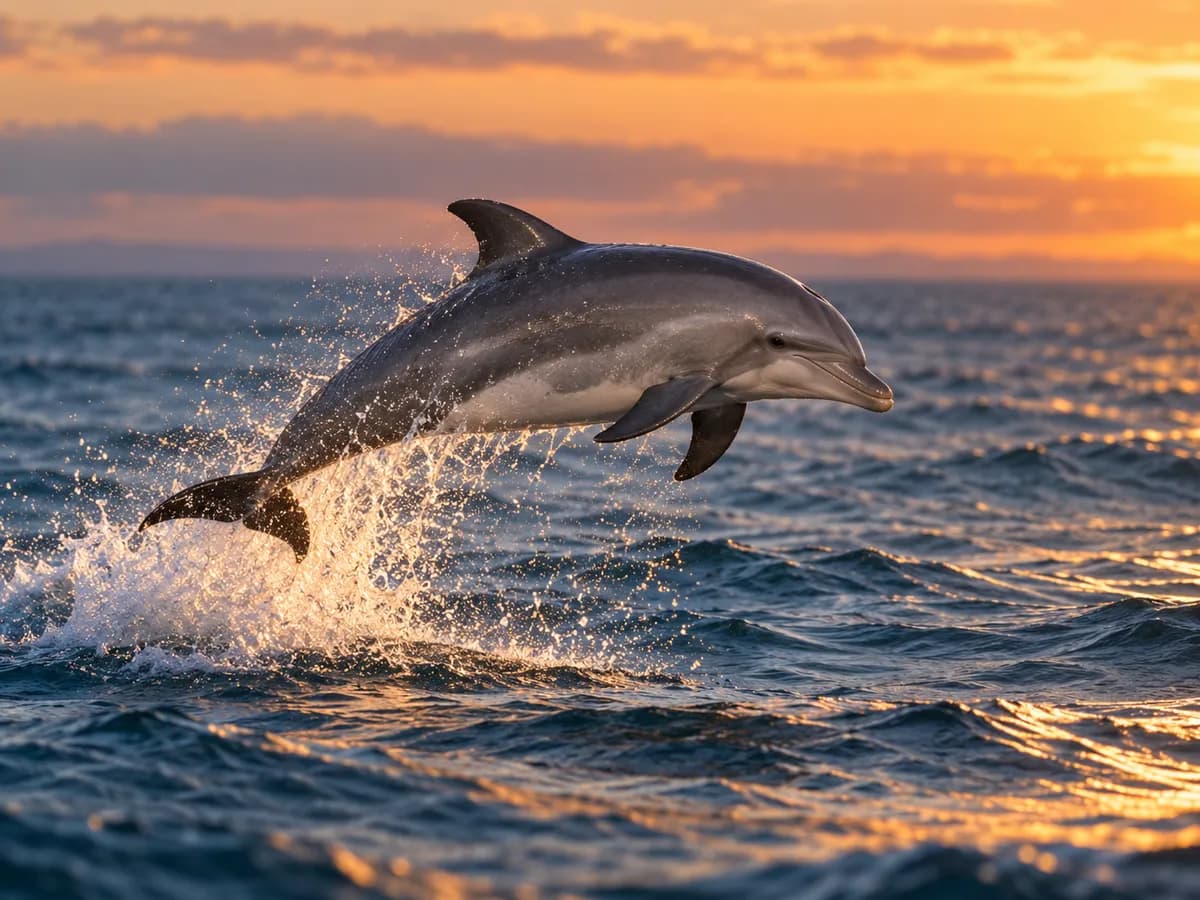
Known for its intelligence, playfulness and strong social bonds, the bottlenose dolphin lives in warm and temperate seas around the world. It is one of the most familiar dolphins and can also be seen off Türkiye's coasts.
- Lengte
- 2–4 m
- Gewicht
- 150–650 kg
- Levensduur in het wild
- 40–60 jaar
- Beschermingsstatus (IUCN)
- Niet bedreigd (LC)
Waarden zijn bij benadering voor volwassen dieren en verschillen per geslacht, ondersoort en populatie.
In één oogopslag
De belangrijkste feiten over Tuimelaars.
- Where does it live?Bottlenose dolphins live worldwide in warm and temperate seas, both close to shore and offshore.
- What does it eat?Their main food is fish, squid and crustaceans.
- Behaviour and social lifeBottlenose dolphins live in groups called pods, whose membership can change over time.
- CalvesPregnancy lasts about 12 months and usually a single calf is born.
Uitgebreid
In het kort
- The bottlenose is one of the best-known dolphin species.
- It finds prey using echolocation, the echoes of its own sounds.
- Each dolphin is thought to have its own "signature whistle".
- It occurs along Türkiye's Black Sea, Marmara, Aegean and Mediterranean coasts.
- The IUCN lists it as Least Concern globally; some regional populations are at risk.
The bottlenose dolphin (Tursiops truncatus) is a marine mammal with a short, thick beak, grey colouring and a curved dorsal fin. Although it looks like a fish, it breathes with lungs and feeds its calf milk.
Where does it live?
Bottlenose dolphins live worldwide in warm and temperate seas, both close to shore and offshore. In Türkiye they can be seen along the Black Sea, Marmara, Aegean and Mediterranean coasts.
What does it eat?
Their main food is fish, squid and crustaceans. They find prey by echolocation: they make high-frequency sounds and use the returning echoes to sense the position, size and shape of nearby objects. Some groups develop shared hunting strategies.
Behaviour and social life
Bottlenose dolphins live in groups called pods, whose membership can change over time. They communicate with whistles, clicks and body movements. Research suggests each dolphin uses its own "signature whistle" that works much like a name.
Calves
Pregnancy lasts about 12 months and usually a single calf is born. The calf stays with its mother for several years and learns survival skills from her.
Conservation status
The bottlenose dolphin is listed as Least Concern (LC) globally on the IUCN Red List. However, some regional populations are threatened by entanglement in fishing nets, marine pollution, noise and declining prey.
Fun facts
- Dolphins rest only one half of the brain at a time while sleeping; the other half keeps breathing going.
- Some bottlenose groups use sponges to protect their snouts while foraging on the sea floor.
- Dolphins are among the few animals that can recognise themselves in a mirror.
Vergelijkbare dieren
Andere dieren uit dezelfde groep.
Respect voor de natuur, een sterkere toekomst
Wilde dieren beschermen is ieders verantwoordelijkheid.
Vind je een gewond of jong wild dier, raak het dan niet aan en waarschuw de plaatselijke natuurbeschermingsdienst. Meer kennis, meer bewustzijn.
- Respecteer natuurlijke leefgebieden
- Bekijk wilde dieren van een afstand
- Laat geen afval achter in de natuur
- Steun een duurzame toekomst