

Hippopotamuses
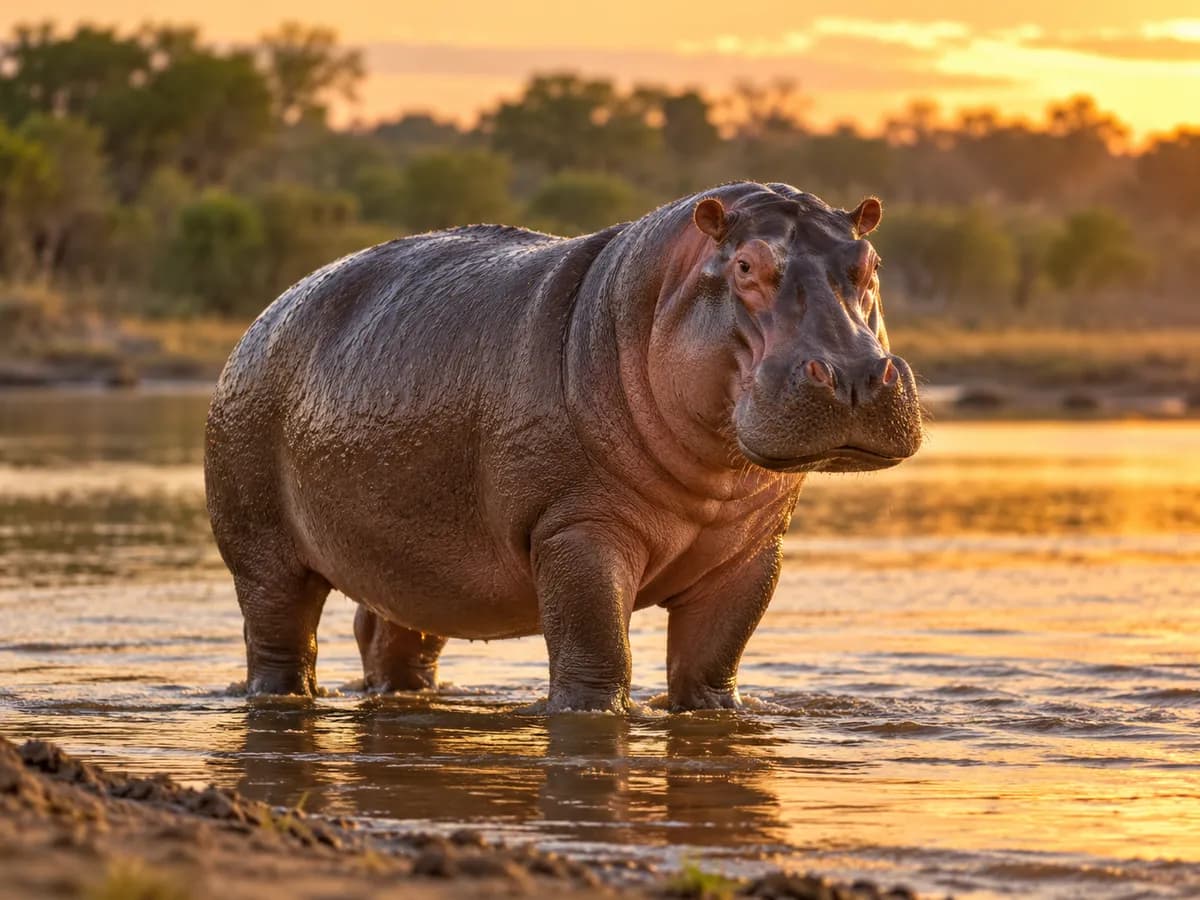
The hippo spends most of the day in water and comes ashore at night to graze. Despite its calm look, it is known as one of Africa's most dangerous animals.
- Lengte
- 2,9–5,1 m
- Gewicht
- 1,3–3,2 t
- Levensduur in het wild
- 35–40 jaar
- Beschermingsstatus (IUCN)
- Kwetsbaar (VU)
Waarden zijn bij benadering voor volwassen dieren en verschillen per geslacht, ondersoort en populatie.
In één oogopslag
De belangrijkste feiten over Nijlpaarden.
- Where does it live?It lives in Africa south of the Sahara, in rivers, lakes and swamps with grassland nearby.
- What does it eat?It is a herbivore that mostly eats short grass.
- Behaviour and social lifeHippos live in the water in groups of females and young, usually in an area held by a dominant male.
- CalvesPregnancy lasts about eight months and usually a single calf is born, often in the water.
Uitgebreid
In het kort
- The hippo spends the day in water to stay cool and feeds on land at night.
- It is a herbivore that may walk kilometres in a night to graze.
- Rather than swimming, it moves by walking or bouncing along the bottom.
- It can be extremely aggressive when defending its territory or young.
- The IUCN lists it as Vulnerable; habitat loss and hunting for meat and teeth are the main threats.
The hippopotamus (Hippopotamus amphibius) is among the largest land mammals, along with elephants and rhinos. Its name means "river horse" in Ancient Greek, but it is not related to horses; its closest living relatives are thought to be whales and dolphins.
Where does it live?
It lives in Africa south of the Sahara, in rivers, lakes and swamps with grassland nearby. During the day it needs water deep enough to keep its body cool and moist.
What does it eat?
It is a herbivore that mostly eats short grass. It leaves the water at dusk and grazes through the night, sometimes walking several kilometres. It spends the day resting in the water.
Behaviour and social life
Hippos live in the water in groups of females and young, usually in an area held by a dominant male. Males defend their territories fiercely: they open their mouths wide to display their teeth and may fight. They are not good swimmers; they walk or bounce along the bottom instead.
Calves
Pregnancy lasts about eight months and usually a single calf is born, often in the water. The calf can suckle underwater and stays very close to its mother.
Conservation status
The hippopotamus is listed as Vulnerable (VU) on the IUCN Red List. Loss of water sources and riverside grazing to farming, illegal hunting for meat and teeth, and conflict with people are the main threats.
Fun facts
- Hippo skin produces a reddish secretion thought to act as a sunscreen.
- Its nostrils and ears close when it dives.
- Its long canine teeth keep growing throughout life.
Goed om te weten
De belangrijkste punten.
- Keep away from wild animalsHippos can run fast and may attack when approached. Always keep a safe distance in the wild and follow your guides' advice.
Vergelijkbare dieren
Andere dieren uit dezelfde groep.

Respect voor de natuur, een sterkere toekomst
Wilde dieren beschermen is ieders verantwoordelijkheid.
Vind je een gewond of jong wild dier, raak het dan niet aan en waarschuw de plaatselijke natuurbeschermingsdienst. Meer kennis, meer bewustzijn.
- Respecteer natuurlijke leefgebieden
- Bekijk wilde dieren van een afstand
- Laat geen afval achter in de natuur
- Steun een duurzame toekomst