

The adolescent bearded dragon stage
Between 7 and 18 months, bearded dragons' growth slows and their diet starts shifting from insects toward plants.
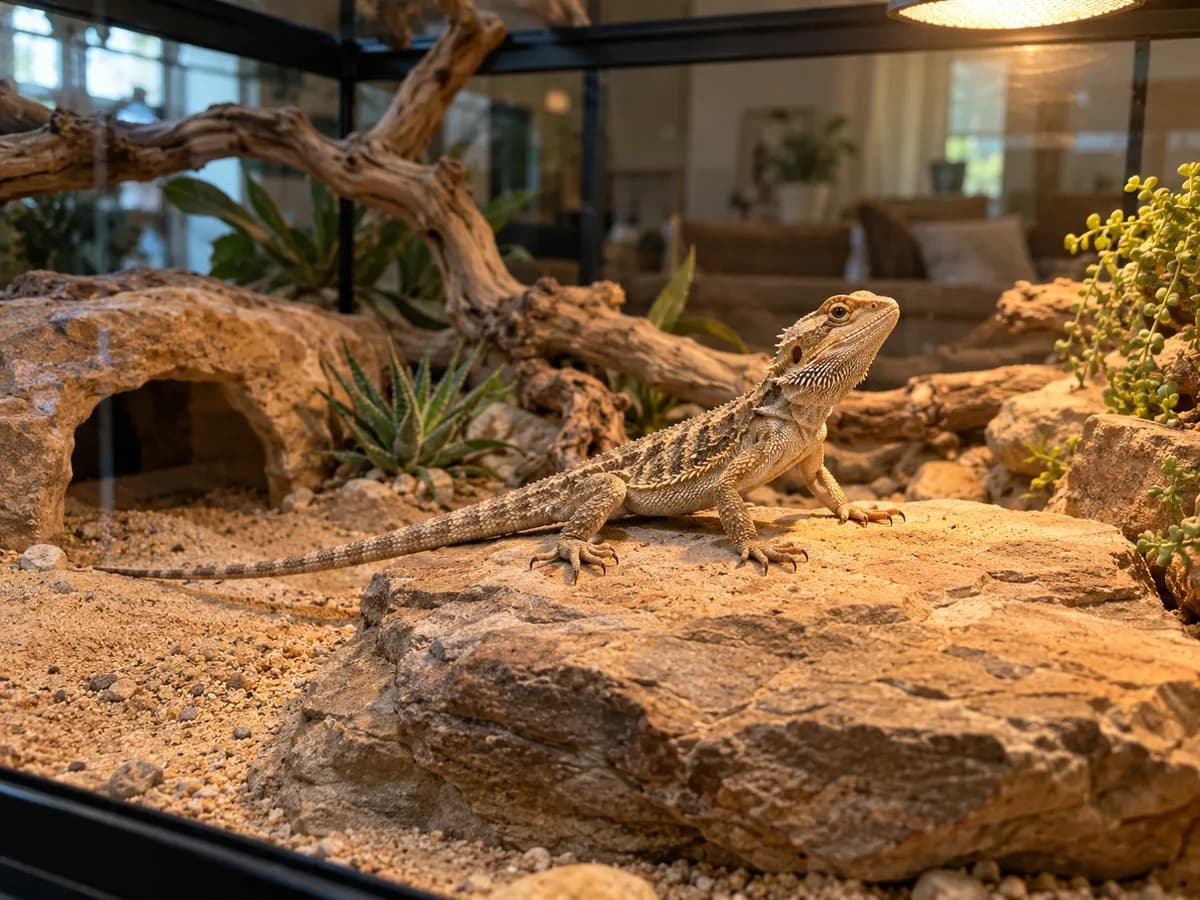
Em resumo
- Growth slows, and plant foods begin to make up more of the diet.
- Behavior changes linked to sexual maturity may appear.
- Heat and UVB routines must be kept up with the same care.
- Appetite and activity may drop in cooler seasons.
- Regular weighing helps you follow the change in diet.
Adolescence runs from about 7 to 18 months of age. As your bearded dragon approaches adult size, growth slows and dietary needs start to change.
What is happening in this stage?
- Growth slows and sheds become less frequent.
- Sexual maturity develops; head-bobbing and beard darkening may increase.
- Some individuals are less active and eat less in the cooler season.
What should you do differently?
- Diet: Gradually increase greens and vegetables and reduce how often you feed insects. Review the supplement routine with your veterinarian.
- Heat and light: Keep up the heat and UVB routine with the same care and track bulb lifespans.
- Space: Plan the move to an enclosure large enough for adult size.
- Enrichment: Climbing branches, different textures and supervised time outside the enclosure.
What should you monitor?
- Weight (regular weighing)
- How much greenery they eat, and appetite
- Droppings
- Activity and basking behavior
Expected behavior
Head-bobbing, arm-waving, beard darkening and territorial behavior may increase at this stage. A bearded dragon can be stressed by seeing another dragon, so enclosures can be placed out of each other's view.
Reminders
- Check-ups as often as your veterinarian recommends
- UVB lamp replacement date
- Weighing every two weeks or monthly
Next stage
From about 18 months your bearded dragon enters the adult stage.
Os intervalos de idade são aproximados; as diferenças dentro de uma espécie (como o tamanho nos cães) podem antecipar ou atrasar as transições.
Este conteúdo destina-se apenas a informação geral e não substitui um exame veterinário nem um diagnóstico. Se estiver preocupado com a saúde do seu animal, contacte o seu veterinário.