

Peregrine falcons
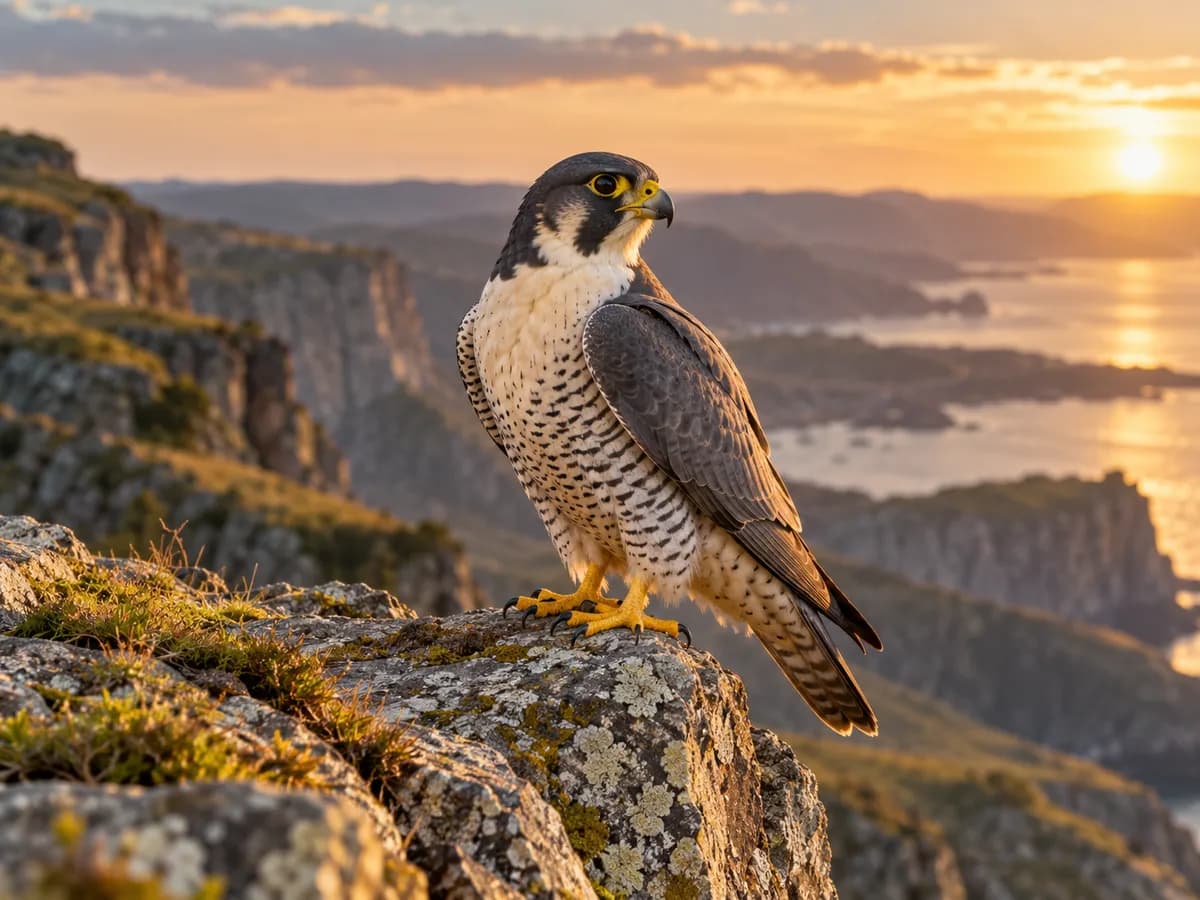
Thanks to the speed it reaches in a dive, the peregrine falcon is considered the fastest animal on Earth. It lives on every continent except Antarctica and today also nests on skyscrapers in many big cities.
- Envergadura
- 0,7–1,2 m
- Peso
- 0,3–1,5 kg
- Longevidade na natureza
- 12–17 anos
- Estado de conservação (UICN)
- Pouco preocupante (LC)
Valores aproximados para adultos; variam com o sexo, a subespécie e a população.
Num relance
Os factos principais sobre Falcões-peregrinos.
- Where does it live?It lives on every continent except Antarctica, from Arctic tundra to the tropics.
- What does it eat?Its main food is medium-sized birds such as pigeons, starlings and seabirds, caught in flight.
- Behaviour and social lifePeregrines usually stay with the same mate and use the same nest site for years.
- ChicksThe female usually lays 3–4 eggs.
Em detalhe
Em resumo
- The peregrine can exceed 300 kilometres per hour in a dive.
- It lives on every continent except Antarctica.
- Its main prey are other birds caught in flight.
- In cities it may nest on skyscrapers and bridges.
- It recovered after DDT was banned; the IUCN lists it as Least Concern.
The peregrine falcon (Falco peregrinus) is a medium-sized falcon recognisable by its blue-grey back, barred pale chest and the dark "moustache" mark below its eye. When it dives onto prey from a height, it reaches the highest speeds known in the animal world.
Where does it live?
It lives on every continent except Antarctica, from Arctic tundra to the tropics. In the wild it usually nests on steep cliffs and coastal bluffs; in cities it may use skyscrapers, bridges and church towers. It breeds in Türkiye and is common during migration.
What does it eat?
Its main food is medium-sized birds such as pigeons, starlings and seabirds, caught in flight. It spots prey from high up, tucks its wings against its body to go into a very fast dive and catches its target in mid-air.
Behaviour and social life
Peregrines usually stay with the same mate and use the same nest site for years. Northern breeding populations migrate south in winter, while some populations stay in the same area all year.
Chicks
The female usually lays 3–4 eggs. Both parents care for the chicks. After leaving the nest, young falcons stay with their parents for a while to learn to fly and hunt.
Conservation status
The peregrine falcon is listed as Least Concern (LC) on the IUCN Red List. In the mid-20th century, pesticides such as DDT thinned eggshells and sharply reduced peregrine populations in many countries. After these chemicals were banned and conservation programmes began, the species recovered strongly.
Fun facts
- Small bony bumps in its nostrils are thought to help it breathe at high speed.
- "Peregrine" means "wanderer".
- City peregrines naturally help keep pigeon populations in check.
Animais semelhantes
Outros animais do mesmo grupo.

Respeito pela natureza, amanhãs mais fortes
Proteger a vida selvagem é responsabilidade de todos.
Se encontrar um animal selvagem ferido ou uma cria, não lhe toque e avise a autoridade local de conservação da natureza. Mais conhecimento, mais consciência.
- Respeite os habitats naturais
- Observe os animais à distância
- Não deixe lixo na natureza
- Apoie um futuro sustentável