

The adult leopard gecko stage
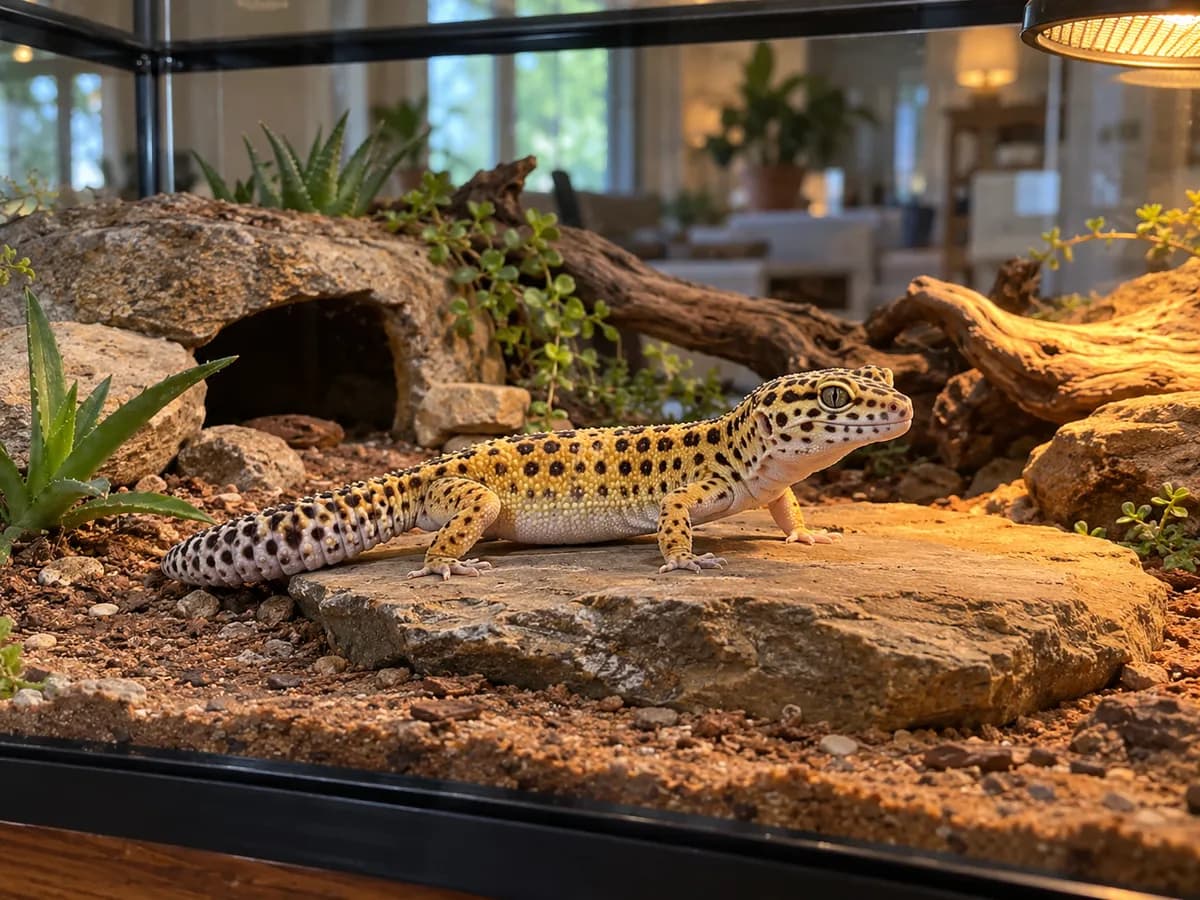
Between 10 months and 10 years, leopard geckos enjoy calm, long adult years. The right temperatures, a regular feeding routine, enrichment and tracking condition through tail thickness are the foundation of this stage.
Em resumo
- Adults eat less often than juveniles.
- The tail is a fat store; its thickness is one sign of condition.
- A warm–cool gradient, hides and a humid hide are needed for life.
- Enrichment such as different textures, climbing areas and foraging is helpful.
- Males must not be housed together, as it leads to fights.
Adulthood runs from about 10 months to 10 years of age. Your leopard gecko has reached adult size; its habits are settled and it is often more used to handling.
What is happening in this stage?
- Growth is complete and sheds become less frequent.
- Patterns reach their adult look.
- Appetite may drop seasonally; females can lay eggs even without a male.
What should you do differently?
- Diet: Appropriately sized insects, less often than in youth; set variety and supplements with your veterinarian.
- Heat: The heat routine and thermostat checks.
- Enrichment: Different substrate textures, low climbing areas and offering insects in different parts of the enclosure.
- Housing: Alone or with compatible females; never keep males together.
What should you monitor?
- Weight and tail thickness (weighing at home)
- Appetite and droppings
- Complete sheds
- Eyes and activity
Expected behavior
Hiding during the day, becoming active in the evening, using one corner of the enclosure as a toilet and twitching the tail tip while hunting are normal at this stage.
Reminders
- Check-ups yearly or as often as your veterinarian recommends
- Monthly weighing
- Thermostat and thermometer checks
Next stage
From about 10 years of age your leopard gecko enters the senior stage.
Os intervalos de idade são aproximados; as diferenças dentro de uma espécie (como o tamanho nos cães) podem antecipar ou atrasar as transições.
Este conteúdo destina-se apenas a informação geral e não substitui um exame veterinário nem um diagnóstico. Se estiver preocupado com a saúde do seu animal, contacte o seu veterinário.