

The young budgie stage
In their first months, budgies get to know their new home, its sounds and their people. A calm start, a varied diet and safe flying time are the foundations of this stage.
Em resumo
- Let a newly arrived bird settle into the cage and room for the first few days.
- Budgies are flock animals; social contact, and often a bird companion, matters.
- The diet shouldn't be seed alone; vary it with pellets, vegetables and greens.
- Provide supervised flying time in a safe room.
- Hand-taming should be patient, food-rewarded and done in short sessions.
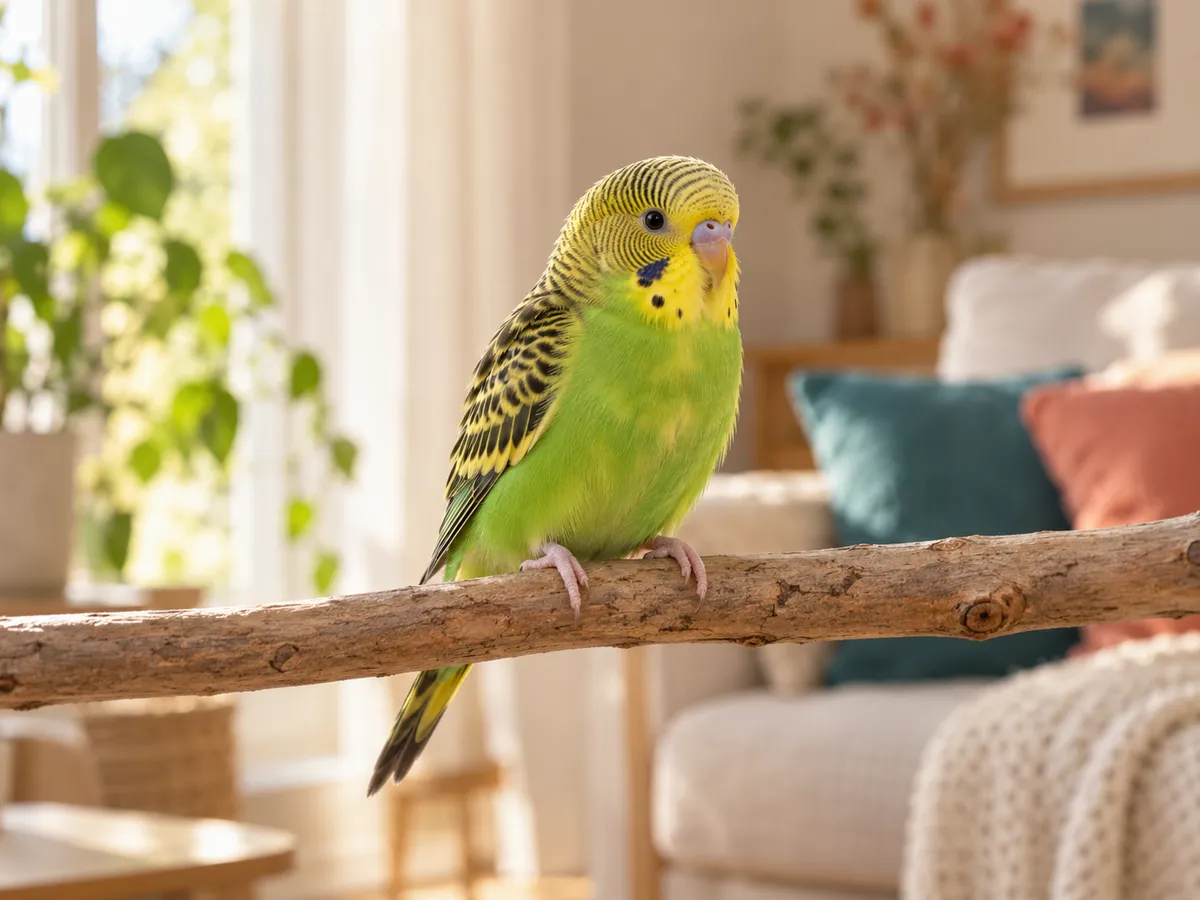
The juvenile stage runs from hatching to about 6 months. Budgies complete their feathers, learn to fly and get to know their surroundings; young birds often have forehead bars and dark eyes.
What is happening in this stage?
- The first moult happens and adult feather patterns appear.
- Flying skill and balance develop.
- They learn sounds, people and their surroundings; trust is shaped now.
- Early attempts at mimicry and chatter may begin.
What should you do differently?
- First days: Place the cage in a quiet corner; for the first few days only refresh food and water, and talk softly nearby.
- Diet: Quality seed or pellets, plus fresh vegetables and greens every day; introduce new foods patiently.
- Flying: Flying time in a safe room where you've checked windows, mirrors and other hazards.
- Taming: Start by keeping your hand near the cage; reward stepping onto a finger with small treats.
What should you monitor?
- Weight (weekly weighing on a kitchen scale)
- Appetite and droppings
- Feather condition and sitting fluffed up
- Activity and chatter
Expected behavior
Exploring everything with their beak, chirping, short and clumsy flights and frequent naps are normal at this stage.
Reminders
- First veterinary check-up (with an avian-experienced vet)
- Weekly weighing
- Daily fresh water and clean food dishes
Next stage
From about 6 months your budgie enters the adult stage.
Os intervalos de idade são aproximados; as diferenças dentro de uma espécie (como o tamanho nos cães) podem antecipar ou atrasar as transições.
Este conteúdo destina-se apenas a informação geral e não substitui um exame veterinário nem um diagnóstico. Se estiver preocupado com a saúde do seu animal, contacte o seu veterinário.