
Brown bears
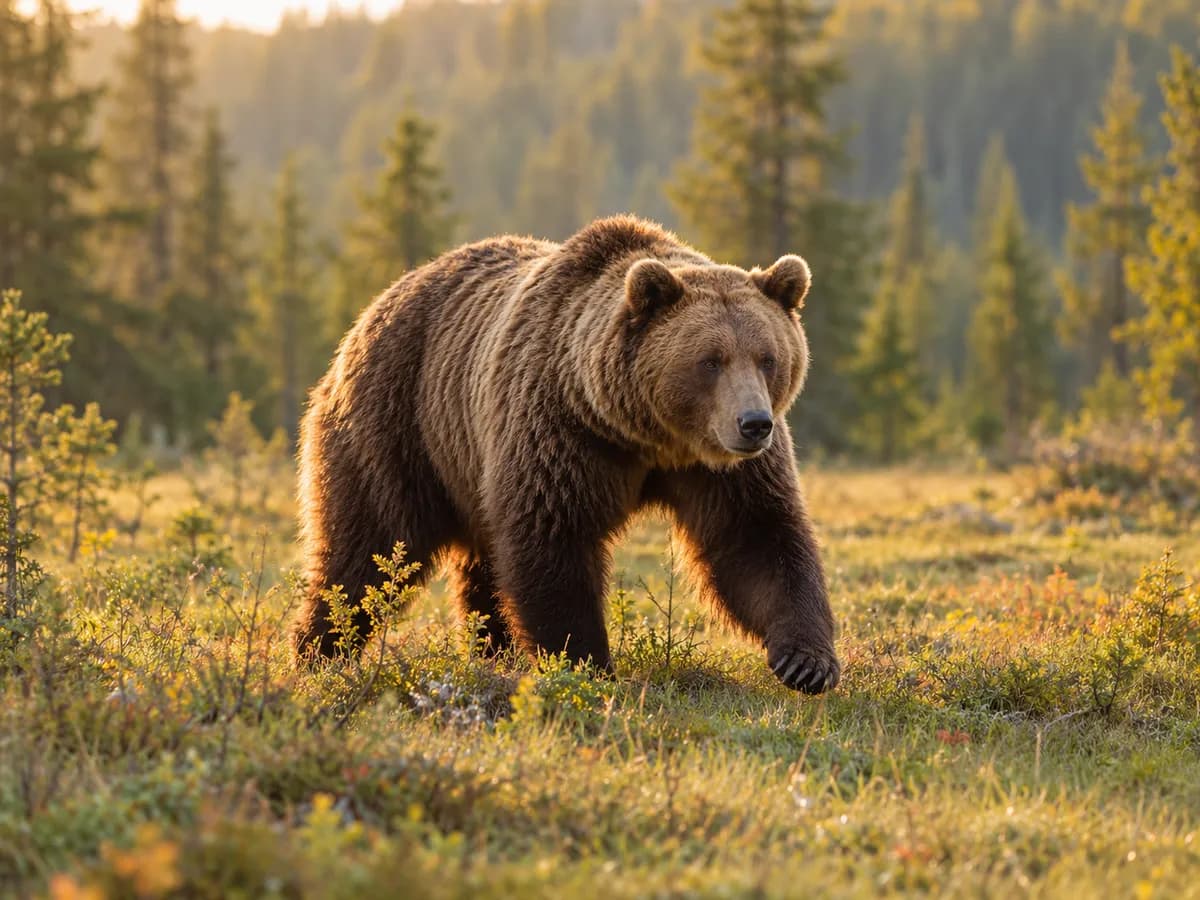
The world's most widespread bear, the brown bear also lives in Türkiye's mountain forests. Despite its powerful look, it is an omnivore whose diet includes a lot of plants, fruit and roots.
- Длина
- 1,5–2,8 m
- Масса
- 80–600 kg
- Продолжительность жизни в природе
- 20–30 лет
- Охранный статус (МСОП)
- Вызывает наименьшие опасения (LC)
Значения приблизительные для взрослых особей и зависят от пола, подвида и популяции.
Коротко
Главные факты: Бурые медведи.
- Where does it live?Brown bears live in the forests, mountains and tundra of North America, Europe and Asia.
- What does it eat?It is an omnivore whose diet changes with the seasons.
- Behaviour and social lifeApart from mothers with cubs, brown bears mostly live alone.
- CubsCubs are born in the den during winter, usually 1–3 at a time.
Подробно
Коротко
- The brown bear is the most widely distributed bear species.
- In Türkiye it lives in the forested mountains of the Black Sea region and eastern Anatolia.
- It is an omnivore: it eats plants, fruit, roots, insects, fish and meat.
- It spends the winter in a den in a state similar to hibernation.
- The IUCN lists it as Least Concern globally.
The brown bear (Ursus arctos) is recognisable by the muscular hump on its shoulders and its thick fur. Its coat can range from light blond to dark brown. North America's "grizzly" and Alaska's large Kodiak bears are subspecies of this species.
Where does it live?
Brown bears live in the forests, mountains and tundra of North America, Europe and Asia. In Türkiye they are found especially in the forested mountains of the Black Sea region and eastern Anatolia.
What does it eat?
It is an omnivore whose diet changes with the seasons. It eats grass, roots, fruit, nuts, acorns, insects, honey and fish; when it gets the chance it also hunts small and large mammals or scavenges. In some regions brown bears are famous for catching salmon in rivers.
Behaviour and social life
Apart from mothers with cubs, brown bears mostly live alone. In autumn they eat a great deal to store fat for winter. They spend the winter resting in a den, often one they dig themselves, with a lowered body temperature and metabolism.
Cubs
Cubs are born in the den during winter, usually 1–3 at a time. They are very small at birth and grow on their mother's milk in the den. Cubs stay with their mother for 2–3 years.
Conservation status
The brown bear is listed as Least Concern (LC) globally on the IUCN Red List. However, some regional populations are small and isolated. Habitat loss, conflict with people and illegal hunting are the main problems.
Fun facts
- Brown bears can run surprisingly fast over short distances.
- Their sense of smell is extremely keen.
- The shoulder hump is made of powerful muscles they use for digging.
Похожие животные
Другие животные из той же группы.
Уважение к природе — сильнее завтра
Защита дикой природы — общая ответственность.
Если вы нашли раненое или детёныша дикого животного, не трогайте его и сообщите в местную службу охраны природы. Больше знаний — больше осознанности.
- Уважайте природные места обитания
- Наблюдайте за животными издалека
- Не оставляйте мусор на природе
- Поддерживайте устойчивое будущее