

Jaguars
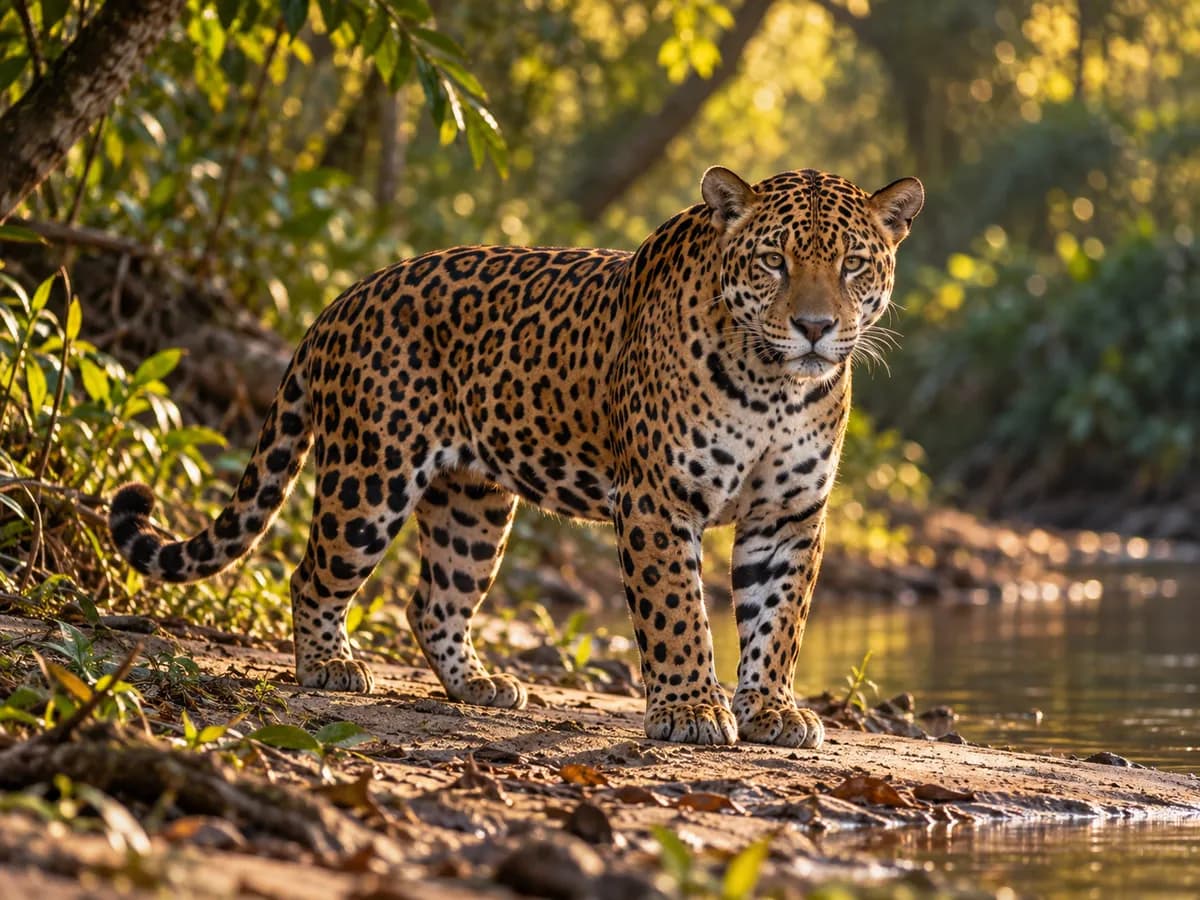
The largest cat in the Americas, the jaguar has one of the most powerful bites of any cat. It lives in rainforests and wetlands and loves water.
- Длина
- 1,1–1,9 m
- Масса
- 45–120 kg
- Продолжительность жизни в природе
- 12–15 лет
- Охранный статус (МСОП)
- Близок к уязвимому положению (NT)
Значения приблизительные для взрослых особей и зависят от пола, подвида и популяции.
Коротко
Главные факты: Ягуары.
- Where does it live?It lives in Central and South America, from Mexico to northern Argentina.
- What does it eat?It is a carnivore that can eat more than 80 different prey species, including peccaries, capybaras, deer, caimans, turtles and fish.
- Behaviour and social lifeJaguars live alone and hold large territories.
- CubsAfter a pregnancy of about three and a half months, the female usually has 1–4 cubs.
Подробно
Коротко
- The jaguar is the largest cat in the Americas.
- Its powerful bite can even pierce a turtle's shell.
- It is an excellent swimmer and prefers habitats near water.
- The rosettes on its coat have small spots inside them.
- The IUCN lists it as Near Threatened; deforestation is the biggest threat.
The jaguar (Panthera onca) is the only Panthera species in the Americas and the continent's largest cat. It resembles the leopard but is bigger and stockier. Most of the rosettes on its coat have small black spots in the centre, an easy way to tell it from a leopard.
Where does it live?
It lives in Central and South America, from Mexico to northern Argentina. The largest populations are in the Amazon basin and Brazil's Pantanal wetlands. It prefers rainforests and wetlands near water.
What does it eat?
It is a carnivore that can eat more than 80 different prey species, including peccaries, capybaras, deer, caimans, turtles and fish. It often kills with a powerful bite aimed at the skull.
Behaviour and social life
Jaguars live alone and hold large territories. They can be active by day and night. Unlike most cats, they love water, swim very well and hunt in water.
Cubs
After a pregnancy of about three and a half months, the female usually has 1–4 cubs. The cubs stay with their mother for about two years.
Conservation status
The jaguar is listed as Near Threatened (NT) on the IUCN Red List. Fragmented habitat from deforestation and land clearing, conflict with ranchers and illegal hunting are the main threats.
Fun facts
- The name "jaguar" is thought to come from a South American Indigenous language.
- Entirely black jaguars also exist and are also popularly called "black panthers".
- Jaguars can roar; their call sounds like a repeated, cough-like grunt.
Похожие животные
Другие животные из той же группы.
Уважение к природе — сильнее завтра
Защита дикой природы — общая ответственность.
Если вы нашли раненое или детёныша дикого животного, не трогайте его и сообщите в местную службу охраны природы. Больше знаний — больше осознанности.
- Уважайте природные места обитания
- Наблюдайте за животными издалека
- Не оставляйте мусор на природе
- Поддерживайте устойчивое будущее