

Lions
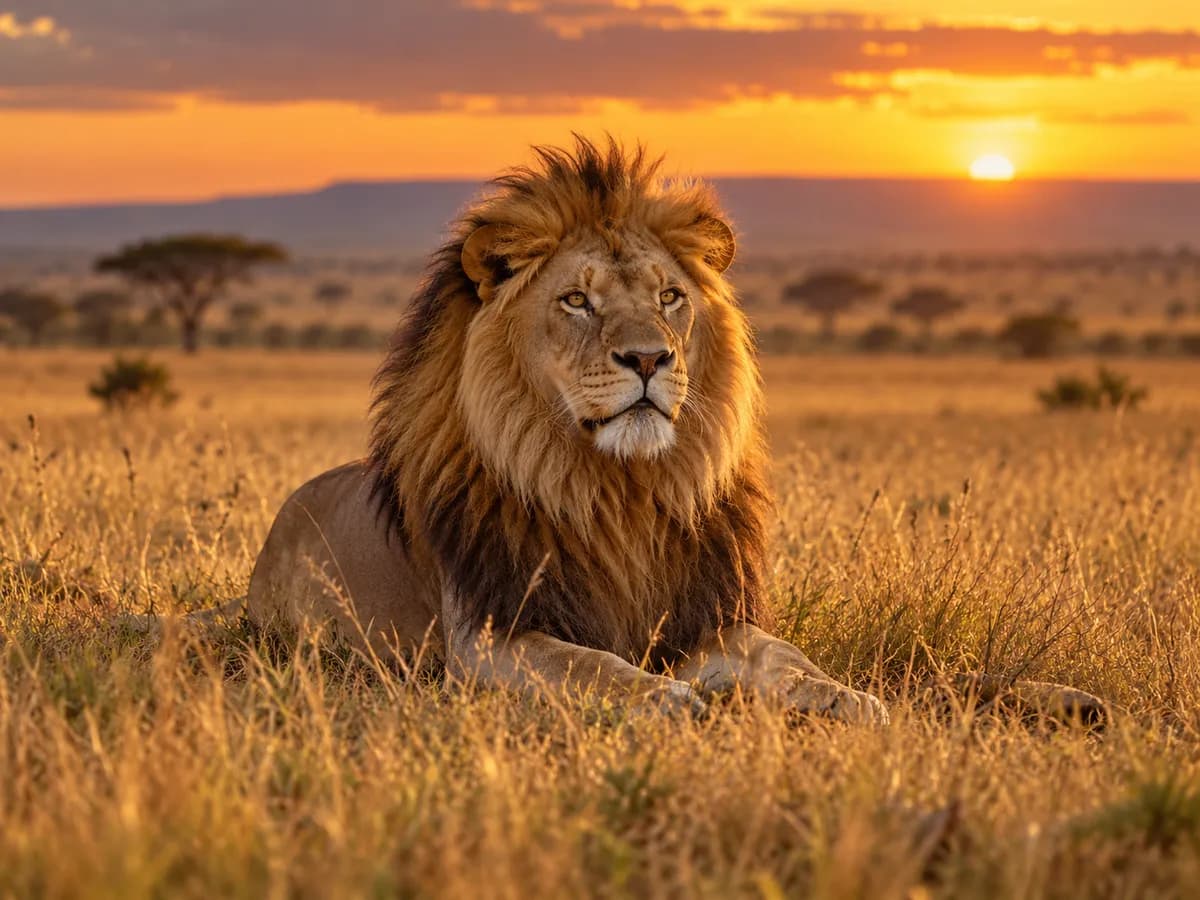
The only big cat that lives in groups, the lion is the symbol of the African savanna. It spends much of the day resting, while hunting is mostly done by the females working together.
- Длина
- 1,7–2,5 m
- Масса
- 120–250 kg
- Продолжительность жизни в природе
- 10–14 лет
- Охранный статус (МСОП)
- Уязвимый (VU)
Значения приблизительные для взрослых особей и зависят от пола, подвида и популяции.
Коротко
Главные факты: Львы.
- Where does it live?Most lions live in Africa south of the Sahara, in savannas, open woodlands and grasslands.
- What does it eat?Lions are carnivores.
- Behaviour and social lifeA pride usually consists of several related females, their cubs and one or more adult males.
- CubsAfter a pregnancy of about three and a half months, a lioness usually gives birth to 2–4 cubs.
Подробно
Коротко
- Lions live in social groups called prides, made up of related females and their cubs.
- Most hunting is done by females, often cooperatively.
- They can rest for up to 20 hours a day and are most active at dusk and at night.
- A lion's roar can be heard up to 8 kilometres away and helps mark territory.
- The IUCN lists the lion as Vulnerable; habitat loss is the biggest threat.
The lion (Panthera leo) is the world's second-largest cat after the tiger. The mane that covers the male's neck and shoulders makes it one of the most recognisable animals in nature. Mane colour and thickness vary between individuals and usually darken with age.
Where does it live?
Most lions live in Africa south of the Sahara, in savannas, open woodlands and grasslands. A very small population lives in India's Gir Forest in Gujarat. Historically, lions ranged widely from southern Europe to the Middle East, including Anatolia.
What does it eat?
Lions are carnivores. Their main prey are medium and large herbivores such as zebras, antelopes, warthogs and buffalo. When they get the chance, they also take kills from other predators. An adult can eat a large amount of meat in one meal and then rest for days without hunting.
Behaviour and social life
A pride usually consists of several related females, their cubs and one or more adult males. Females generally stay in the pride they were born into, while young males leave when they mature; some form "coalitions" with their brothers and try to take over another pride. Males defend the territory and mark its borders with roars and scent.
Cubs
After a pregnancy of about three and a half months, a lioness usually gives birth to 2–4 cubs. Females in a pride often raise their cubs together and may even nurse each other's young.
Conservation status
The lion is listed as Vulnerable (VU) on the IUCN Red List. Over the past century, most of its former range has been lost. The main threats are habitat loss to farming and settlement, declining prey, and conflict with people protecting their livestock.
Fun facts
- A lion's mane gives rivals and females clues about the male's health.
- Unlike most cats, lions do not completely avoid water; they can swim when needed.
- Roaring is possible thanks to a special structure in their larynx; lions cannot purr continuously like house cats.
Похожие животные
Другие животные из той же группы.
Уважение к природе — сильнее завтра
Защита дикой природы — общая ответственность.
Если вы нашли раненое или детёныша дикого животного, не трогайте его и сообщите в местную службу охраны природы. Больше знаний — больше осознанности.
- Уважайте природные места обитания
- Наблюдайте за животными издалека
- Не оставляйте мусор на природе
- Поддерживайте устойчивое будущее