

Monarch butterflies
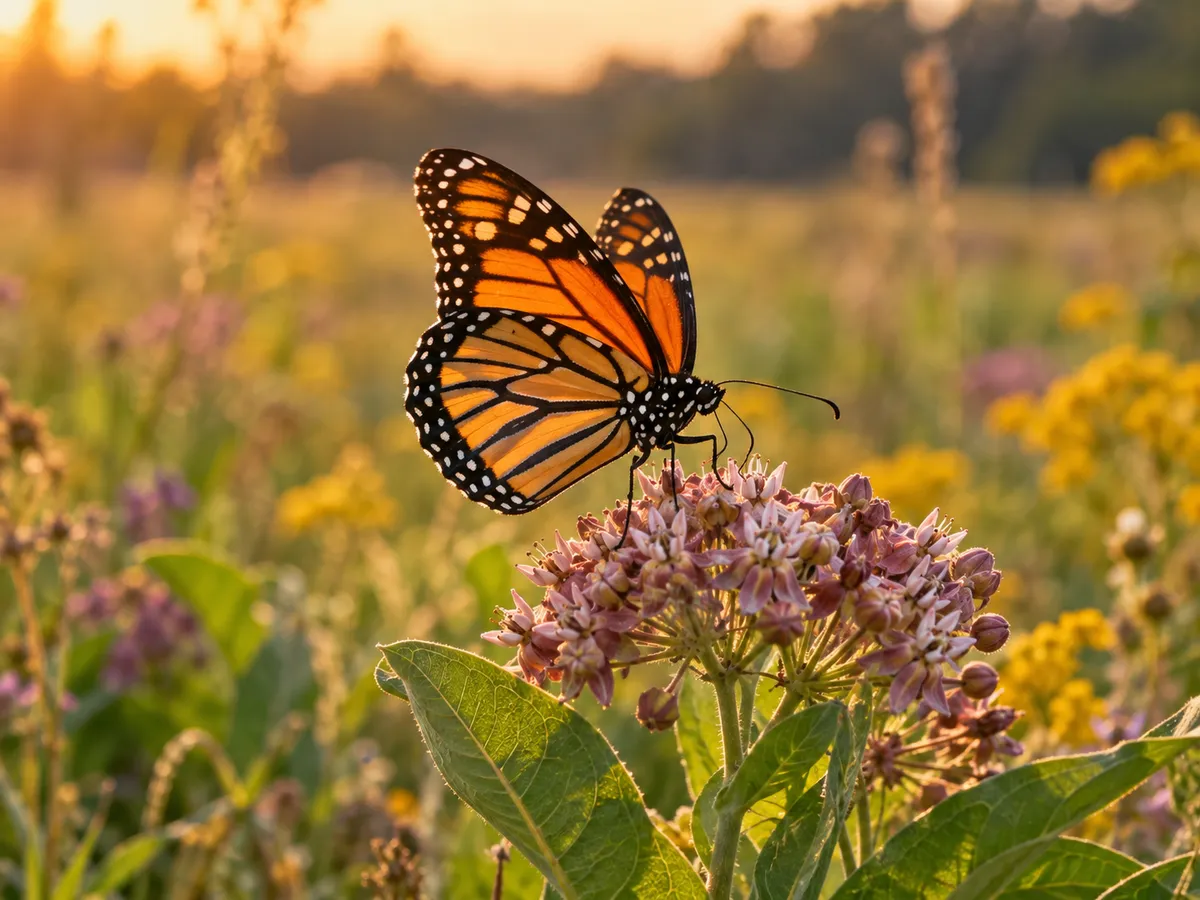
Known for its orange-and-black wings, the monarch butterfly makes one of the longest migrations in the insect world. In North America, millions of monarchs overwinter together in Mexican forests.
- Размах крыльев
- 9–10 cm
- Питание
- Растительноядный
- Класс
- Беспозвоночное
Значения приблизительные для взрослых особей и зависят от пола, подвида и популяции.
Коротко
Главные факты: Бабочки-монархи.
- Where does it live?Its best-known populations are in North America.
- What does it eat?Caterpillars feed only on the leaves of milkweed (Asclepias) species.
- Migration and life cycleThe eastern North American population migrates thousands of kilometres each autumn from Canada and the USA to mountain forests in central Mexico,…
- Life stagesThe monarch passes through four stages: egg, caterpillar, pupa (chrysalis) and adult.
Подробно
Коротко
- The monarch is famous for its migration of thousands of kilometres in North America.
- Its caterpillars feed only on milkweed plants.
- Substances from milkweed make it distasteful and harmful to predators.
- Completing the migration takes several generations.
- The IUCN lists the migratory North American population as Vulnerable.
The monarch butterfly (Danaus plexippus) is a large butterfly easily recognised by the black veins and white spots on its orange wings. Its bright colours act as a warning to predators: "don't eat me".
Where does it live?
Its best-known populations are in North America. There are also resident populations in Central and South America, Australia, some Pacific islands and places such as the Canary Islands. It uses open meadows, field edges and areas where milkweed grows.
What does it eat?
Caterpillars feed only on the leaves of milkweed (Asclepias) species. Adult butterflies feed on flower nectar. Chemicals the caterpillars take from milkweed build up in their bodies and make them distasteful and harmful to birds.
Migration and life cycle
The eastern North American population migrates thousands of kilometres each autumn from Canada and the USA to mountain forests in central Mexico, where millions of butterflies overwinter together. The return north begins in spring, but several generations complete the journey together. Summer generations live only a few weeks as adults, while the generation that migrates in autumn can live for months.
Life stages
The monarch passes through four stages: egg, caterpillar, pupa (chrysalis) and adult. The female lays her eggs one at a time on milkweed leaves. The green, gold-spotted chrysalis is known as one of nature's most elegant forms.
Conservation status
In its 2023 assessment, the IUCN listed the migratory monarch subspecies as Vulnerable (VU). Loss of milkweed habitat to farming and development, pesticides, climate change and damage to overwintering forests in Mexico are the main threats.
Fun facts
- Migrating monarchs are known to use the position of the sun to find their way.
- At overwintering sites, clusters of butterflies completely cover tree branches.
- Planting native milkweed in gardens is one way to help monarchs.
Похожие животные
Другие животные из той же группы.
Уважение к природе — сильнее завтра
Защита дикой природы — общая ответственность.
Если вы нашли раненое или детёныша дикого животного, не трогайте его и сообщите в местную службу охраны природы. Больше знаний — больше осознанности.
- Уважайте природные места обитания
- Наблюдайте за животными издалека
- Не оставляйте мусор на природе
- Поддерживайте устойчивое будущее