

Humpback whales
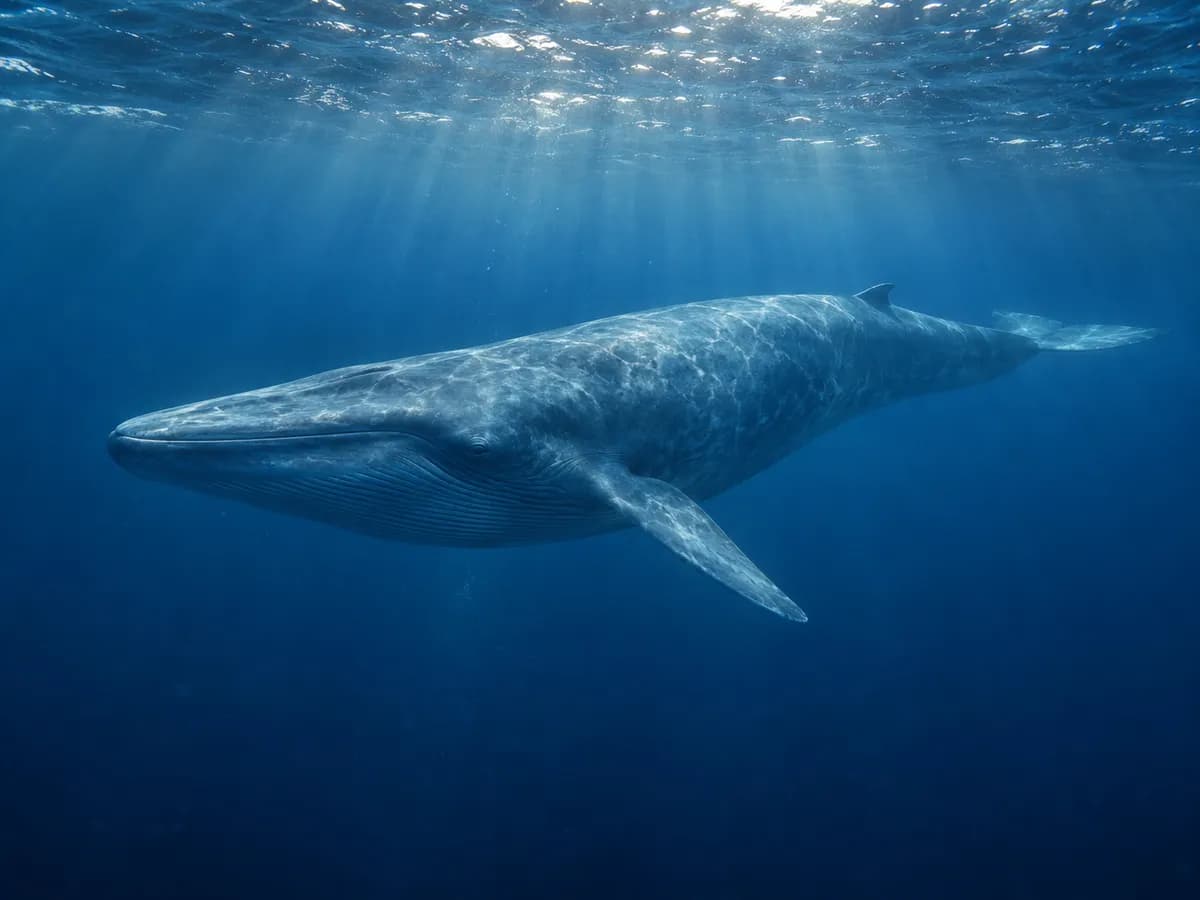
Known for its long flippers, leaps out of the water and complex "songs", the humpback whale makes long migrations between oceans. Many populations have recovered since commercial whaling was banned.
- Länge
- 12–16 m
- Gewicht
- 25–40 t
- Lebenserwartung in freier Natur
- 45–50 Jahre
- Gefährdungsstatus (IUCN)
- Nicht gefährdet (LC)
Die Werte gelten ungefähr für erwachsene Tiere und schwanken je nach Geschlecht, Unterart und Population.
Auf einen Blick
Die wichtigsten Fakten über Buckelwale.
- Where does it live?It lives in all the world's oceans.
- What does it eat?It feeds on krill, small crustaceans and schooling fish such as herring and mackerel, filtering water through its baleen plates to trap food.
- Behaviour and social lifeHumpbacks are usually seen alone or in small groups.
- CalvesPregnancy lasts about 11–12 months and a single calf is born.
Ausführlich
Kurz gesagt
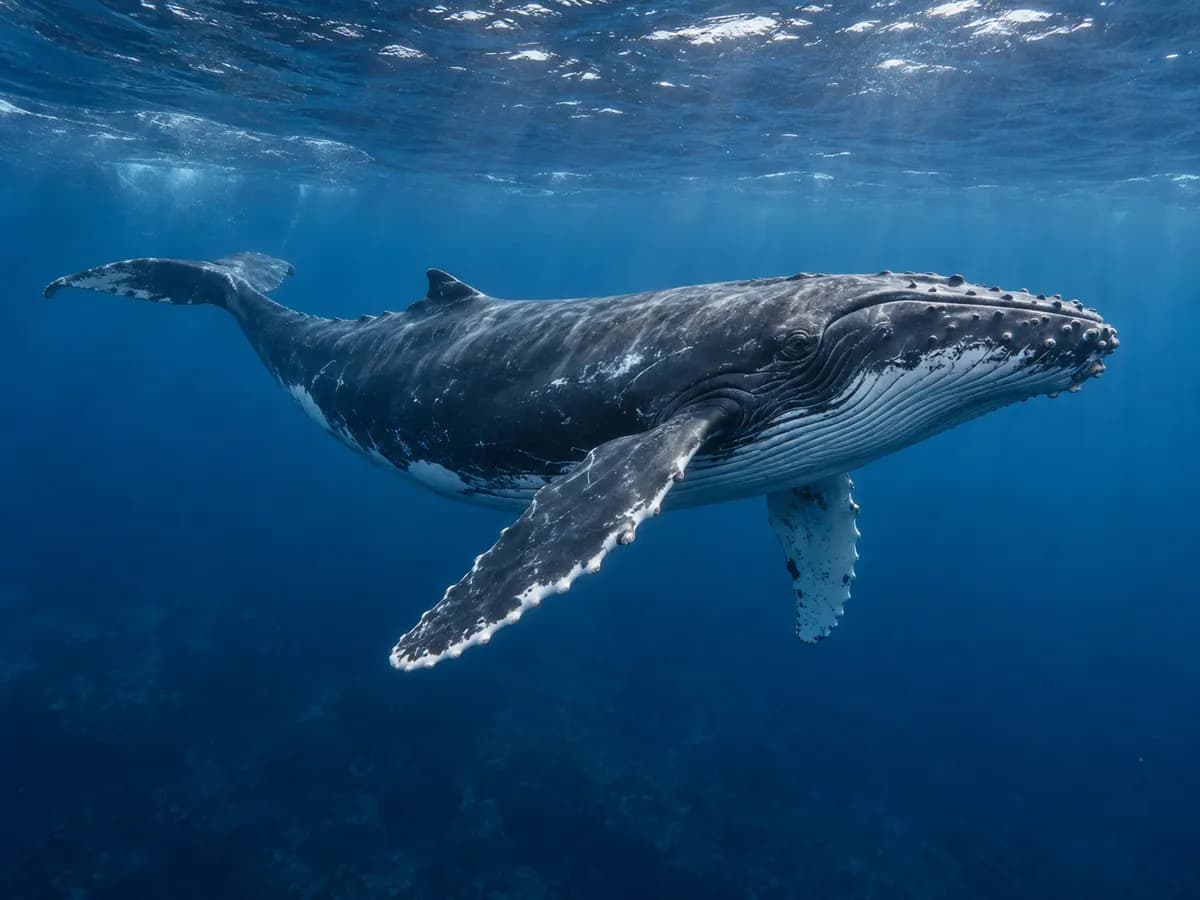
- A humpback's pectoral fins are about a third of its body length.
- Males sing complex songs that can last for hours.
- It migrates thousands of kilometres between feeding and breeding grounds.
- Some groups hunt fish by trapping them in "nets" of air bubbles.
- The IUCN lists it as Least Concern; it is a conservation success story.
The humpback whale (Megaptera novaeangliae) is a large baleen whale recognisable by the hump in front of its dorsal fin and its very long, wing-like pectoral fins. The black-and-white pattern on the underside of its tail fluke is different for every individual, and researchers identify whales by these patterns.
Where does it live?
It lives in all the world's oceans. It usually spends summer in food-rich waters near the poles and migrates to tropical waters in winter to breed and give birth. It is rarely seen in the Mediterranean.
What does it eat?
It feeds on krill, small crustaceans and schooling fish such as herring and mackerel, filtering water through its baleen plates to trap food. Some groups swim in circles around a school of prey to create a "net" of air bubbles and then swim upward with their mouths open.
Behaviour and social life
Humpbacks are usually seen alone or in small groups. They are known for spectacular behaviour such as breaching fully out of the water and slapping the surface with their flippers and tails. The long, complex songs sung by males are shared among the males of a population and change over time.
Calves
Pregnancy lasts about 11–12 months and a single calf is born. The calf grows quickly on its mother's fatty milk in the tropical waters where it was born and makes its first migration with her.
Conservation status
The humpback whale is listed as Least Concern (LC) on the IUCN Red List. Commercial whaling in the 20th century greatly reduced populations, but many have recovered strongly since whaling was banned. Entanglement in fishing gear, ship strikes and ocean noise are the main threats today.
Fun facts
- "Megaptera" in its scientific name means "big wing".
- Humpback songs can travel very long distances underwater.
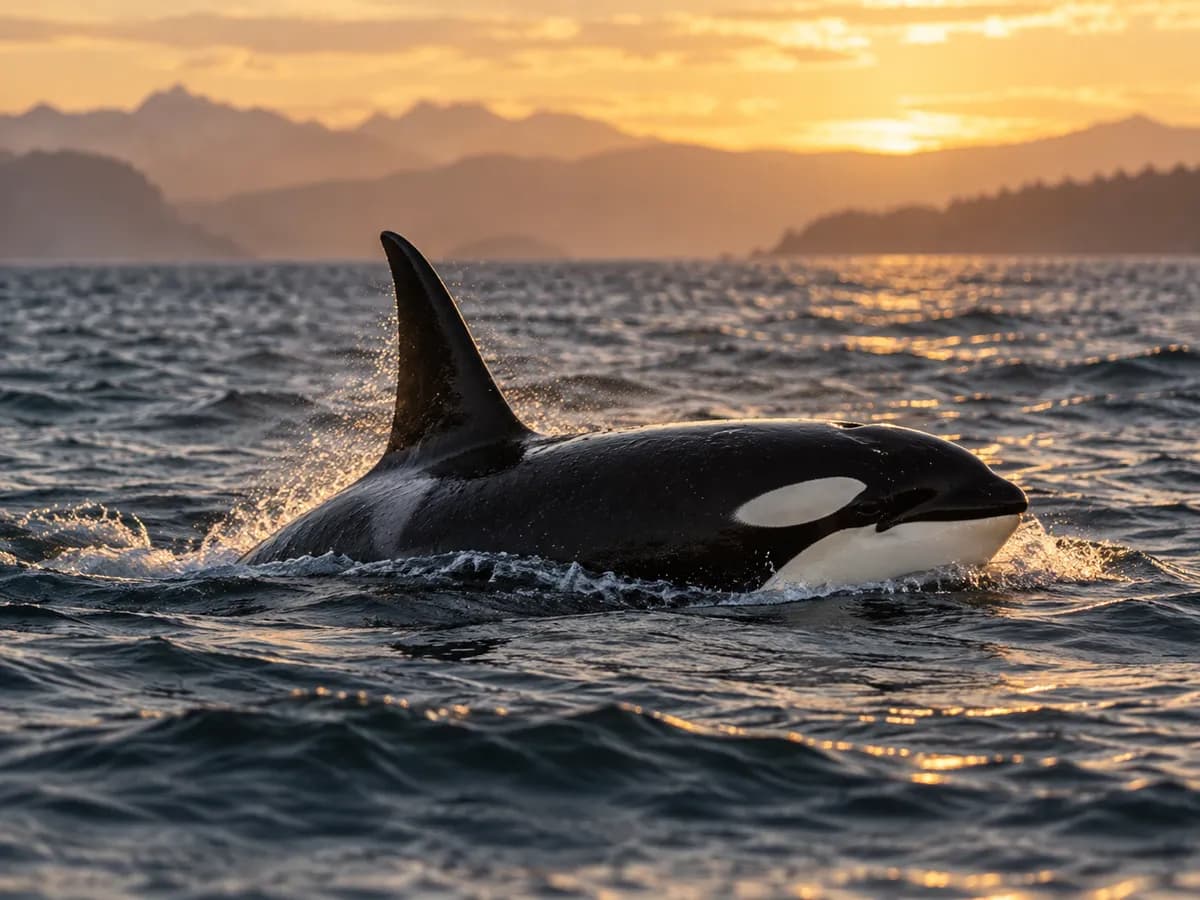
- Some humpbacks have been seen apparently trying to protect other animals from attacking orcas.
Ähnliche Tiere
Weitere Tiere aus derselben Gruppe.
Respekt vor der Natur, ein stärkeres Morgen
Wildtiere zu schützen ist unser aller Verantwortung.
Wenn Sie ein verletztes oder junges Wildtier finden, fassen Sie es nicht an und informieren Sie die örtliche Naturschutzbehörde. Mehr Wissen, mehr Bewusstsein.
- Natürliche Lebensräume respektieren
- Wildtiere aus der Ferne beobachten
- Keinen Müll in der Natur lassen
- Eine nachhaltige Zukunft unterstützen