

Giraffes
The tallest animal on Earth, the giraffe uses its long neck to reach leaves other herbivores cannot. These gentle giants of the African savanna are far more social than they seem.
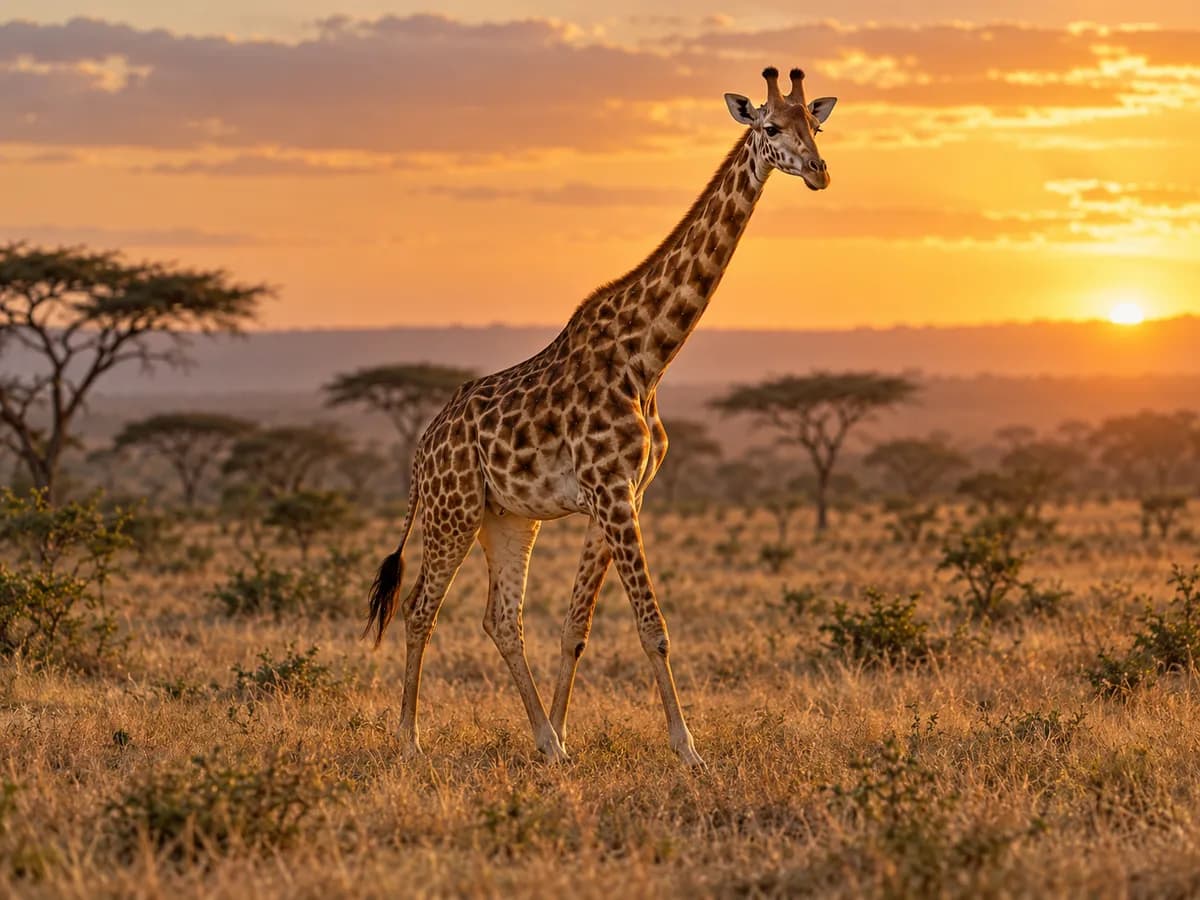
- Höhe
- 4,3–5,7 m
- Gewicht
- 0,7–1,9 t
- Lebenserwartung in freier Natur
- 20–25 Jahre
- Gefährdungsstatus (IUCN)
- Gefährdet (VU)
Die Werte gelten ungefähr für erwachsene Tiere und schwanken je nach Geschlecht, Unterart und Population.
Auf einen Blick
Die wichtigsten Fakten über Giraffen.
- Where does it live?Giraffes live in Africa south of the Sahara, in savannas dotted with trees and in open woodlands.
- What does it eat?They are herbivores that mostly eat the leaves of trees and shrubs, with acacias being the best-known food.
- Behaviour and social lifeGiraffes live in loose groups whose members change often.
- CalvesPregnancy lasts about 15 months.
Ausführlich
Kurz gesagt
- The giraffe is the tallest land animal in the world.
- Its long neck has only seven vertebrae, just like a human's.
- It gathers leaves from trees such as acacias with its long, gripping tongue.
- Each giraffe's patch pattern is unique.
- The IUCN lists the giraffe as Vulnerable; numbers have fallen markedly in recent decades.
The giraffe (Giraffa camelopardalis) is the tallest animal in the world, reaching more than 5 metres. Its long neck and legs let it reach high branches on savanna trees. The patchy pattern of its coat is different for every individual. Scientists still debate whether giraffes are a single species or several.
Where does it live?
Giraffes live in Africa south of the Sahara, in savannas dotted with trees and in open woodlands.
What does it eat?
They are herbivores that mostly eat the leaves of trees and shrubs, with acacias being the best-known food. Their long, gripping tongues and lips let them pick leaves even from thorny branches. Because they get moisture from plants, they do not need to drink every day; to drink, they must spread their legs and bend down.
Behaviour and social life
Giraffes live in loose groups whose members change often. Their height lets them spot predators from far away. Males "neck" — swinging their necks against each other — to compete for the right to mate.
Calves
Pregnancy lasts about 15 months. The female gives birth standing up; the calf drops about two metres to the ground and can stand and walk within hours.
Conservation status
The giraffe is listed as Vulnerable (VU) on the IUCN Red List. Habitat loss to farming and settlement, poaching and regional conflicts have caused their numbers to decline.
Fun facts
- A giraffe's heart is powerful enough to pump blood all the way up its long neck to the brain.
- Giraffes usually sleep only in very short bouts.
- The horn-like knobs on their heads are called ossicones and are covered in skin.
Ähnliche Tiere
Weitere Tiere aus derselben Gruppe.
Respekt vor der Natur, ein stärkeres Morgen
Wildtiere zu schützen ist unser aller Verantwortung.
Wenn Sie ein verletztes oder junges Wildtier finden, fassen Sie es nicht an und informieren Sie die örtliche Naturschutzbehörde. Mehr Wissen, mehr Bewusstsein.
- Natürliche Lebensräume respektieren
- Wildtiere aus der Ferne beobachten
- Keinen Müll in der Natur lassen
- Eine nachhaltige Zukunft unterstützen