

- Länge
- 0,8–1,3 m
- Gewicht
- 15–35 kg
- Lebenserwartung in freier Natur
- 10–17 Jahre
- Gefährdungsstatus (IUCN)
- Nicht gefährdet (LC)
Die Werte gelten ungefähr für erwachsene Tiere und schwanken je nach Geschlecht, Unterart und Population.
Auf einen Blick
Die wichtigsten Fakten über Luchse.
- Where does it live?It lives across a vast area from western Europe to Siberia, Central Asia and the Himalayas, especially in forests and mountains.
- What does it eat?It is a carnivore.
- Behaviour and social lifeLynx live alone, use very large territories and are mostly active at dusk and at night.
- KittensIn late spring, the female usually has 2–3 kittens in a sheltered den.
Ausführlich
Kurz gesagt
- The Eurasian lynx is the largest of the four lynx species.
- It is easy to recognise by the black tufts on its ears and its short tail.
- It hunts small deer such as roe deer, and hares.
- Its wide paws work like snowshoes in snow.
- The IUCN lists it as Least Concern globally.
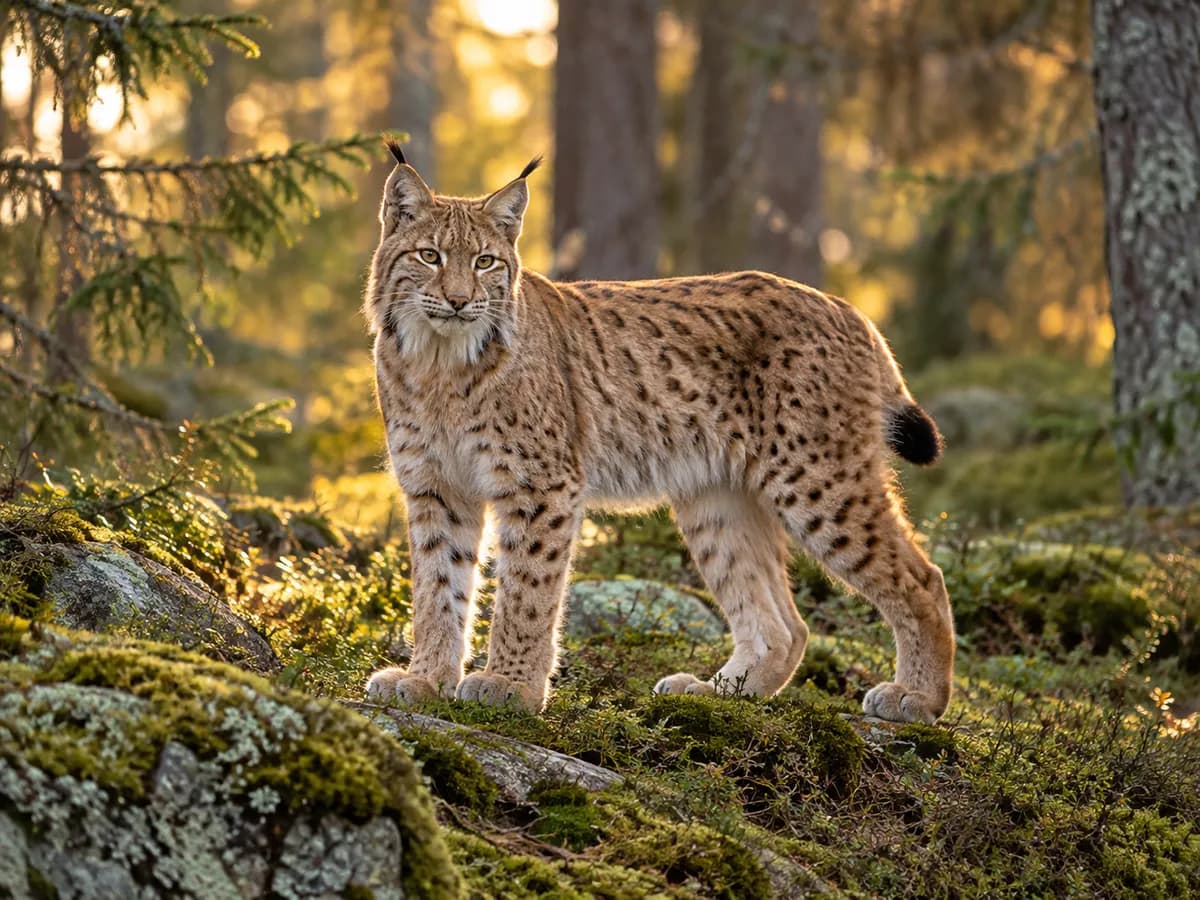
The Eurasian lynx (Lynx lynx) is a medium-sized cat. It is easy to recognise by the black tufts on its ears, the ruff of fur framing its face, its spotted coat and its short, black-tipped tail. Long legs and wide paws help it move through snowy terrain.
Where does it live?
It lives across a vast area from western Europe to Siberia, Central Asia and the Himalayas, especially in forests and mountains. In Türkiye it is found in the forests of the eastern Black Sea region, eastern Anatolia and some other areas; camera-trap studies have documented its presence.
What does it eat?
It is a carnivore. Small hoofed animals such as roe deer and chamois, and hares, are its main prey; it also catches birds and rodents. It creeps close to its prey and attacks with a short, powerful leap.
Behaviour and social life
Lynx live alone, use very large territories and are mostly active at dusk and at night. Because they are so secretive, they are rarely seen in the wild.
Kittens
In late spring, the female usually has 2–3 kittens in a sheltered den. The kittens stay with their mother for about ten months and learn to hunt from her.
Conservation status
The Eurasian lynx is listed as Least Concern (LC) globally on the IUCN Red List. In parts of Europe, however, it was driven to extinction and has since been reintroduced. Fragmented habitat, illegal killing and road accidents are the main threats.
Fun facts
- The ear tufts are thought to help with hearing, but their exact function is still debated.
- Lynx have very sharp eyesight.
- The Eurasian lynx is Europe's third-largest predator.
Ähnliche Tiere
Weitere Tiere aus derselben Gruppe.
Respekt vor der Natur, ein stärkeres Morgen
Wildtiere zu schützen ist unser aller Verantwortung.
Wenn Sie ein verletztes oder junges Wildtier finden, fassen Sie es nicht an und informieren Sie die örtliche Naturschutzbehörde. Mehr Wissen, mehr Bewusstsein.
- Natürliche Lebensräume respektieren
- Wildtiere aus der Ferne beobachten
- Keinen Müll in der Natur lassen
- Eine nachhaltige Zukunft unterstützen