

Raccoons
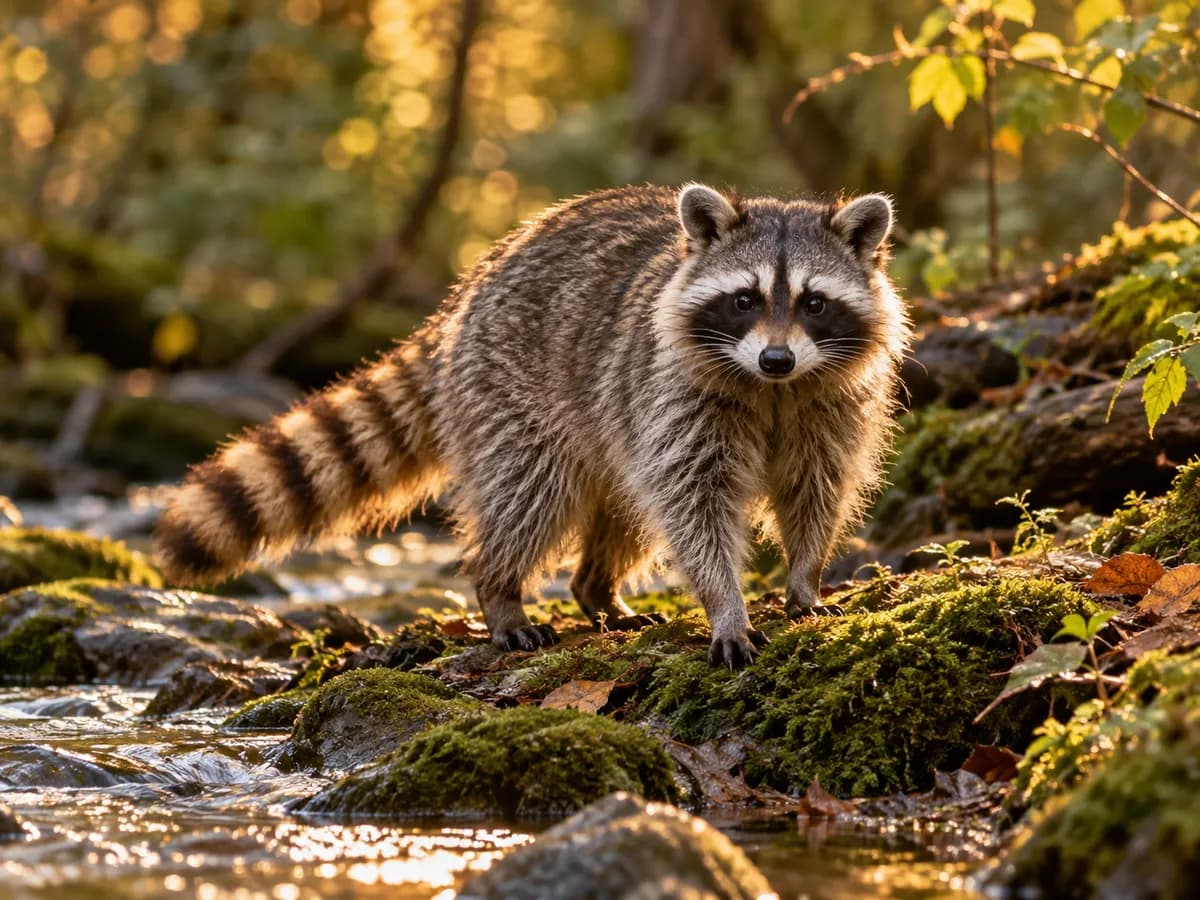
Known for the black "mask" on its face and its ringed tail, the raccoon is a clever animal with nimble front paws that thrives even in cities. It is native to North America.
- Länge
- 40–70 cm
- Gewicht
- 3,5–9 kg
- Lebenserwartung in freier Natur
- 2–5 Jahre
- Gefährdungsstatus (IUCN)
- Nicht gefährdet (LC)
Die Werte gelten ungefähr für erwachsene Tiere und schwanken je nach Geschlecht, Unterart und Population.
Auf einen Blick
Die wichtigsten Fakten über Waschbären.
- Where does it live?It lives across most of North America, from southern Canada to Central America.
- What does it eat?It is an omnivore that eats almost anything it can find: fruit, nuts, insects, worms, frogs, fish, bird eggs and small animals.
- Behaviour and social lifeRaccoons are mostly active at night.
- KitsIn spring, the female usually gives birth to 2–5 kits in a tree hole or similar shelter.
Ausführlich
Kurz gesagt
- The raccoon is a mammal native to North and Central America.
- Its front paws are very sensitive and dexterous.
- It is an omnivore that eats fruit, insects, frogs, eggs and human scraps.
- It adapts extremely well to cities.
- People introduced it to parts of Europe, where it is considered invasive.
The raccoon (Procyon lotor) is a medium-sized mammal recognisable by the black "mask" around its eyes and the dark rings on its tail. Its front paws are very dexterous, much like hands, and its sense of touch is highly developed.
Where does it live?
It lives across most of North America, from southern Canada to Central America. It uses forests, wetland edges and especially cities. In the 20th century it was introduced to European countries such as Germany and to Japan, where wild populations have become established.
What does it eat?
It is an omnivore that eats almost anything it can find: fruit, nuts, insects, worms, frogs, fish, bird eggs and small animals. In cities, bins and pet food also become food sources.
Behaviour and social life
Raccoons are mostly active at night. Handling food in or near water, which makes them look as if they are "washing" it, actually helps them feel the food better with their front paws. They are known for their problem-solving and memory, and can learn to open latched lids.
Kits
In spring, the female usually gives birth to 2–5 kits in a tree hole or similar shelter. The young stay with their mother for about a year.
Conservation status
The raccoon is listed as Least Concern (LC) on the IUCN Red List and is widespread in North America. In Europe it is considered an invasive alien species and is on the EU list because of its possible effects on native wildlife.
Fun facts
- "Lotor" in the raccoon's scientific name means "washer" in Latin.
- The sense of touch in its front paws uses a large part of its brain.
- Raccoons can remember a problem they solved even years later.
Gut zu wissen
Die wichtigsten Punkte.
- Do not feed wild animalsRaccoons and other wild animals can carry diseases. Do not feed them or try to keep them as pets.
Ähnliche Tiere
Weitere Tiere aus derselben Gruppe.
Respekt vor der Natur, ein stärkeres Morgen
Wildtiere zu schützen ist unser aller Verantwortung.
Wenn Sie ein verletztes oder junges Wildtier finden, fassen Sie es nicht an und informieren Sie die örtliche Naturschutzbehörde. Mehr Wissen, mehr Bewusstsein.
- Natürliche Lebensräume respektieren
- Wildtiere aus der Ferne beobachten
- Keinen Müll in der Natur lassen
- Eine nachhaltige Zukunft unterstützen