
Donkey care
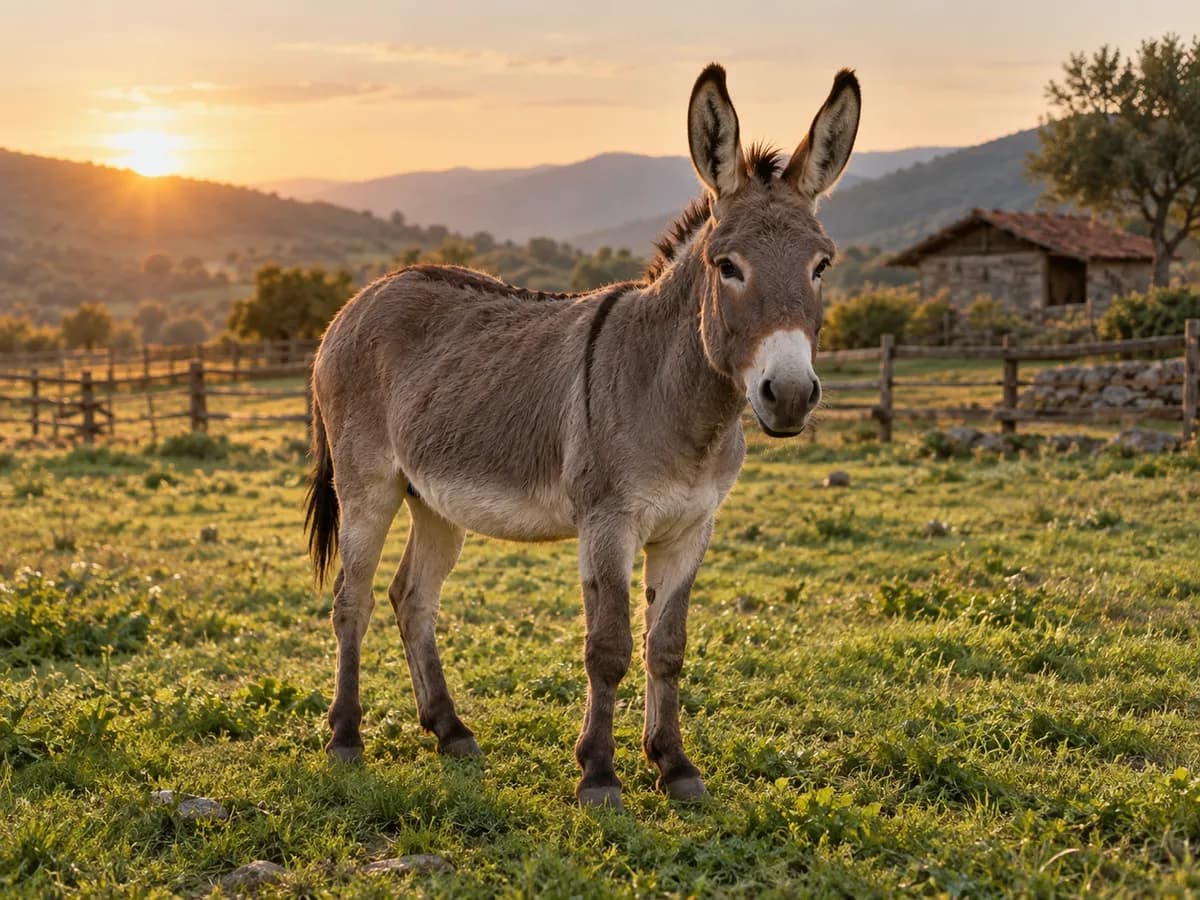
Donkeys come from dry regions and are hardy, intelligent and deeply attached to their companions. Although they look like horses, their needs differ: a fibrous, low-energy diet, shelter from rain and always a donkey companion.
- Classe
- Mammifère
- Groupe
- Chevaux et ânes
L'essentiel des soins
Les bases des soins pour Ânes.
- Housing and spaceShelter from rain: A donkey's coat is not waterproof like a horse's.
- Feeding routineDonkeys are adapted to eating low-nutrient, fibrous plants in their natural environment.
- WaterAlthough donkeys tolerate thirst well, they must always have access to clean water.
- Daily careHooves: Pick out hooves regularly and have them seen by a farrier.
En détail
En bref
- Donkeys are adapted to dry climates and should be fed fibrous, low-energy forage.
- Rich grass and too much feed easily make donkeys overweight.
- Their coat is not waterproof; a shelter from rain is essential.
- Donkeys bond strongly with a companion and should not be kept alone.
- They live a long time; caring for them is a long-term commitment.
Donkeys are hardy, intelligent animals whose origins lie in the dry regions of Africa. Rather than fleeing at once like horses, they stop and assess danger, which has earned them a reputation for being "stubborn"; in fact it is a sign of a cautious nature. With proper care they can live for more than 30 years.
Housing and space
- Shelter from rain: A donkey's coat is not waterproof like a horse's. They must always be able to reach a dry shelter from rain and wind.
- Dry ground: Their hooves are adapted to arid terrain; constantly wet, muddy ground increases hoof problems.
- Room to move: Provide a safe area where they can wander and explore.
Feeding routine
Donkeys are adapted to eating low-nutrient, fibrous plants in their natural environment. The basis of their diet is straw and low-energy hay. Rich, fresh grass and too much concentrate easily cause obesity and related problems in donkeys. Grazing time may need to be limited.
Water
Although donkeys tolerate thirst well, they must always have access to clean water. Make sure water does not freeze in winter; donkeys may be reluctant to drink very cold water.
Daily care
- Hooves: Pick out hooves regularly and have them seen by a farrier.
- Grooming: Brushing is good for skin and coat and strengthens your bond.
- Daily checks: Donkeys show pain and discomfort very little, so take even small changes in behaviour seriously.
Behaviour and social needs
Donkeys form very strong bonds with their companions and should ideally be kept with another donkey. Separating donkeys that have lived together for a long time is very stressful for them.
Seasonal care
Donkeys tolerate heat well but are sensitive to cold, wet weather. In winter and rainy spells they must have access to shelter.
Bon à savoir
Les points les plus importants.
- Watch their weightIn donkeys, extra weight shows as fat deposits, especially on the neck and rump. Avoid bread, sugary foods and too much fruit.
- Health programmeSet up a regular programme for vaccinations, parasite control and dental and hoof checks with your veterinarian. Because donkeys hide discomfort, contact your vet without delay whenever something seems out of the ordinary.
Animaux similaires
D'autres animaux du même groupe.
Pour un avenir meilleur
Respect des animaux, une agriculture plus durable.
Des soins attentifs au bien-être des animaux de ferme, c'est un meilleur avenir pour les animaux, les humains et la nature.
- Soutenir le bien-être animal
- Encourager une production durable
- Vivre en harmonie avec la nature
- Partager le savoir