

Husky de Sibérie
With striking eyes and a wolf-like look, the Husky is a sociable, free-spirited sled dog born to run.
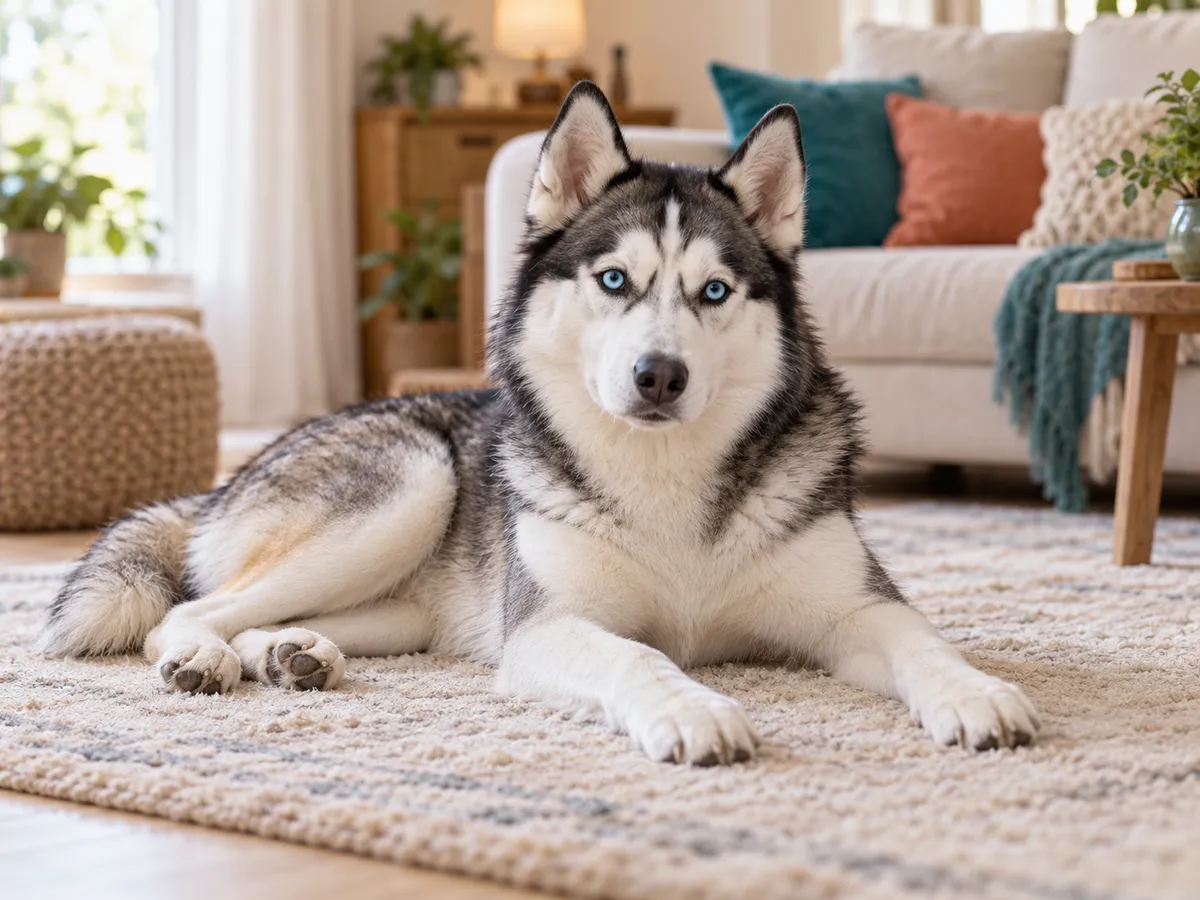
- Origine
- Russie
- Taille
- Moyen
- Poids adulte
- 16–27 kg
- Espérance de vie typique
- 12–14 ans
- Énergie
- Entretien du pelage
- Perte de poils
- Facilité d'éducation
Les échelles de 1 à 5 sont des estimations éditoriales de PetBondly fondées sur les descriptions des clubs de race et des sources générales ; chaque animal est différent.
The Siberian Husky is a hardy working dog bred to pull sleds over long distances. It is much loved for its looks, but it should not be adopted before its needs are well understood.
Character and temperament
Friendly, sociable and playful; it is usually very outgoing with people, which makes it a poor guard dog. It is an independent thinker, so recall training takes time. Rather than barking, it tends to "talk" and howl.
Exercise and mental needs
Extremely energetic, it needs long, brisk activity every day. Canicross or running alongside a bike (with suitable equipment) are ideal. It is prone to escaping and digging, so gardens must be securely fenced. Move exercise to cooler times of day in hot weather.
Coat care
It has a dense double coat and "blows" it heavily once or twice a year. During these periods, brushing almost every day is needed.
Who is it suited to?
Suited to very active, experienced owners who can exercise with their dog for long periods every day. Huskies dislike being alone for long.
A short history
Developed as a sled dog by the Chukchi people of north-eastern Siberia and brought to Alaska in the early 20th century.
Les notes de santé propres à la race seront ajoutées après relecture vétérinaire. Pour toute question de santé, adressez-vous à votre vétérinaire.