

Rottweiler
Powerful, confident and deeply devoted to its family, the Rottweiler becomes a calm, reliable companion with good socialisation and consistent training.
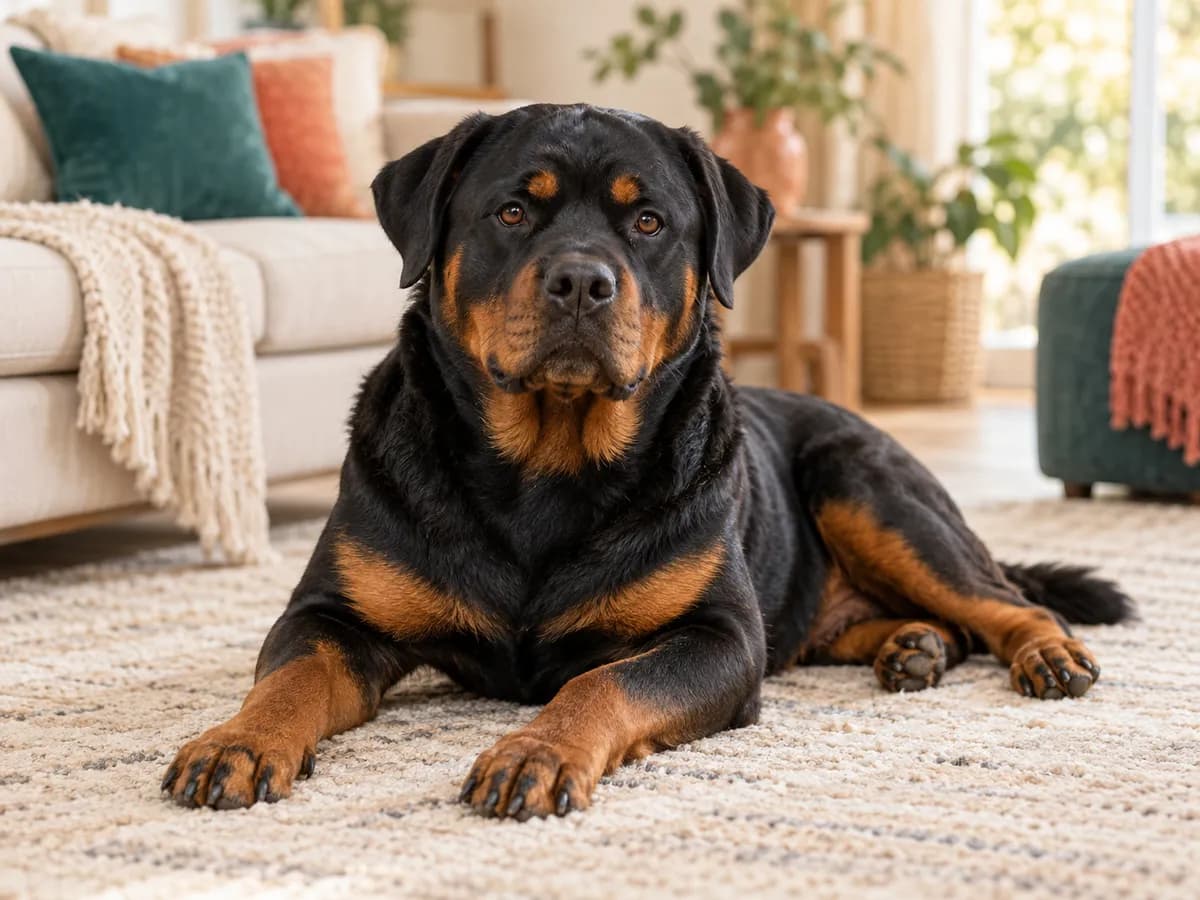
- Origine
- Allemagne
- Taille
- Grand
- Poids adulte
- 35–60 kg
- Espérance de vie typique
- 9–10 ans
- Énergie
- Entretien du pelage
- Perte de poils
- Facilité d'éducation
Les échelles de 1 à 5 sont des estimations éditoriales de PetBondly fondées sur les descriptions des clubs de race et des sources générales ; chaque animal est différent.
Throughout history the Rottweiler has been a working dog that drove and guarded livestock. Today it is known both as a family dog and as a breed working in many roles.
Character and temperament
Calm, self-assured, affectionate with its family but protective. It can be wary of strangers, so thorough socialisation from puppyhood and consistent, reward-based training are very important.
Exercise and mental needs
Strong and athletic, it needs regular walks, play and mental work such as obedience training. It is a breed that is happiest with a job to do.
Coat care
The short, coarse double coat stays tidy with weekly brushing. Grooming increases slightly during seasonal shedding.
Who is it suited to?
Suited to owners experienced with dog training, or willing to get professional support, who can handle a strong dog. Some countries and cities have specific legal rules for this breed; check before adopting.
A short history
It takes its name from the town of Rottweil in Germany, where it was used to drive cattle to market and guard them.
Les notes de santé propres à la race seront ajoutées après relecture vétérinaire. Pour toute question de santé, adressez-vous à votre vétérinaire.