

Emperor penguins
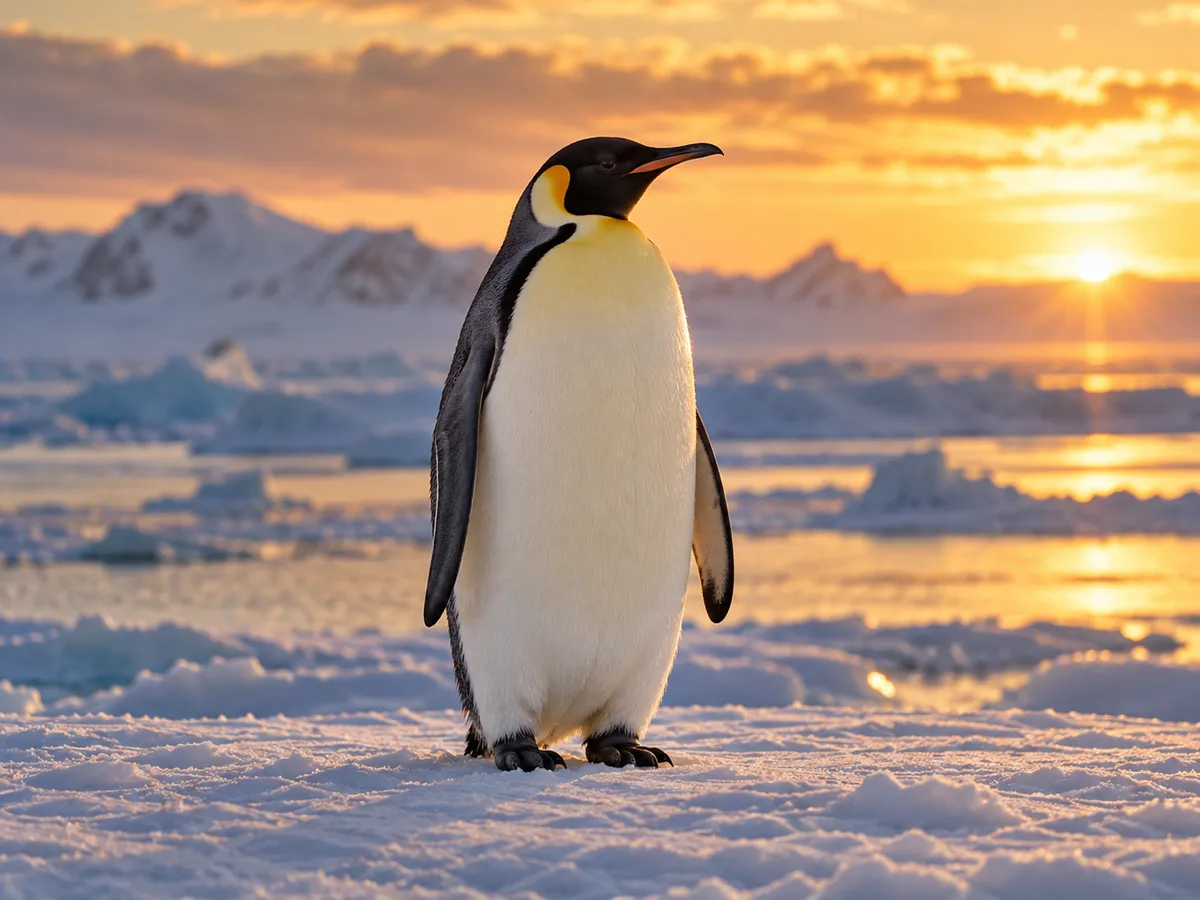
The largest of all penguins, the emperor penguin breeds in the harshest conditions of the Antarctic winter. Males protect the egg in freezing cold by carrying it on their feet for months.
- Hauteur
- 1–1,3 m
- Poids
- 22–45 kg
- Longévité dans la nature
- 15–20 ans
- Statut de conservation (UICN)
- Quasi menacé (NT)
Valeurs approximatives pour les adultes ; elles varient selon le sexe, la sous-espèce et la population.
En un coup d'œil
Les faits essentiels sur Manchots empereurs.
En détail
En bref
- The emperor penguin is the world's largest penguin species.
- It breeds only in Antarctica, on sea ice.
- Males carry the egg on their feet under a fold of belly skin through the winter.
- Thousands of birds huddle closely together to keep each other warm.
- The IUCN lists it as Near Threatened; shrinking sea ice is the biggest threat.
The emperor penguin (Aptenodytes forsteri) stands more than 1 metre tall, making it the world's largest penguin and one of the heaviest seabirds. It cannot fly, but its wings work as excellent flippers underwater. The yellow-orange patches on its neck set it apart from other penguins.
Where does it live?
Emperor penguins live only in Antarctica and the surrounding seas. Colonies are formed on fast ice attached to the coast.
What does it eat?
It is a carnivore that eats fish, krill and squid. While searching for food it can dive hundreds of metres deep and stay underwater for a long time.
Behaviour and social life
Emperor penguins live in colonies. Because Antarctic winter temperatures and winds are extremely harsh, the birds press together into tight huddles of thousands. Birds in the huddle keep shifting so that everyone takes turns on the windy outer edge and in the warm centre.
Chicks
At the start of winter, the female lays a single egg and goes to sea to feed. The male holds the egg on his feet under a feathered fold of belly skin for about two months, eating nothing the whole time. After the chick hatches, the parents take turns going to sea to feed it.
Conservation status
The emperor penguin is listed as Near Threatened (NT) on the IUCN Red List. The loss of sea ice due to climate change directly threatens the breeding success of colonies.
Fun facts
- Males can go without food for months during incubation and early chick rearing.
- Their black backs and white bellies camouflage them at sea from above and below.
- Colonies are sometimes discovered from space, thanks to guano stains in satellite images.
Animaux similaires
D'autres animaux du même groupe.

Respect de la nature, des lendemains plus forts
Protéger la faune sauvage est l'affaire de tous.
Si vous trouvez un animal sauvage blessé ou un petit, ne le touchez pas et prévenez le service local de protection de la nature. Plus de savoir, plus de conscience.
- Respecter les habitats naturels
- Observer les animaux de loin
- Ne laisser aucun déchet dans la nature
- Soutenir un avenir durable