

Three-toed sloths
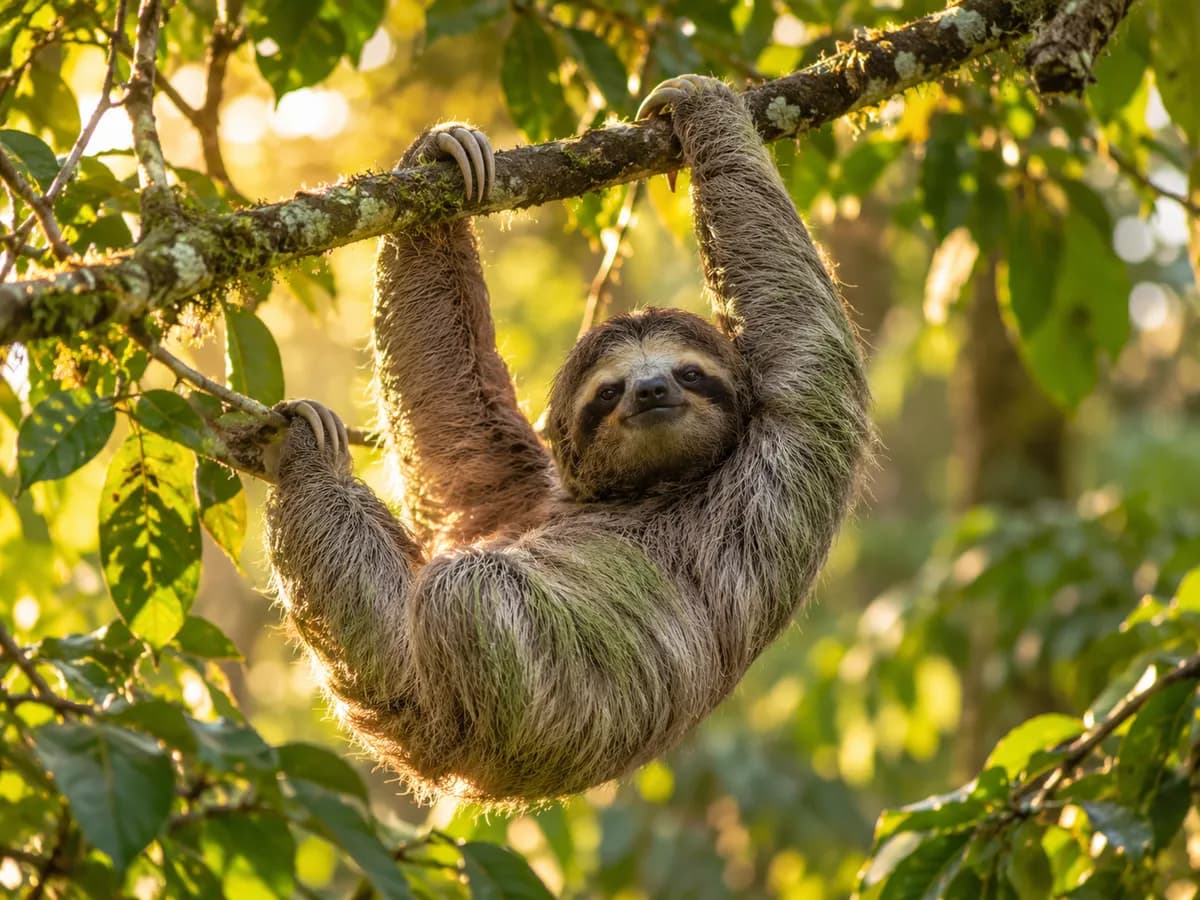
The three-toed sloth, which spends almost its whole life hanging upside down from branches, is one of the slowest mammals on Earth. Its slowness is an adaptation to a low-energy diet.
- Longueur
- 40–75 cm
- Poids
- 2–6 kg
- Longévité dans la nature
- 20–30 ans
- Statut de conservation (UICN)
- Préoccupation mineure (LC)
Valeurs approximatives pour les adultes ; elles varient selon le sexe, la sous-espèce et la population.
En un coup d'œil
Les faits essentiels sur Paresseux tridactyles.
- Where does it live?It lives in tropical rainforests from Central America to northern South America, usually high in the canopy.
- What does it eat?It is a herbivore that mostly eats the leaves of certain trees.
- Behaviour and social lifeSloths live alone and move very slowly, an adaptation to their low-energy diet.
- YoungThe female usually has one young a year.
En détail
En bref
- Three-toed sloths live in the rainforests of Central and South America.
- They eat leaves and have a very slow metabolism.
- They climb down to the ground about once a week to go to the toilet.
- Green algae can grow in their fur, giving them camouflage.
- The brown-throated sloth is listed as Least Concern by the IUCN.
Three-toed sloths (genus Bradypus) are tree-dwelling mammals with three long claws on their front feet. There are four species; the facts on this page refer to the most widespread, the brown-throated sloth (Bradypus variegatus). Two-toed sloths belong to a separate family.
Where does it live?
It lives in tropical rainforests from Central America to northern South America, usually high in the canopy.
What does it eat?
It is a herbivore that mostly eats the leaves of certain trees. Leaves provide little energy and are hard to digest; digestion can take days or even weeks.
Behaviour and social life
Sloths live alone and move very slowly, an adaptation to their low-energy diet. They spend most of their lives hanging upside down from branches, where they eat, sleep and even give birth. They come down from the tree about once a week to go to the toilet. Despite being slow, they are good swimmers.
Young
The female usually has one young a year. For the first months the baby clings to its mother's belly and learns which trees she feeds on.
Conservation status
The brown-throated sloth is listed as Least Concern (LC) on the IUCN Red List. Still, deforestation, roads and power lines that cut through forests, and the illegal pet trade are serious problems for these animals. The pygmy three-toed sloth, which lives on a small island off Panama, is Critically Endangered.
Fun facts
- Three-toed sloths have more neck vertebrae than most mammals and can turn their heads through a very wide angle.
- Algae, moths and other small creatures live in their fur.
- Their strong claws keep them from falling off branches even while they sleep.
Animaux similaires
D'autres animaux du même groupe.
Respect de la nature, des lendemains plus forts
Protéger la faune sauvage est l'affaire de tous.
Si vous trouvez un animal sauvage blessé ou un petit, ne le touchez pas et prévenez le service local de protection de la nature. Plus de savoir, plus de conscience.
- Respecter les habitats naturels
- Observer les animaux de loin
- Ne laisser aucun déchet dans la nature
- Soutenir un avenir durable