

Clownfish
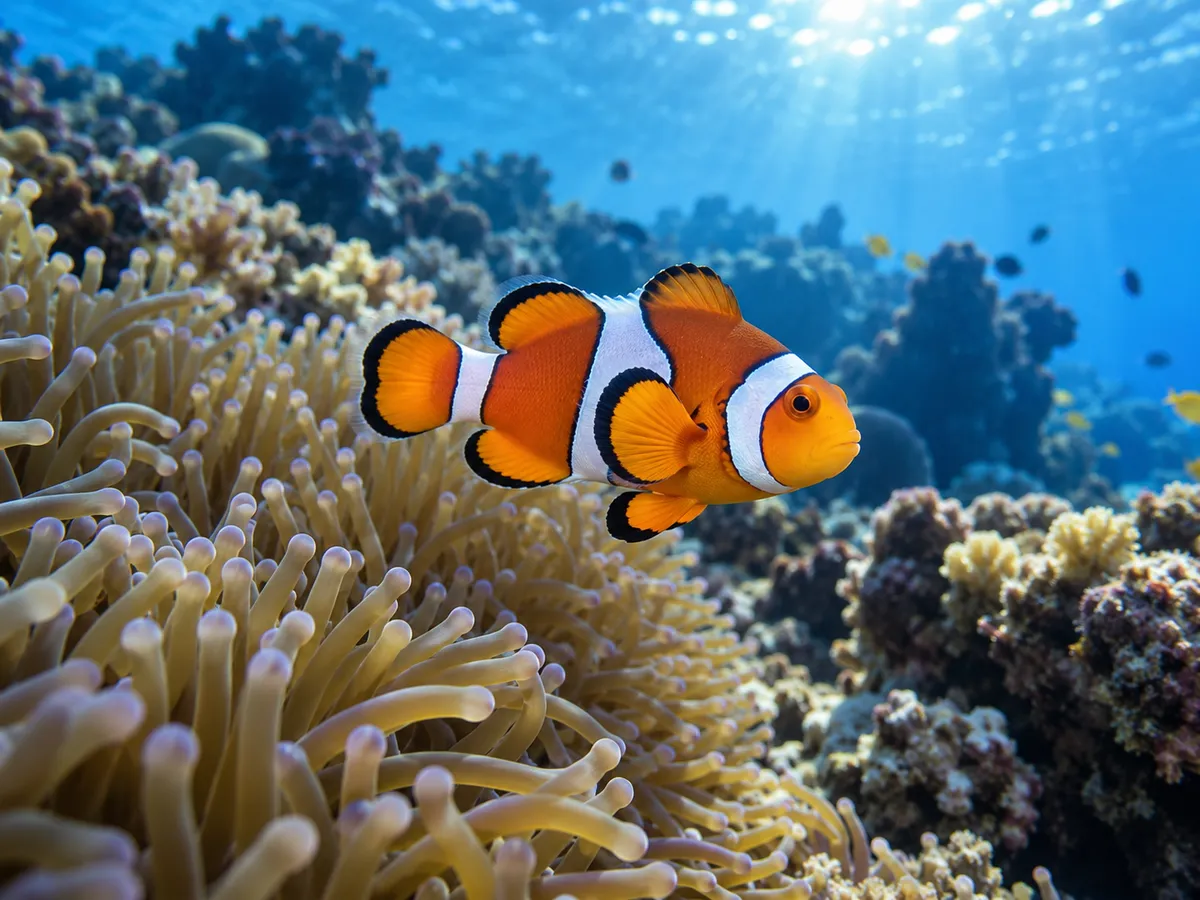
Known for its orange-and-white stripes, the clownfish lives among sea anemones with stinging tentacles. This partnership is one of the best-known examples of cooperation in the sea.
- Longueur
- 8–11 cm
- Longévité dans la nature
- 6–10 ans
- Régime alimentaire
- Omnivore
- Classe
- Poisson
Valeurs approximatives pour les adultes ; elles varient selon le sexe, la sous-espèce et la population.
En un coup d'œil
Les faits essentiels sur Poissons-clowns.
- Where does it live?It lives on shallow coral reefs and in lagoons in the eastern Indian Ocean and western Pacific.
- What does it eat?It is an omnivore that eats zooplankton, small crustaceans and algae.
- Partnership with the sea anemoneThe clownfish lives among anemone tentacles that are deadly to other fish.
- Behaviour and social lifeAn anemone is usually home to a group made up of one female, one breeding male and several smaller males.
En détail
En bref
- The clownfish lives among the tentacles of sea anemones.
- A mucus layer on its skin helps protect it from the anemone's stinging cells.
- All clownfish are born male; the largest in the group becomes female.
- It lives on coral reefs in the Indian and Pacific oceans.
- It is one of the most sought-after aquarium fish; choose captive-bred ones.
Clownfish are small reef fish with nearly 30 species. The facts on this page refer to the best-known species, the ocellaris clownfish (Amphiprion ocellaris). It is easy to recognise by its bright orange body and three white bands edged in black.
Where does it live?
It lives on shallow coral reefs and in lagoons in the eastern Indian Ocean and western Pacific. It is always found with certain species of sea anemone.
What does it eat?
It is an omnivore that eats zooplankton, small crustaceans and algae. It may also eat scraps left from the anemone's prey.
Partnership with the sea anemone
The clownfish lives among anemone tentacles that are deadly to other fish. A special mucus layer covering its skin is thought to prevent the anemone's stinging cells from firing. The anemone protects the fish from predators; the fish cleans the anemone, chases away some predators and provides nutrients through its waste.
Behaviour and social life
An anemone is usually home to a group made up of one female, one breeding male and several smaller males. All clownfish are born male. When the female, the largest in the group, dies, the breeding male becomes female and the next-largest male takes his place.
Young
Eggs are laid on a rock surface right next to the anemone. The male cleans and guards them until they hatch. The young drift in open water as plankton for a while and then find their own anemone.
Conservation status
There is no global IUCN assessment for the ocellaris clownfish. Coral reef decline from warming and bleaching affects both anemones and clownfish. Collection from the wild for the aquarium trade also puts pressure on some areas.
Fun facts
- Clownfish rarely stray far from their anemone.
- Clownfish were among the first marine fish to be bred successfully in aquariums.
- The sizes of clownfish in an anemone follow their rank in the group.
Bon à savoir
Les points les plus importants.
- For aquarium keepersIf you want a clownfish, choose captive-bred fish rather than wild-caught ones. A marine aquarium requires serious knowledge and equipment.
Animaux similaires
D'autres animaux du même groupe.
Respect de la nature, des lendemains plus forts
Protéger la faune sauvage est l'affaire de tous.
Si vous trouvez un animal sauvage blessé ou un petit, ne le touchez pas et prévenez le service local de protection de la nature. Plus de savoir, plus de conscience.
- Respecter les habitats naturels
- Observer les animaux de loin
- Ne laisser aucun déchet dans la nature
- Soutenir un avenir durable