

White rhinoceroses
The largest of the rhinos, the white rhinoceros is a huge grazer with a broad, flat lip. Conservation in South Africa brought it back from the brink, but poaching is still a major threat.
- Hauteur
- 1,5–1,9 m
- Poids
- 1,7–3,6 t
- Longévité dans la nature
- 40–50 ans
- Statut de conservation (UICN)
- Quasi menacé (NT)
Valeurs approximatives pour les adultes ; elles varient selon le sexe, la sous-espèce et la population.
En un coup d'œil
Les faits essentiels sur Rhinocéros blancs.
- Where does it live?Most of the population lives in South Africa; it is also found in protected areas in Namibia, Zimbabwe, Kenya and some other countries.
- What does it eat?It is a herbivore that grazes on grass close to the ground.
- Behaviour and social lifeFemales and their young live in small groups, while adult males are usually solitary and mark their territories with dung piles and urine.
- CalvesPregnancy lasts about 16 months and a single calf is born.
En détail
En bref
- The white rhino is the largest living rhinoceros species.
- Its name refers not to its colour but to its wide mouth.
- It grazes on grass and lives in open grasslands.
- One of its two subspecies, the northern white rhino, is extinct in the wild.
- The IUCN lists it as Near Threatened; poaching for horn is the biggest threat.
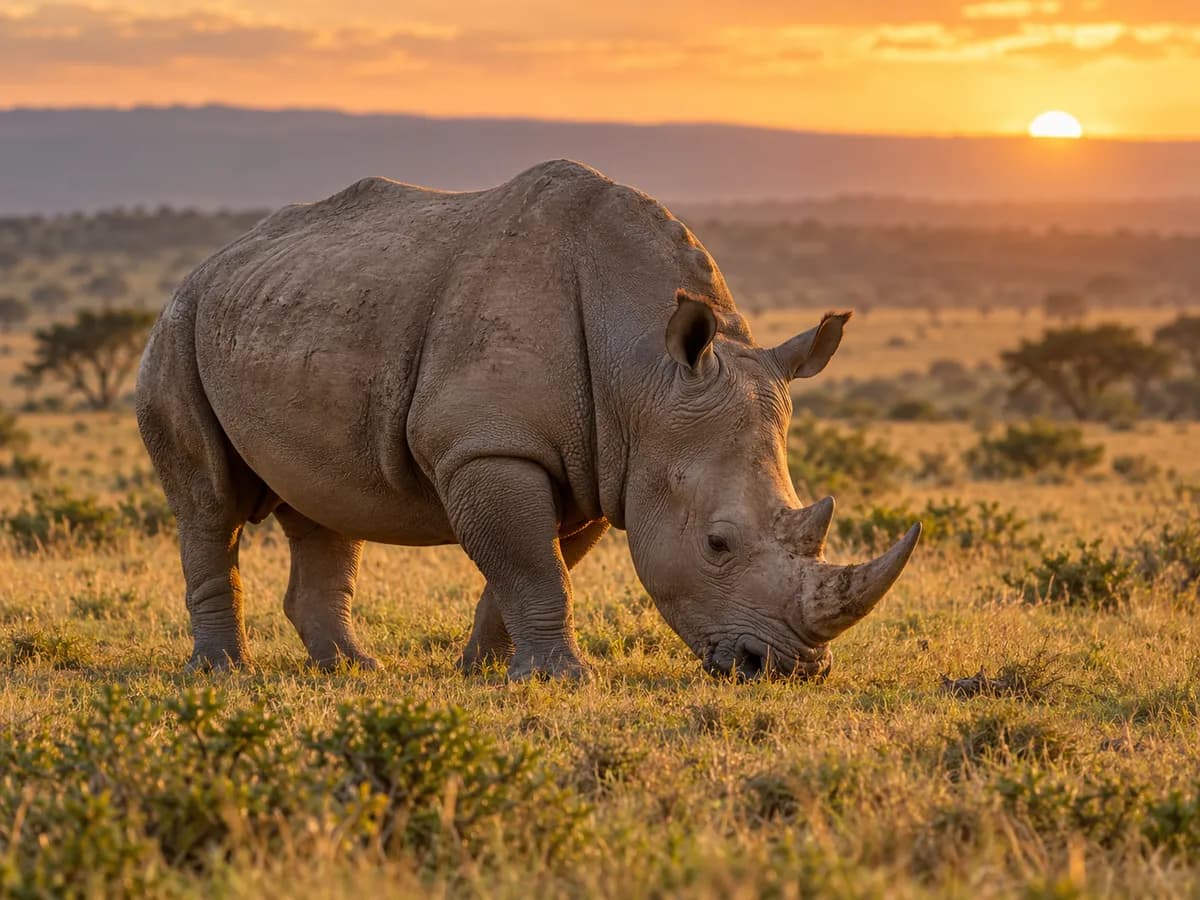
The white rhinoceros (Ceratotherium simum) is the largest living rhino species. Despite its name, it is grey, not white. The name "white" is commonly said to come from a misunderstanding of an Afrikaans or Dutch word meaning "wide", referring to the animal's broad, flat lip.
Where does it live?
Most of the population lives in South Africa; it is also found in protected areas in Namibia, Zimbabwe, Kenya and some other countries. It prefers open savannas and grasslands.
What does it eat?
It is a herbivore that grazes on grass close to the ground. Its broad, flat lip helps it crop grass almost like a mower.
Behaviour and social life
Females and their young live in small groups, while adult males are usually solitary and mark their territories with dung piles and urine. Their eyesight is poor, but their senses of smell and hearing are strong. Mud wallows help them cool off and protect against parasites.
Calves
Pregnancy lasts about 16 months and a single calf is born. The calf stays with its mother for several years.
Conservation status
The white rhino is listed as Near Threatened (NT) on the IUCN Red List. The southern white rhino fell to very low numbers in the early 20th century but, thanks to conservation in South Africa, grew to tens of thousands. The northern white rhino is extinct in the wild; only a couple of females remain. Poaching for horn remains the species' biggest threat.
Fun facts
- Rhino horn is made of keratin, the protein found in hair and nails.
- White and black rhinos are both grey; the real difference is the shape of their lips.
- White rhinos usually let their calves walk in front of them.
Animaux similaires
D'autres animaux du même groupe.

Respect de la nature, des lendemains plus forts
Protéger la faune sauvage est l'affaire de tous.
Si vous trouvez un animal sauvage blessé ou un petit, ne le touchez pas et prévenez le service local de protection de la nature. Plus de savoir, plus de conscience.
- Respecter les habitats naturels
- Observer les animaux de loin
- Ne laisser aucun déchet dans la nature
- Soutenir un avenir durable