

Kurz gesagt
- Growth slows, and plant foods begin to make up more of the diet.
- Behavior changes linked to sexual maturity may appear.
- Heat and UVB routines must be kept up with the same care.
- Appetite and activity may drop in cooler seasons.
- Regular weighing helps you follow the change in diet.
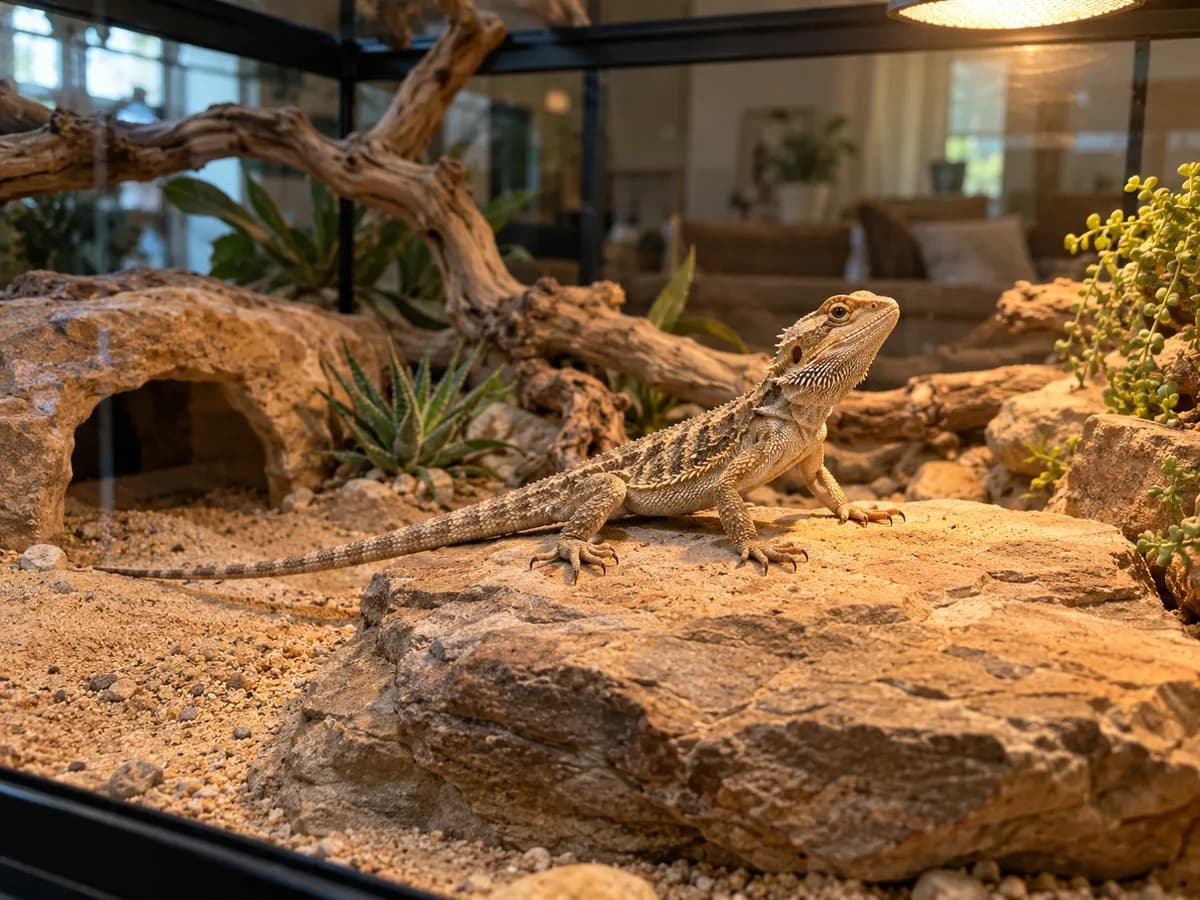
Adolescence runs from about 7 to 18 months of age. As your bearded dragon approaches adult size, growth slows and dietary needs start to change.
What is happening in this stage?
- Growth slows and sheds become less frequent.
- Sexual maturity develops; head-bobbing and beard darkening may increase.
- Some individuals are less active and eat less in the cooler season.
What should you do differently?
- Diet: Gradually increase greens and vegetables and reduce how often you feed insects. Review the supplement routine with your veterinarian.
- Heat and light: Keep up the heat and UVB routine with the same care and track bulb lifespans.
- Space: Plan the move to an enclosure large enough for adult size.
- Enrichment: Climbing branches, different textures and supervised time outside the enclosure.
What should you monitor?
- Weight (regular weighing)
- How much greenery they eat, and appetite
- Droppings
- Activity and basking behavior
Expected behavior
Head-bobbing, arm-waving, beard darkening and territorial behavior may increase at this stage. A bearded dragon can be stressed by seeing another dragon, so enclosures can be placed out of each other's view.
Reminders
- Check-ups as often as your veterinarian recommends
- UVB lamp replacement date
- Weighing every two weeks or monthly
Next stage
From about 18 months your bearded dragon enters the adult stage.
Die Altersspannen sind Näherungswerte; Unterschiede innerhalb einer Art (etwa die Größe bei Hunden) können die Übergänge verschieben.
Dieser Inhalt dient der allgemeinen Information und ersetzt weder eine tierärztliche Untersuchung noch eine Diagnose. Wenn Sie sich Sorgen um die Gesundheit Ihres Tieres machen, wenden Sie sich bitte an Ihre Tierarztpraxis.