

Praying mantises
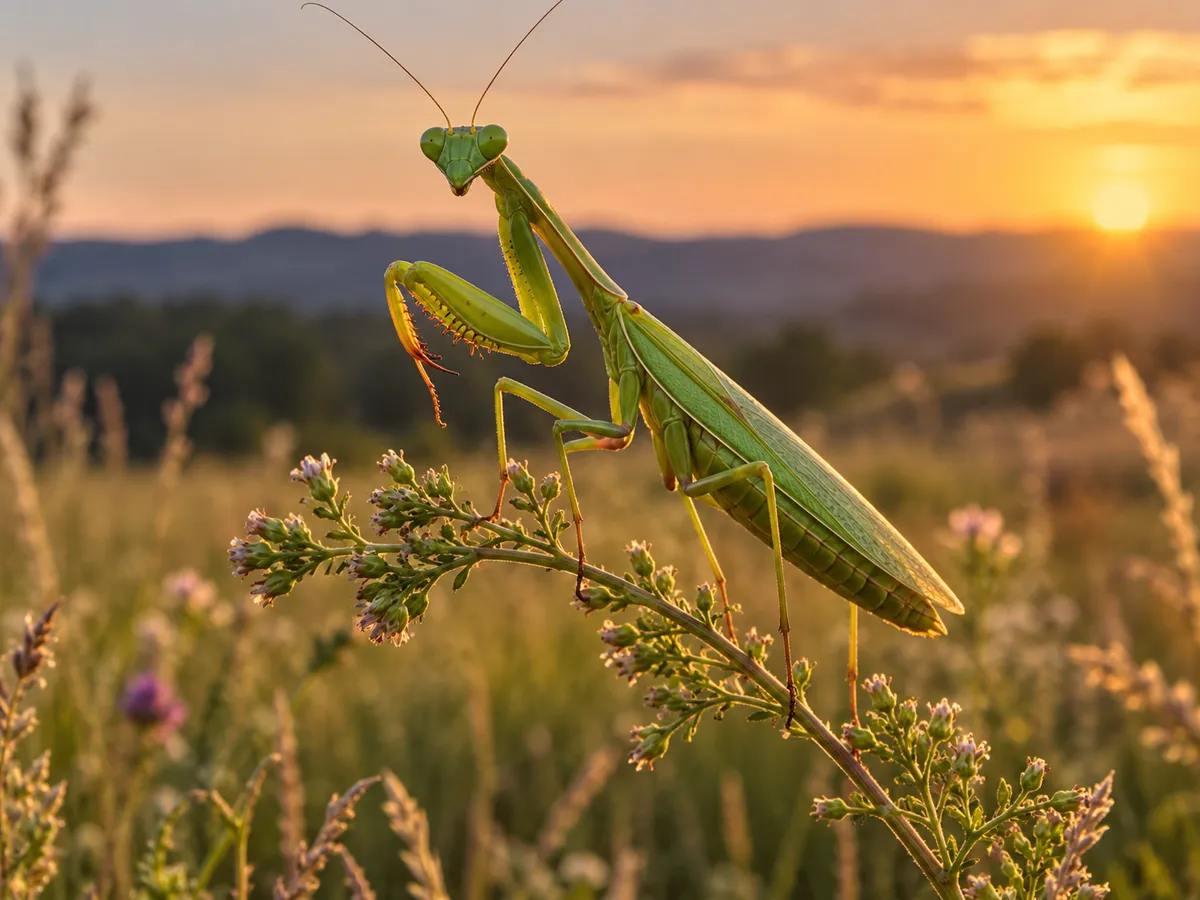
Known for the front legs it folds as if in prayer, the praying mantis is a patient and skilled insect hunter. It is common in Türkiye's meadows, gardens and field edges.
- Länge
- 5–8 cm
- Ernährung
- Insektenfresser
- Klasse
- Wirbelloses Tier
Die Werte gelten ungefähr für erwachsene Tiere und schwanken je nach Geschlecht, Unterart und Population.
Auf einen Blick
Die wichtigsten Fakten über Gottesanbeterinnen.
- Where does it live?It lives in southern and central Europe, Asia and Africa, and has also been carried to North America.
- What does it eat?It is a carnivore that hunts flies, grasshoppers, butterflies, moths and other insects.
- Behaviour and lifeMantises live alone and are well camouflaged.
- Life cycleIn autumn, the female covers her eggs in a foam-like substance and sticks them to twigs or stones; the substance hardens and protects the eggs…
Ausführlich
Kurz gesagt
- The praying mantis waits with its front legs folded as if praying.
- It grabs prey very quickly with its spiny front legs.
- It is one of the few insects that can turn its head almost 180 degrees.
- By hunting many garden insects, it helps keep nature in balance.
- It can be seen in almost every region of Türkiye.
The European mantis (Mantis religiosa) is a long-bodied insect that can be green or brown. The way it waits with its spiny front legs folded gives it a "praying" look, and both its common and scientific names come from this posture.
Where does it live?
It lives in southern and central Europe, Asia and Africa, and has also been carried to North America. In Türkiye it is seen in almost every region, in meadows, scrub, field edges and gardens.
What does it eat?
It is a carnivore that hunts flies, grasshoppers, butterflies, moths and other insects. It usually waits motionless among plants and, when prey comes close enough, shoots out its front legs to grab it.
Behaviour and life
Mantises live alone and are well camouflaged. They can turn their heads through a wide angle and their large compound eyes are good at detecting movement. When threatened, they spread their wings and raise their front legs to look bigger.
Life cycle
In autumn, the female covers her eggs in a foam-like substance and sticks them to twigs or stones; the substance hardens and protects the eggs through winter. In spring, small nymphs hatch and grow by moulting several times. Adults usually die in autumn.
Conservation status
There is no global IUCN assessment for this species. Although it is common, pesticides and the loss of meadows affect insect populations in general.
Fun facts
- Mantises have a single "ear" on the underside of the body that helps them detect bat calls.
- Females sometimes eat the male during mating, but not always.
- A mantis in your garden is a natural helper against pest insects.
Ähnliche Tiere
Weitere Tiere aus derselben Gruppe.
Respekt vor der Natur, ein stärkeres Morgen
Wildtiere zu schützen ist unser aller Verantwortung.
Wenn Sie ein verletztes oder junges Wildtier finden, fassen Sie es nicht an und informieren Sie die örtliche Naturschutzbehörde. Mehr Wissen, mehr Bewusstsein.
- Natürliche Lebensräume respektieren
- Wildtiere aus der Ferne beobachten
- Keinen Müll in der Natur lassen
- Eine nachhaltige Zukunft unterstützen