
Türkisch Van
The legendary cat of the Lake Van region, known for its interest in water, strong build and playful character. There is also an interesting difference between Türkiye's "Van cat" and the international "Turkish Van" breed standard.
- Herkunft
- Türkei
- Größe
- Groß
- Gewicht (erwachsen)
- 3–8 kg
- Typische Lebenserwartung
- 12–17 Jahre
- Energie
- Fellpflege
- Haarausfall
- Erziehbarkeit
Die Skalen von 1–5 sind redaktionelle Einschätzungen von PetBondly auf Basis von Rassebeschreibungen und allgemeinen Quellen; jedes Tier ist anders.
The Van cat is a strong, large cat that developed naturally around Lake Van in eastern Anatolia. It is famous for its interest in water; many Van cats enjoy playing with it.
Two definitions of "Van"
- In Türkiye, the "Van cat" usually means an all-white cat, often with one blue and one amber eye.
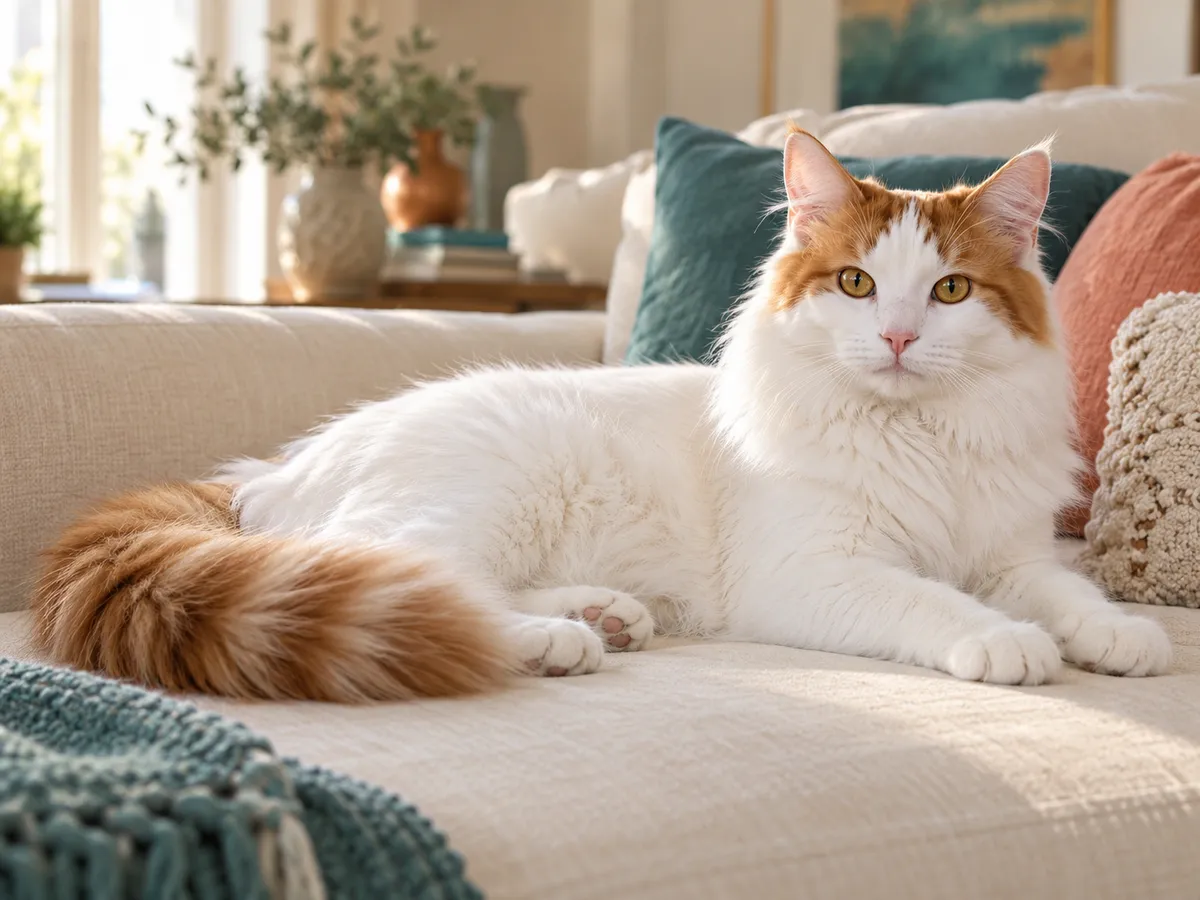
- The international "Turkish Van" breed standard describes a white-bodied cat with coloured markings on the head and tail, the so-called "van pattern".
Both are linked to cats from the same region; the difference comes from which organisation defines the breed.
Character and temperament
Energetic, intelligent, playful and attached to its people. It likes to show affection on its own terms and may prefer being beside you to being held.
Exercise and mental needs
Active and strong, it needs climbing spaces, games and mental stimulation. Because of its interest in water, supervision around baths and sinks is useful.
Coat care
It has a semi-long, soft, water-resistant coat; without a dense undercoat, weekly brushing is usually enough.
Who is it suited to?
Ideal for families looking for an active, playful cat with plenty of personality who can spend time with it.
A short history
A natural cat that has lived around Lake Van for centuries, it was recognised internationally as a breed after cats were taken to Europe in the mid-20th century. Work to protect the Van cat continues in Türkiye.
Rassespezifische Gesundheitshinweise werden nach tierärztlicher Prüfung ergänzt. Bei Gesundheitsfragen wenden Sie sich bitte an Ihre Tierarztpraxis.