

Dieser Abschnitt ist noch nicht auf Deutsch verfügbar; Sie sehen vorerst die Version auf Englisch.
Kurz gesagt
- Activity may decrease; keep the enclosure low and easy to get around.
- Appetite may drop; track weight and tail thickness regularly.
- Shedding may get harder, so the humid hide is important.
- Keep up the temperature routine with the same care.
- Veterinary check-ups are usually recommended more often.
Leopard geckos are considered seniors from about 10 years of age and, in good conditions, can live for many more years. The goal is to adapt the enclosure to changing needs and notice changes early.
What is happening in this stage?
- Activity and interest in hunting may decrease.
- Appetite and the amount eaten may decrease.
- Sheds can become slower and harder.
- Eyesight and the ability to catch prey may change.
What should you do differently?
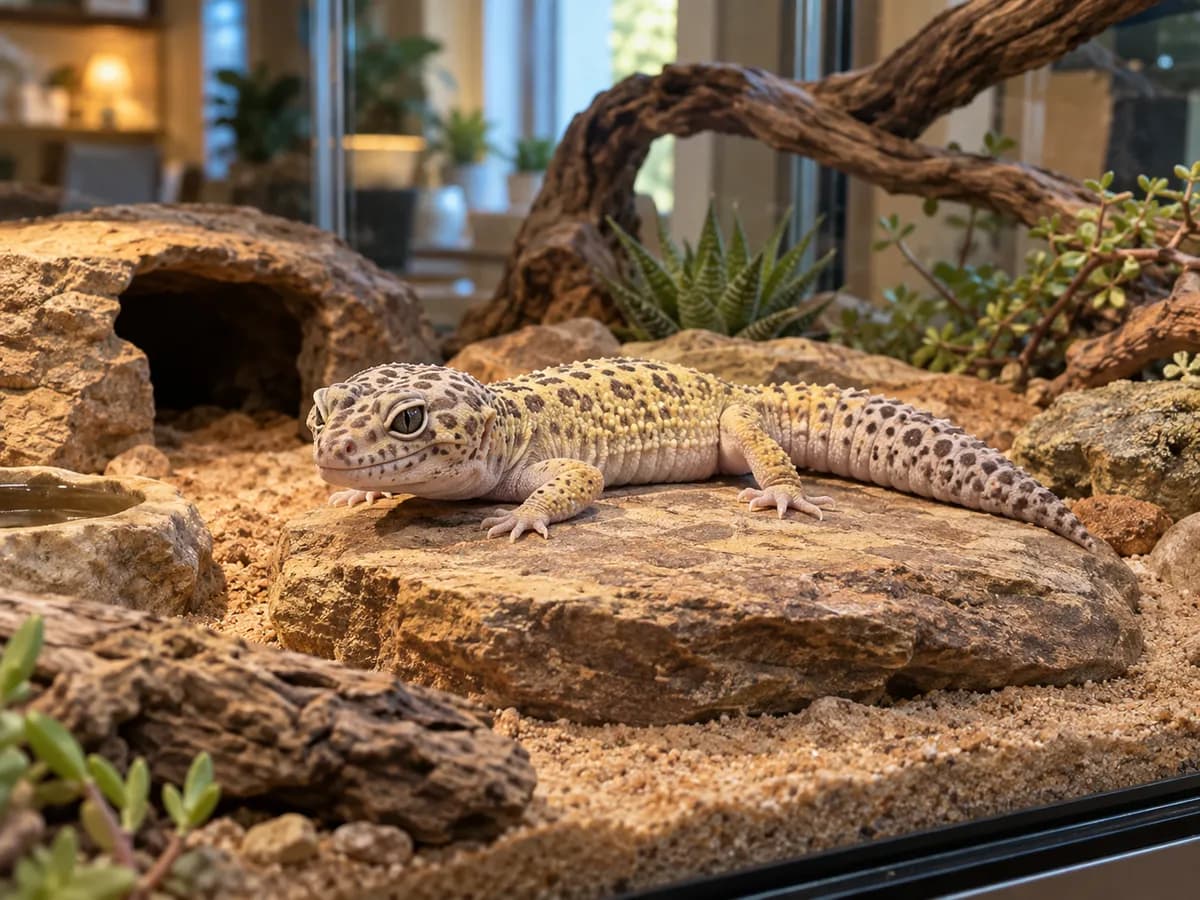
- Access: Low hides and fewer high obstacles; keep the floor flat.
- Diet: Adapt portions, frequency and supplements with your veterinarian; if they struggle to catch prey, try offering insects in a dish.
- Shedding: Keep the humid hide going and check the toes and tail tip.
- Heat: Keep up the heat routine with the same care.
What should you monitor?
- Weight and tail thickness (regular weighing)
- Appetite and droppings
- Movement and balance
- Eyes and skin condition
Expected behavior
Longer rests, shorter active periods and a smaller appetite can be part of ageing. Note any new change.
Reminders
- Check-ups as often as your veterinarian recommends (usually more often)
- Weighing every two weeks
- Checking the humid hide
Die Altersspannen sind Näherungswerte; Unterschiede innerhalb einer Art (etwa die Größe bei Hunden) können die Übergänge verschieben.
Dieser Inhalt dient der allgemeinen Information und ersetzt weder eine tierärztliche Untersuchung noch eine Diagnose. Wenn Sie sich Sorgen um die Gesundheit Ihres Tieres machen, wenden Sie sich bitte an Ihre Tierarztpraxis.