

Dieser Abschnitt ist noch nicht auf Deutsch verfügbar; Sie sehen vorerst die Version auf Englisch.
Kurz gesagt
- Provide flying time in a safe room every day.
- Keep their minds busy by rotating toys and adding foraging games.
- Keep up a varied diet of seed, pellets, vegetables and greens.
- During moults they need more rest and good nutrition.
- Weekly weighing helps you spot small changes early.
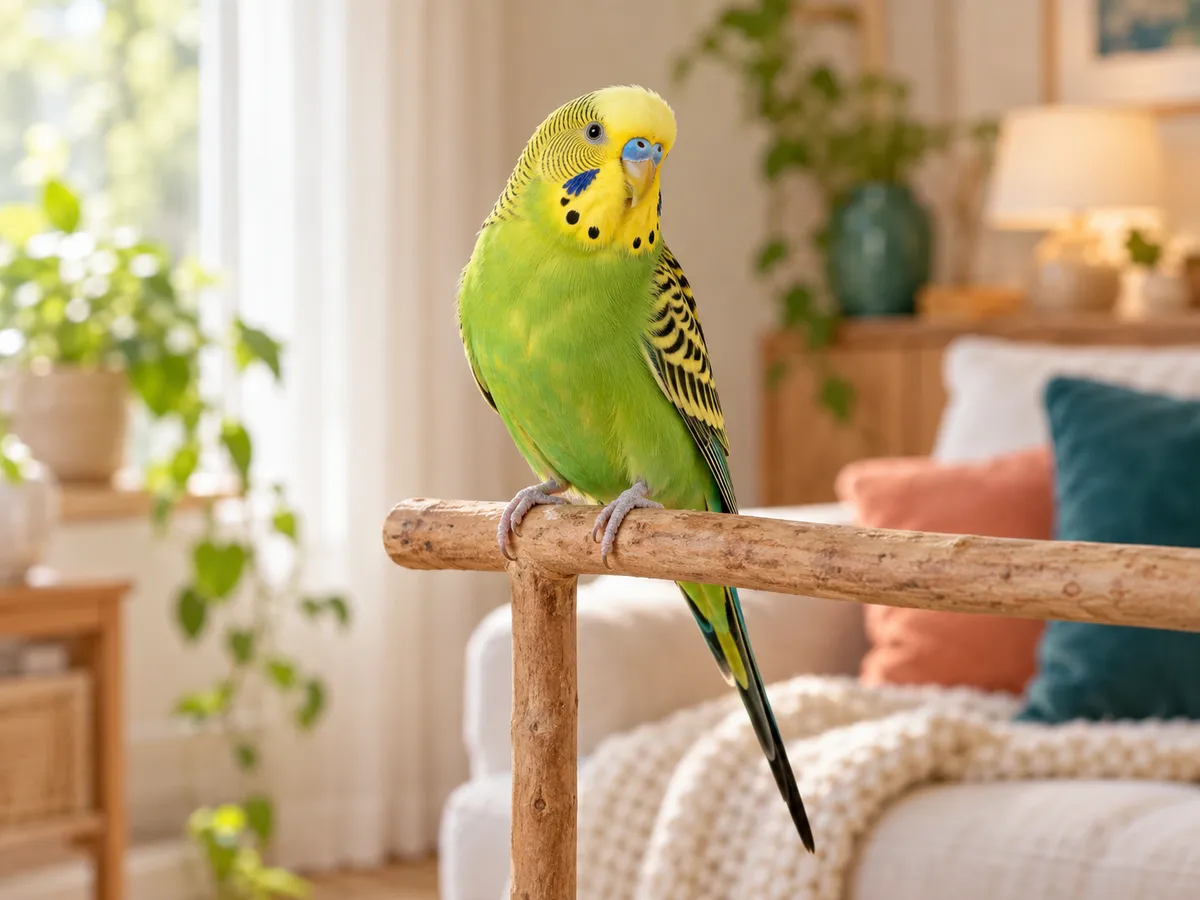
Adulthood runs from about 6 months to 6 years of age. Your budgie has its adult plumage, and its personality, voice and habits become clear.
What is happening in this stage?
- Adult feather patterns are complete, and moults repeat seasonally.
- Social bonds, talking and mimicry may develop.
- Breeding behavior may appear (for example courting a mirror or toys).
What should you do differently?
- Flying: Supervised flying in a safe room every day.
- Enrichment: Rotate toys weekly and add foraging and shredding toys.
- Diet: Quality seed or pellets and fresh vegetables and greens daily; keep harmful foods (such as avocado and chocolate) away.
- Social life: Spend time together every day; you might consider a compatible bird companion.
- Sleep: A dark, quiet and regular bedtime.
What should you monitor?
- Weight (weighing at home)
- Droppings and appetite
- Feather condition, feather plucking
- Length of beak and nails
Expected behavior
Chirping and talking, "chatting" with themselves in a mirror, preening, chewing and shredding toys, and resting on one foot are normal at this stage.
Reminders
- Check-ups yearly or as often as your veterinarian recommends
- Weekly weighing
- Cage and perch cleaning; rotating toys
Next stage
From about 6 years of age your budgie enters the senior stage.
Die Altersspannen sind Näherungswerte; Unterschiede innerhalb einer Art (etwa die Größe bei Hunden) können die Übergänge verschieben.
Dieser Inhalt dient der allgemeinen Information und ersetzt weder eine tierärztliche Untersuchung noch eine Diagnose. Wenn Sie sich Sorgen um die Gesundheit Ihres Tieres machen, wenden Sie sich bitte an Ihre Tierarztpraxis.