
Bengal
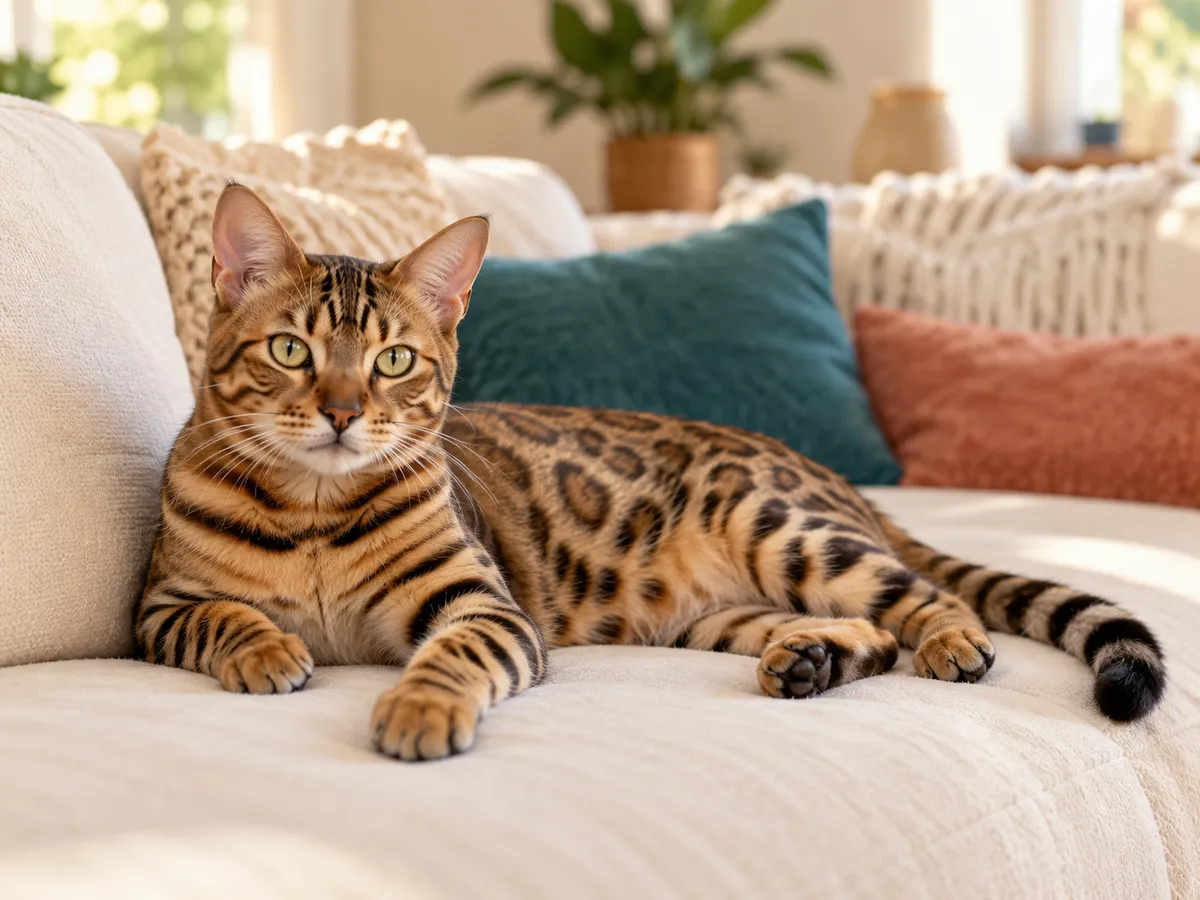
With a leopard-like spotted coat and an athletic build, the Bengal is a very energetic, curious and clever breed that needs lots of play and enrichment.
- Origine
- États-Unis
- Taille
- Moyen
- Poids adulte
- 4–7 kg
- Espérance de vie typique
- 12–16 ans
- Énergie
- Entretien du pelage
- Perte de poils
- Facilité d'éducation
Les échelles de 1 à 5 sont des estimations éditoriales de PetBondly fondées sur les descriptions des clubs de race et des sources générales ; chaque animal est différent.
The Bengal is a wild-looking but domestic breed developed by crossing domestic cats with the Asian leopard cat. It stands out for its glossy, spotted or marbled coat.
Character and temperament
Very active, curious, intelligent and playful. It loves exploring, climbing and often playing with water. It enjoys interacting with its people and, when bored, may try to create its own entertainment.
Exercise and mental needs
It has very high energy and a strong need for mental activity. Cat trees, shelves, food puzzles, long play sessions with wand toys and even safe harness-training walks can help. A Bengal without enough to do may develop unwanted behaviors.
Coat care
It has a short, dense, silky coat; weekly brushing is enough.
Who is it suited to?
Ideal for experienced owners who can make time for active play every day and enrich the home with vertical spaces. Not suited to people looking for a calm lap cat.
A short history
The breed was developed in the United States in the second half of the 20th century. Some countries and regions have legal rules, especially for early-generation hybrids.
Les notes de santé propres à la race seront ajoutées après relecture vétérinaire. Pour toute question de santé, adressez-vous à votre vétérinaire.