

Peregrine falcons
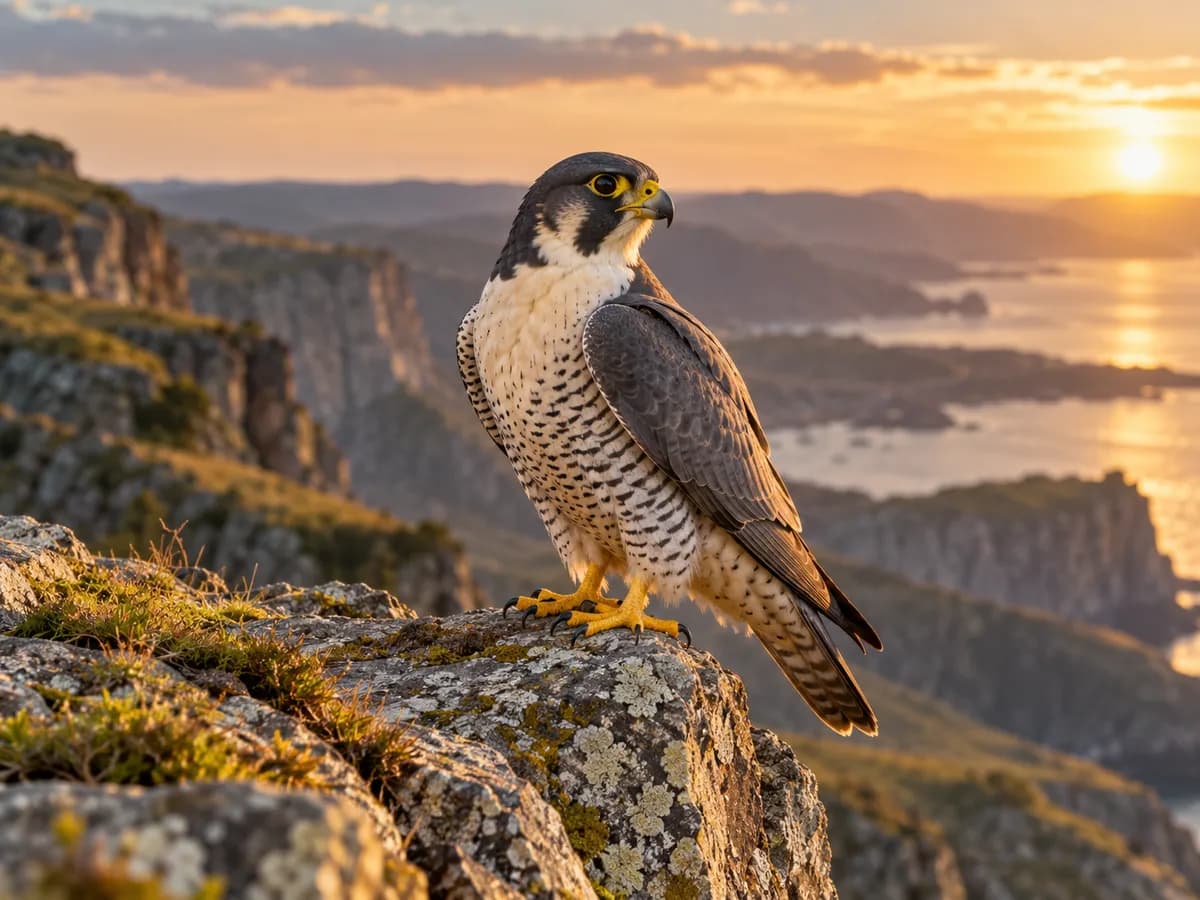
Thanks to the speed it reaches in a dive, the peregrine falcon is considered the fastest animal on Earth. It lives on every continent except Antarctica and today also nests on skyscrapers in many big cities.
- Envergure
- 0,7–1,2 m
- Poids
- 0,3–1,5 kg
- Longévité dans la nature
- 12–17 ans
- Statut de conservation (UICN)
- Préoccupation mineure (LC)
Valeurs approximatives pour les adultes ; elles varient selon le sexe, la sous-espèce et la population.
En un coup d'œil
Les faits essentiels sur Faucons pèlerins.
- Where does it live?It lives on every continent except Antarctica, from Arctic tundra to the tropics.
- What does it eat?Its main food is medium-sized birds such as pigeons, starlings and seabirds, caught in flight.
- Behaviour and social lifePeregrines usually stay with the same mate and use the same nest site for years.
- ChicksThe female usually lays 3–4 eggs.
En détail
En bref
- The peregrine can exceed 300 kilometres per hour in a dive.
- It lives on every continent except Antarctica.
- Its main prey are other birds caught in flight.
- In cities it may nest on skyscrapers and bridges.
- It recovered after DDT was banned; the IUCN lists it as Least Concern.
The peregrine falcon (Falco peregrinus) is a medium-sized falcon recognisable by its blue-grey back, barred pale chest and the dark "moustache" mark below its eye. When it dives onto prey from a height, it reaches the highest speeds known in the animal world.
Where does it live?
It lives on every continent except Antarctica, from Arctic tundra to the tropics. In the wild it usually nests on steep cliffs and coastal bluffs; in cities it may use skyscrapers, bridges and church towers. It breeds in Türkiye and is common during migration.
What does it eat?
Its main food is medium-sized birds such as pigeons, starlings and seabirds, caught in flight. It spots prey from high up, tucks its wings against its body to go into a very fast dive and catches its target in mid-air.
Behaviour and social life
Peregrines usually stay with the same mate and use the same nest site for years. Northern breeding populations migrate south in winter, while some populations stay in the same area all year.
Chicks
The female usually lays 3–4 eggs. Both parents care for the chicks. After leaving the nest, young falcons stay with their parents for a while to learn to fly and hunt.
Conservation status
The peregrine falcon is listed as Least Concern (LC) on the IUCN Red List. In the mid-20th century, pesticides such as DDT thinned eggshells and sharply reduced peregrine populations in many countries. After these chemicals were banned and conservation programmes began, the species recovered strongly.
Fun facts
- Small bony bumps in its nostrils are thought to help it breathe at high speed.
- "Peregrine" means "wanderer".
- City peregrines naturally help keep pigeon populations in check.
Animaux similaires
D'autres animaux du même groupe.

Respect de la nature, des lendemains plus forts
Protéger la faune sauvage est l'affaire de tous.
Si vous trouvez un animal sauvage blessé ou un petit, ne le touchez pas et prévenez le service local de protection de la nature. Plus de savoir, plus de conscience.
- Respecter les habitats naturels
- Observer les animaux de loin
- Ne laisser aucun déchet dans la nature
- Soutenir un avenir durable