

The senior rabbit stage
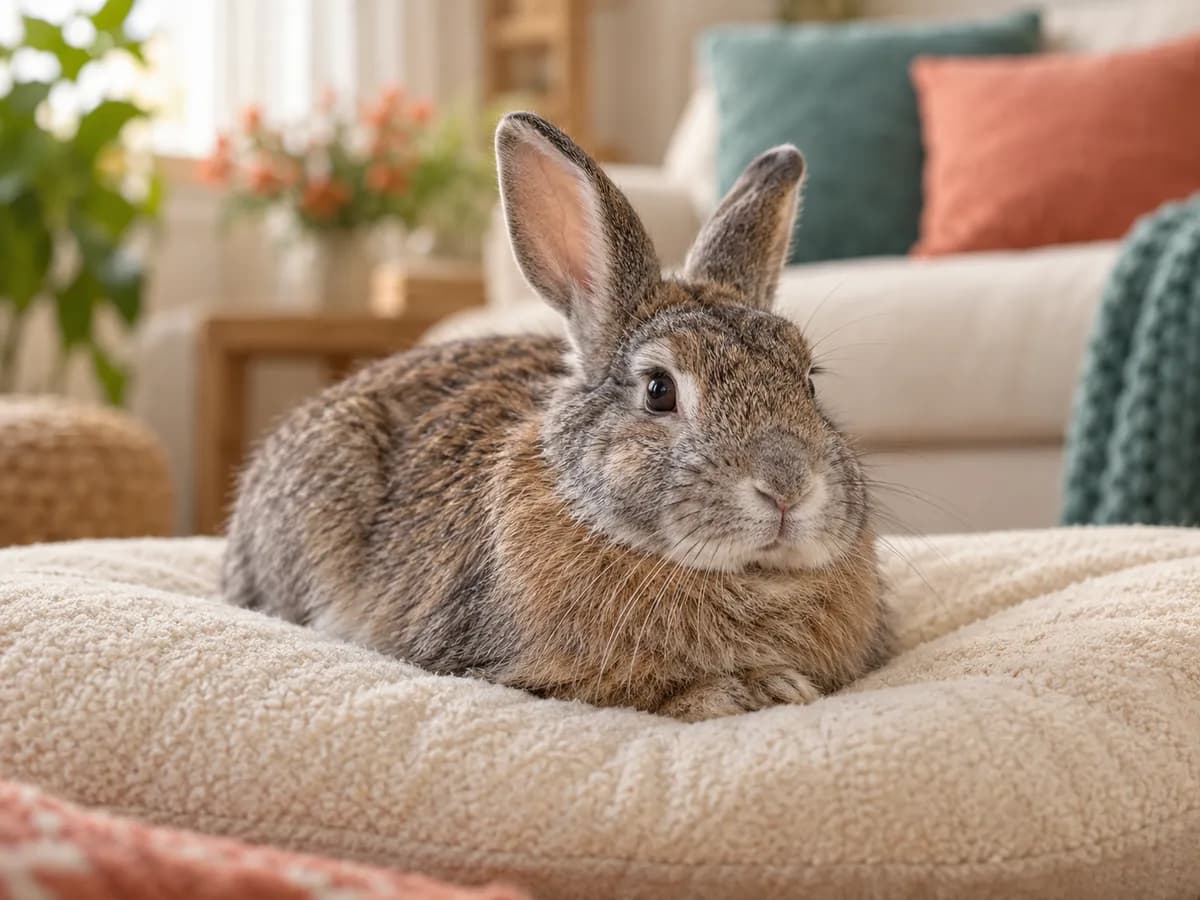
Many rabbits enjoy long, happy years after the age of five. Easy access, soft flooring, grooming support and more frequent veterinary check-ups make this stage more comfortable.
En bref
- Mobility and flexibility may decrease; the litter tray, water and food should be easy to reach.
- Soft, non-slip flooring is kinder to their joints.
- Self-grooming can become harder; gentle brushing and checks are needed.
- Veterinary check-ups are usually recommended more often.
- Note changes in weight, appetite and droppings.
Rabbits are considered seniors from about 5 years of age; this varies by breed and individual. Many stay curious and affectionate. The goal is to adapt the home to changing needs and notice problems early.
What is happening in this stage?
- Activity, jumping and flexibility may decrease.
- Self-grooming, especially around the rear end, can become harder.
- Sleep may increase, along with interest in warm, quiet spots.
- Changes in sight and hearing may appear.
What should you do differently?
- Access: A low-sided litter tray; food and water within easy reach.
- Flooring: Soft, non-slip surfaces; fewer high ramps.
- Grooming: Short, gentle brushing; check regularly that the rear end stays clean.
- Diet: Hay remains the foundation; make any changes with your veterinarian.
- Routine: Avoid sudden changes; familiar companions and routines matter.
What should you monitor?
- Weight and muscle loss (regular weighing)
- Appetite, drinking and droppings
- Gait and posture
- Coat, skin and rear-end cleanliness
Expected behavior
More rest, shorter play sessions and a preference for warm corners are natural parts of ageing. Any new change, however, deserves to be shared with your veterinarian.
Reminders
- Check-ups as often as your veterinarian recommends (usually more often)
- Monthly weighing, or more often if needed
- Nail and teeth checks
Les tranches d'âge sont approximatives ; les différences au sein d'une espèce (comme la taille chez le chien) peuvent avancer ou retarder les transitions.
Ce contenu est fourni à titre d'information générale et ne remplace ni un examen vétérinaire ni un diagnostic. Si la santé de votre animal vous inquiète, contactez votre vétérinaire.