

Indian peafowl
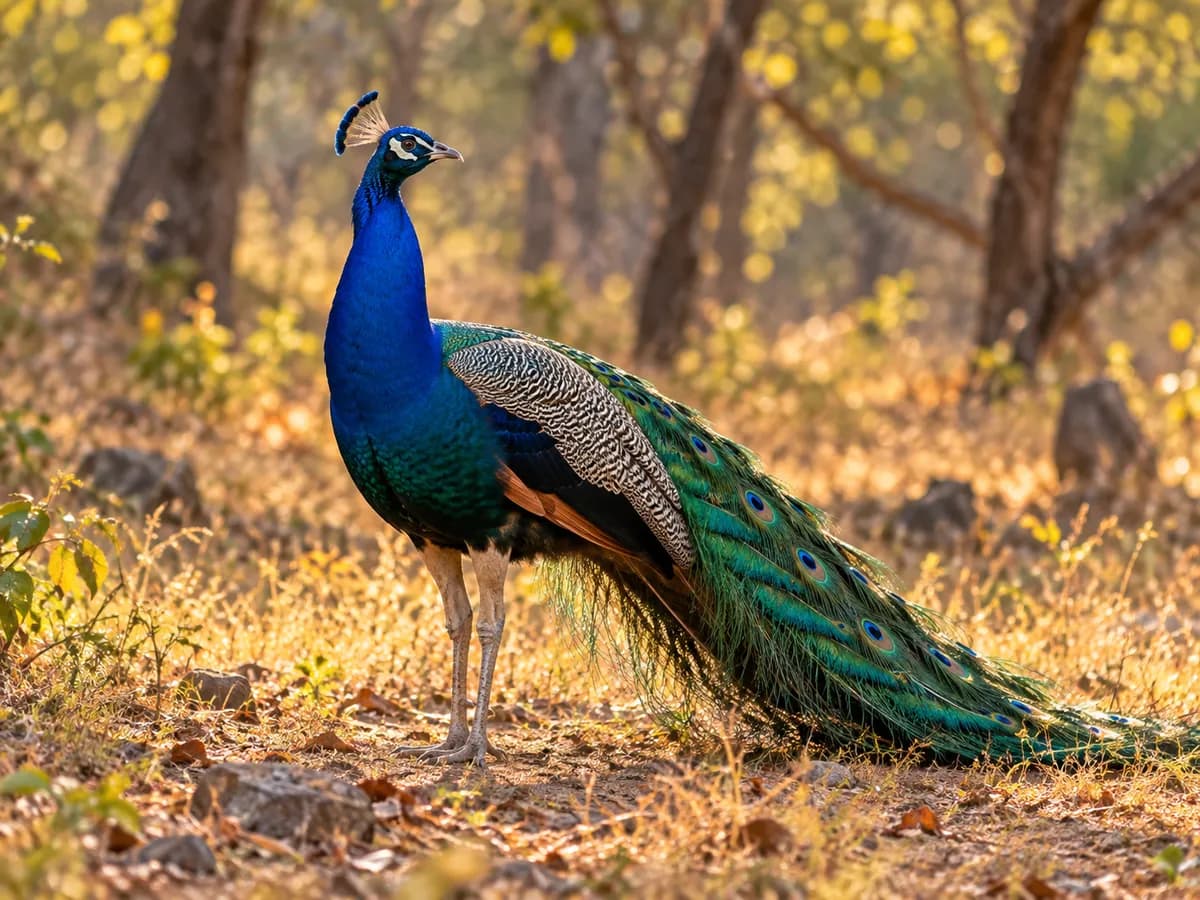
Known for the male's long, eye-patterned train that it spreads like a fan, the Indian peafowl is one of the most spectacular birds in the world. It is India's national bird.
- Longueur
- 0,9–2,3 m
- Poids
- 2,5–6 kg
- Longévité dans la nature
- 15–20 ans
- Statut de conservation (UICN)
- Préoccupation mineure (LC)
Valeurs approximatives pour les adultes ; elles varient selon le sexe, la sous-espèce et la population.
En un coup d'œil
Les faits essentiels sur Paons bleus.
- Where does it live?It lives in India, Sri Lanka, Nepal, Pakistan and Bangladesh, in open forests, at the edges of farmland and near villages.
- What does it eat?It is an omnivore that eats seeds, grain, fruit, insects, worms, small reptiles and even small snakes.
- Behaviour and social lifePeafowl feed on the ground by day and roost in tall trees at night.
- ChicksThe female usually lays 3–6 eggs in a shallow nest on the ground and incubates them alone.
En détail
En bref
- The Indian peafowl is native to India and Sri Lanka.
- The male's showy "tail" is actually a train of back feathers.
- Females prefer males with more impressive displays and feather patterns.
- It is an omnivore that eats seeds, insects and small animals.
- The IUCN lists it as Least Concern.
The Indian peafowl (Pavo cristatus) is a large bird known for the male's brilliant blue neck and long, eye-spotted "tail" feathers. These long feathers are not actually the tail but covert feathers that grow from the lower back; the male spreads them like a fan to display. Females (peahens) are plainer, brownish-grey birds.
Where does it live?
It lives in India, Sri Lanka, Nepal, Pakistan and Bangladesh, in open forests, at the edges of farmland and near villages. It is also kept as an ornamental bird in parks and gardens around the world.
What does it eat?
It is an omnivore that eats seeds, grain, fruit, insects, worms, small reptiles and even small snakes. It usually forages by walking on the ground.
Behaviour and social life
Peafowl feed on the ground by day and roost in tall trees at night. In the breeding season, males spread and shake their trains to display to females. Their loud, piercing calls carry far and serve as alarm signals.
Chicks
The female usually lays 3–6 eggs in a shallow nest on the ground and incubates them alone. The chicks can walk and follow their mother soon after hatching.
Conservation status
The Indian peafowl is listed as Least Concern (LC) on the IUCN Red List. It is legally protected in India, where it is the national bird. Illegal hunting and poisoning from pesticides are problems in some areas.
Fun facts
- The male's long train is shed every year and grows back.
- The brilliant colours in its feathers come not from pigment but from light being scattered by the feather structure.
- Peafowl can fly short distances and spend the night in trees.
Animaux similaires
D'autres animaux du même groupe.


Respect de la nature, des lendemains plus forts
Protéger la faune sauvage est l'affaire de tous.
Si vous trouvez un animal sauvage blessé ou un petit, ne le touchez pas et prévenez le service local de protection de la nature. Plus de savoir, plus de conscience.
- Respecter les habitats naturels
- Observer les animaux de loin
- Ne laisser aucun déchet dans la nature
- Soutenir un avenir durable