

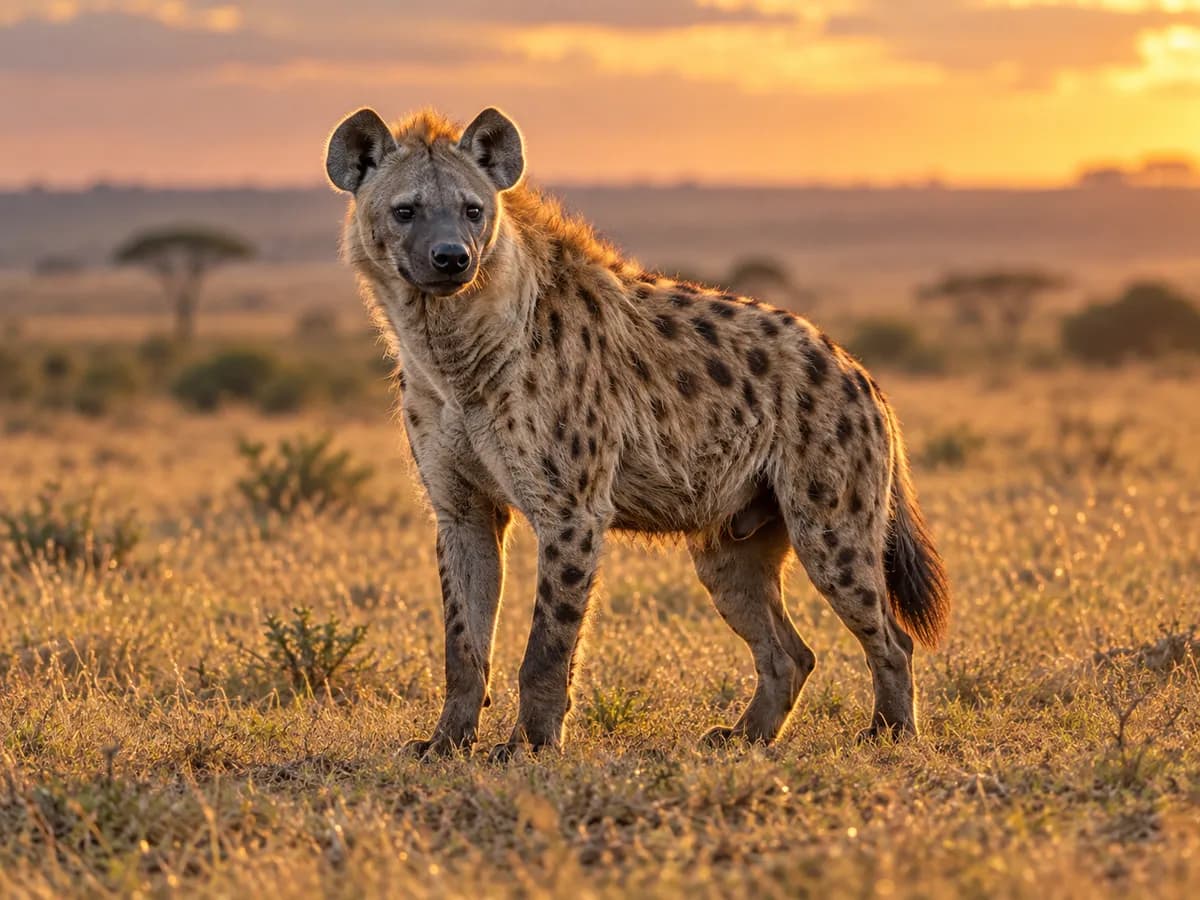
- Length
- 1–1.7 m
- Weight
- 40–86 kg
- Lifespan in the wild
- 12–25 years
- Conservation status (IUCN)
- Least concern (LC)
Figures are approximate for adults and vary by sex, subspecies and population.
At a glance
The key facts about Spotted hyenas.
- Where does it live?It lives in the savannas, grasslands, semi-deserts and mountains of Africa south of the Sahara.
- What does it eat?It is a carnivore that hunts most of its own prey in groups, mainly herbivores such as antelopes and zebras.
- Behaviour and social lifeSpotted hyenas live in groups called clans that can number dozens of individuals.
- CubsThe female usually has 1–2 cubs in a communal den.
In depth
In short
- The spotted hyena hunts most of its own food; it is not just a scavenger.
- Females are larger than males, and females lead the group.
- With very powerful jaws, it can crack and digest bones.
- Its "laughing" calls signal excitement and tension.
- The IUCN lists it as Least Concern.
The spotted hyena (Crocuta crocuta) is the largest of the hyenas. It is recognisable by its sloping back, strong neck and spotted coat. Although it looks dog-like, it belongs to a group more closely related to cats.
Where does it live?
It lives in the savannas, grasslands, semi-deserts and mountains of Africa south of the Sahara.
What does it eat?
It is a carnivore that hunts most of its own prey in groups, mainly herbivores such as antelopes and zebras. When it gets the chance, it also steals kills from other predators and eats carrion. Its strong jaws and teeth crack bones, and its digestive system can even digest bone.
Behaviour and social life
Spotted hyenas live in groups called clans that can number dozens of individuals. Females dominate clans; even the lowest-ranking female usually outranks males. Rank is often passed from mother to offspring. They have a rich vocal repertoire of whoops, growls and the famous "laugh".
Cubs
The female usually has 1–2 cubs in a communal den. Unlike other carnivores, the cubs are born with their eyes open and their teeth already in. Mothers may nurse their cubs for a long time, more than a year.
Conservation status
The spotted hyena is listed as Least Concern (LC) on the IUCN Red List. Outside protected areas, however, its numbers are falling because of conflict with people, poisoning, snares and habitat loss.
Fun facts
- A hyena's "laugh" is not joy but usually a sign of excitement or tension.
- Because they digest bone, their droppings can be whitish from calcium.
- Spotted hyenas are intelligent, cooperative hunters with a high success rate.
Similar animals
Other animals in the same group.
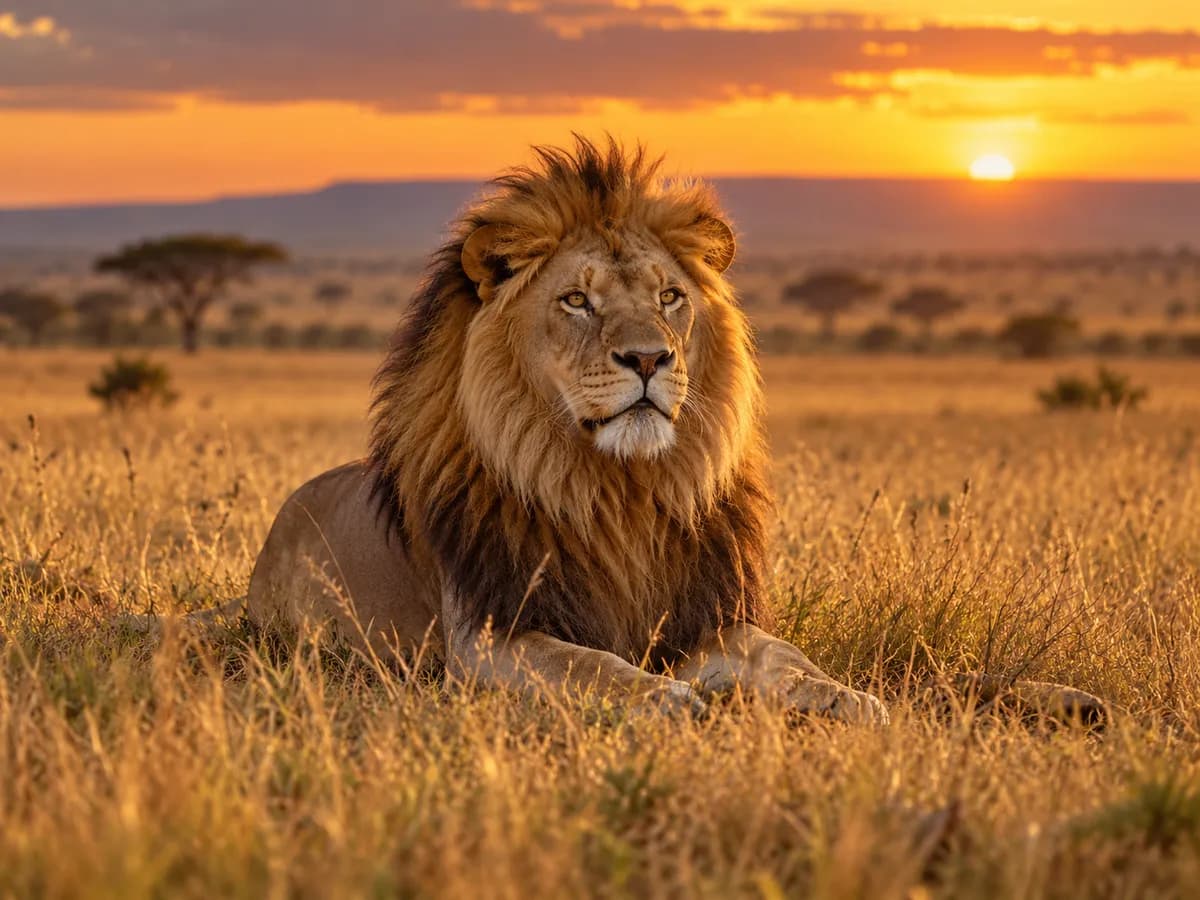 LionThe only big cat that lives in groups, the lion is the symbol of the African savanna. It spends much of the day resting, while hunting is mostly done by the females working together.Explore
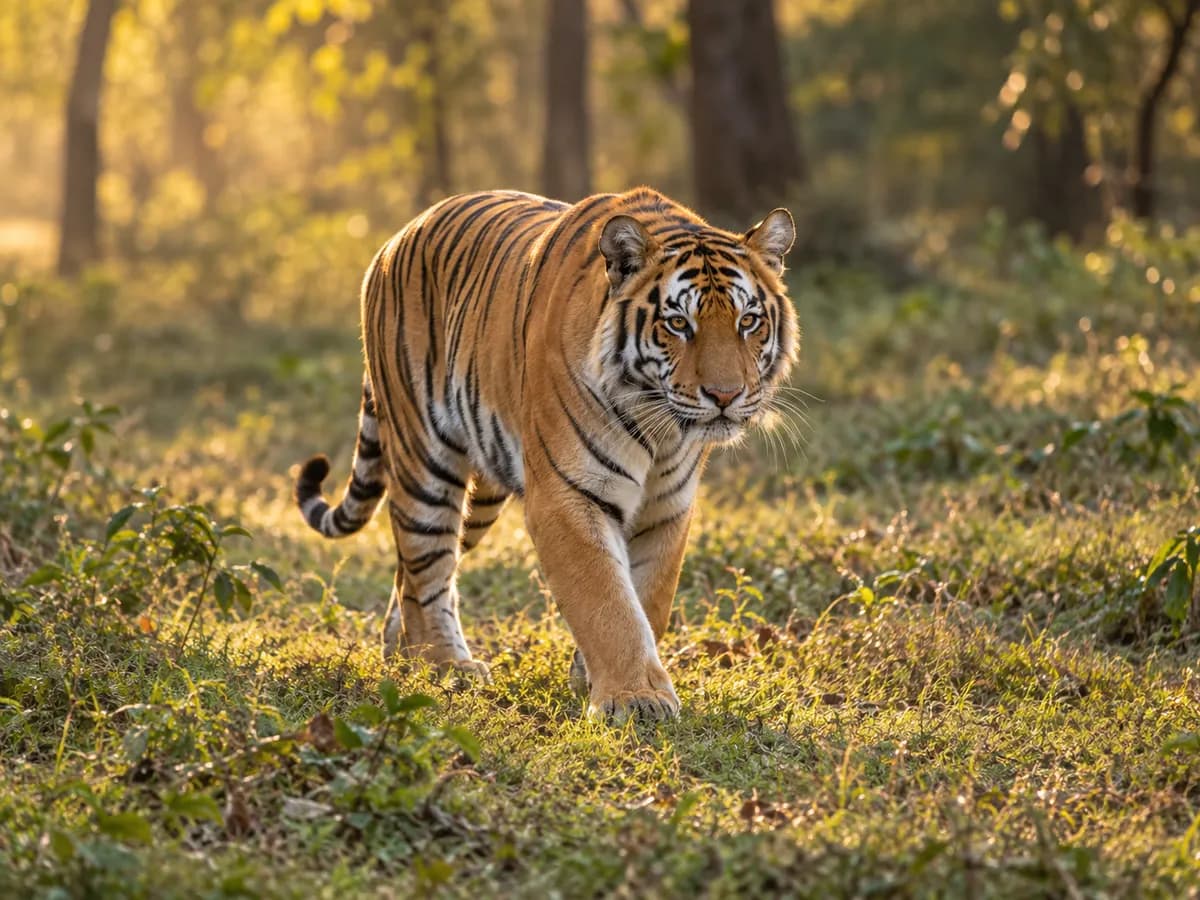 TigerThe largest of all cats, the tiger is known for its striped coat and solitary life. It lives in habitats from Asian forests to mangrove swamps, but it is endangered.Explore
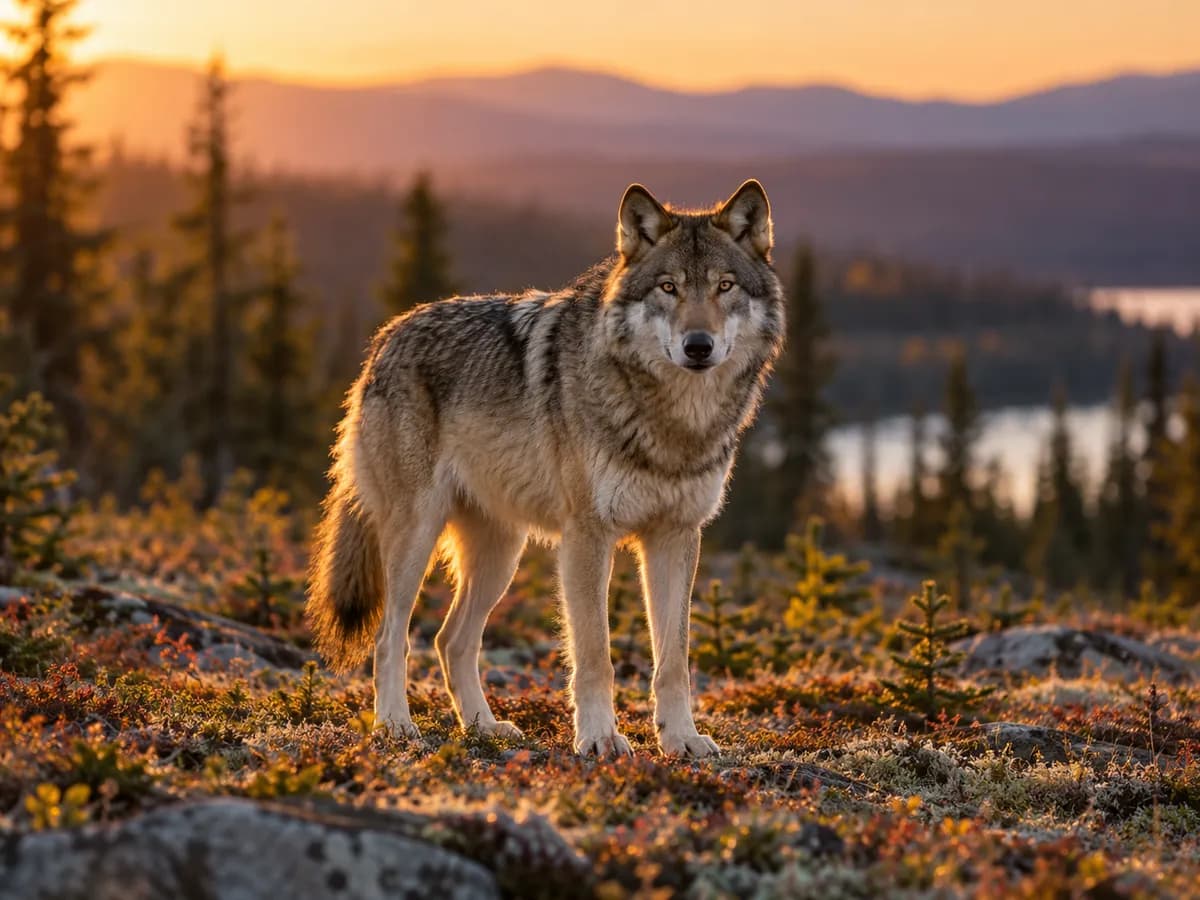 WolfThe ancestor of the domestic dog, the wolf is a highly intelligent predator that lives with strong family bonds. It lives across much of the Northern Hemisphere, including Türkiye.Explore
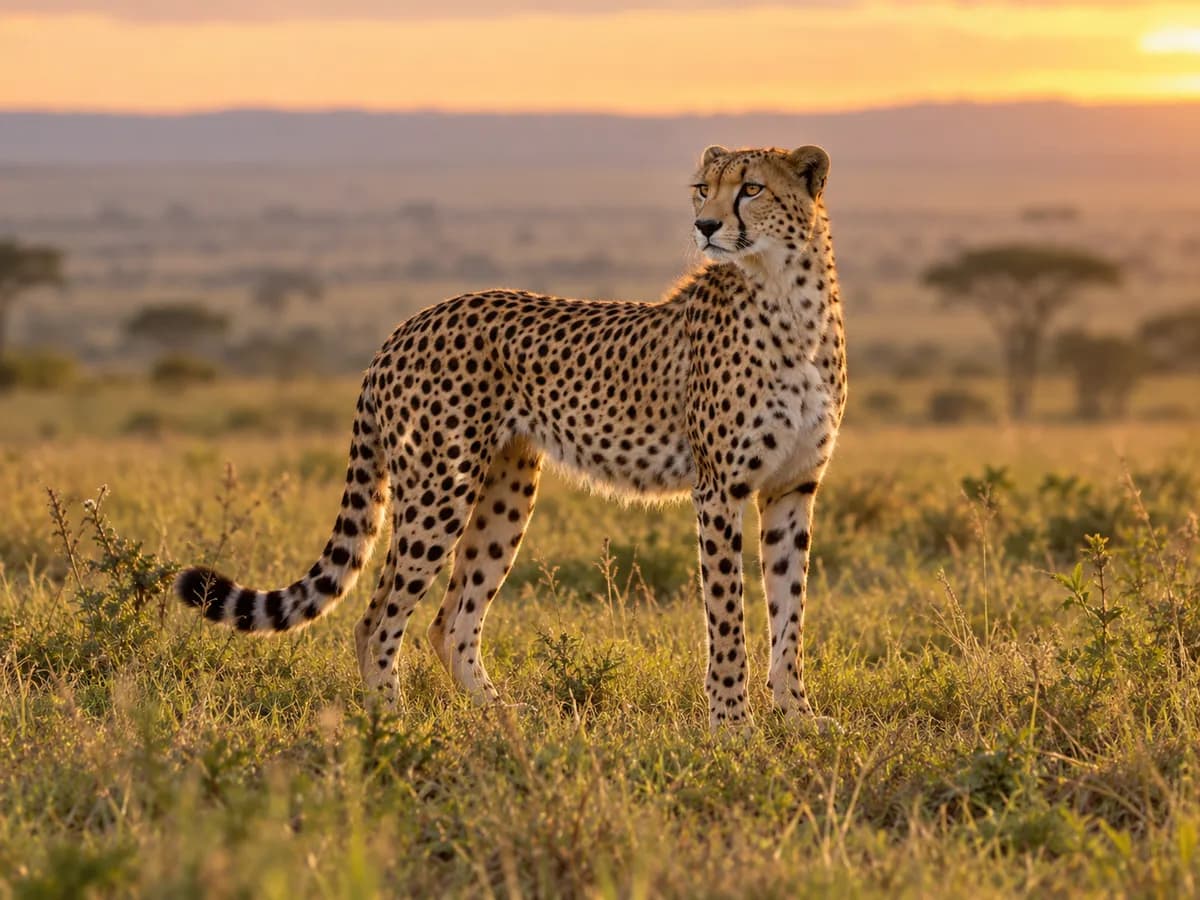 CheetahThe fastest land animal, the cheetah can reach more than 100 kilometres per hour over short distances. Its slim build and the "tear marks" on its face set it apart from other big cats.Explore
Respect for nature, stronger tomorrows
Protecting wildlife is everyone's responsibility.
If you find an injured or young wild animal, don't touch it; inform your local wildlife authority. More knowledge, more awareness.
- Respect natural habitats
- Watch wild animals from afar
- Leave no litter in nature
- Support a sustainable future